Wednesday, 8 September 2021

RETROWURST: Seasonal Products September 2003


 The first visit to a supermarket on our recent return from holiday brought the inevitable groans of ‘No! Lebkuchen already?’ This makes this Retrowurst particularly topical in that it marvels over the German September delicacies of Federweißer, Zwiebelkuchen, Süßer and Pfifferlinge. It goes on as a culinary calendar and guide to German food and drink throughout the year.

---------------------------------------------------------------------

September may well have been the ‘season of mists and mellow fruitfulness’ for Keats, but it is definitely the season of Federweißer und Zwiebelkuchen here in middle-Hessen. The subject of Extrawurst this month is seasonality, especially in relation to food and drink and how brands can use this notion to connect closer with people.


Since I have lived in Germany, it has always been apparent to me that nature’s cycle of months and seasons is somehow closer to Germans’ hearts and especially stomachs than for us Brits. At certain times of year, there are special products that one just can’t avoid; in fact, the whole year is punctuated with delicacies and if one were to throw away all calendars, you would have a pretty good idea of what month you were in by a glance at the restaurants’ blackboards and the supermarket shelves (given that the weather doesn’t seem to be such a reliable guide any more!)


As I said in the opening, in September we are in the midst of the Federweißer und Zwiebelkuchen season. Federweißer is a mildly alcoholic, cloudy grape juice from the first fermentation in winemaking. It is usually available direct from the vineyards and in wine bars but also from the supermarket where it is sold in (potentially messy for the unwary) bottles without a cork! It is usually served with Zwiebelkuchen, a very oniony flan which provides a nice contrast in taste to the rather sweet Federweißer. For those who prefer something non-alcoholic, another speciality of Hessen in September is Süßer, a strong, cloudy, sweet-tasting apple juice which is the first pressing that will eventually be made into Apfelwein. The beginning of Autumn is also mushroom time, especially Pfifferlinge or Chanterelles. Many families go mushroom picking in the forests and Apothekes provide a free ‘mushroom identification service’ to make sure that you’re not about to serve up a poisonous Ragout!


As the Autumn moves on through October and November, the Wild or game season gets underway, with fresh venison and wild boar available in the butcher’s (and deep frozen in Aldi!). Many restaurants have a special game menu. Goose is also widely available from November onwards, as this is traditionally eaten not just at Christmas but also around St Martin’s Day which is in mid-November.


By December, the Christmas goodies will have been in the supermarkets since September but now the Christmas baking season really intensifies with displays of the spices needed in Supermarkets and Apothekes. Competition for home-baking comes inevitably from the various Weihnachtsmärkte or Christmas markets that start around late November.


With February comes Karneval, with its own specialities, mainly Kreppeln or doughnuts and then, around the end of March, the first fresh Grüne Soß is available in restaurants or to make yourself from the pre-bundled fresh herb mixtures available from market stalls. This is a cold sauce made from seven different herbs and sour cream, which is eaten with potatoes, meat or hard-boiled eggs.


April sees the beginning of Spargelzeit where you just can’t escape from asparagus (the German asparagus is white as it grows underground). There are little roadside stalls selling the stuff in various sizes and qualities and a lot of restaurants serve only asparagus at this time. In May, a special woodland herb is available to make a delicious punch called Maibowle with schnapps, white wine and Sekt. In May, the first strawberries are available and many of the roadside asparagus stalls sell these too, along with the many ‘pick your own’ fields. Needless to say, you can make a very nice Bowle from strawberries, too.


There are numerous examples of food brands in Germany who introduce seasonal variants and flavours. Mövenpick Ice Cream, for example have featured ‘Our Ice of the year’ for many years- a flavour that is available for one year only. More recently, Mövenpick have started introducing two such flavours, one for the summer (usually lighter and fruity) and one for the winter (usually more nutty/chocolatey). This idea has been picked up on by many other brands, including Schwartau jams who have a ‘jam of the year’. Other examples of seasonal flavours and variants can be seen in the chocolate confectionery market, where Ritter Sport and Milka are both very active with this kind of thing- summer flavours are usually yoghurt and fruit-orientated while in the winter, flavours based on some of the traditional German Christmas goodies, such as Lebkuchen and Stollen can be seen.


Hochland cheese is another brand who has introduced seasonal varieties into its Almette cream cheese range- this Spring they introduced Almette with asparagus and we will not be surprised to see Almette with mushrooms this Autumn!


There are various important advantages that seasonal variants and flavours can imbue on a brand: firstly, in these days of so many new product flops, there is a certain amount of honesty admitting that a new flavour will only be available for a limited time and, of course, it makes an excellent testing platform. It can make a brand seem less ‘processed’, impersonal and distant especially if the variants are in tune with local tastes or recent trends. It provides a good antidote to the fear of globalisation and faceless, distant corporations. People are given a reason to look at the brand again and it gives the impression of a brand that is ‘fresh’ and always on the pulse. Finally, at a deeper level, in these days of short time cycles and cheating time with technology, ideas that are based on the yearly cycle of nature give people a feeling of being ‘rooted’ again and in touch with nature.

------------------------------------------------------------------------------

Well, all I can say is that in the eighteen years since I wrote that, there has been a proliferation from food and drink brands in terms of both seasonal and regional - the human need to be in tune with nature has been emphasised through greater awareness of sustainability. And of course brands are keen to present themselves as human, in touch with local needs and desires rather than faceless global corporates. It’s push and pull, as new technology enables speedier development and distribution of variants with a mayfly lifespan.

In other news, I’m pleased to say I’ve addressed the proliferation of exclamation marks in my writing.

Wednesday, 25 August 2021

Tutti Frutti Tonality


In this post from five years ago, I bemoaned the homogenisation of logos, films, language, pretty much everything, in an increasingly formulaic “smoothie society”. So it’s a little ironic that a brand that's ruffling a few feathers at the moment with its tone of voice just happens to be the original German smoothie brand and market leader - True Fruits. 

The current hoohah is between True Fruits and supermarket Edeka. True Fruits had the bright idea, with the election coming up, of a topical brand campaign entitled Die Qual der Wahl (“The agony of choice” or thereabouts). Smoothie bottles are decorated with the names of the six biggest parties in the Bundestag with nine points from the party manifesto printed on the bottles - but two of these aren’t genuine. Can you guess which?

This alone would probably not have caused too mainly raised eyebrows had the company not decided to actually produce the bottles and deliver them to supermarkets. Edeka, for one, were unamused at the idea of displaying an AfD bottle on their shelves, so sent these back. A lively discussion has ensued between the two brands: what is democracy? Is information more important than virtue signalling?


True Fruits was Germany’s first smoothie brand, founded in 2006 by three student friends from Bonn. From the outset, they never wanted to ape Innocent with its goody-goody image and rather twee brand voice, or try and push out-and-out healthiness. So instead they have always emphasised their quality credentials, combined with a provocative tonality in their communication, more reminiscent of Oatly or BrewDog.

In the last few years, brand communication has sailed fairly close to the wind, with smutty humour eliciting complaints of sexism as well as making light of racism (“Our token Black”). Much of this is below the radar (as is the current debate) of those outside the ad/marketing community, and the brand continues to enjoy moderate growth.

What’s interesting is that True Fruit’s brand communication is done in-house - they don’t have an ad or PR agency. This is similar to the Oatly model. In-house communication and agencies used to be rather sneered at by creative agencies - typically it would be something like a Korean car brand who’d take this approach.

But these days the tables are turned. Now it’s the in-house communication that’s often more edgy, more provocative, braver - and more distinctive. The big agencies have had their wings clipped in the interests of diversity, inclusivity and equality - or someone’s interpretation of what those values imply. It’s unlikely that we’ll be seeing the likes of this again: 


Poster for Club 18-30, Saatchi & Saatchi London

Tuesday, 10 August 2021

Isn’t it ironic?


 Three or four years ago, I made a calendar for my son’s Christmas present. The calendar was entitled “Beautiful Bruchköbel” and featured our home town’s architectural highlights, many of them sadly demolished now.


We both love that calendar - I loved making it, and I think my son still has it on the wall somewhere. The point being that we both love Bruchköbel, warts and all. 

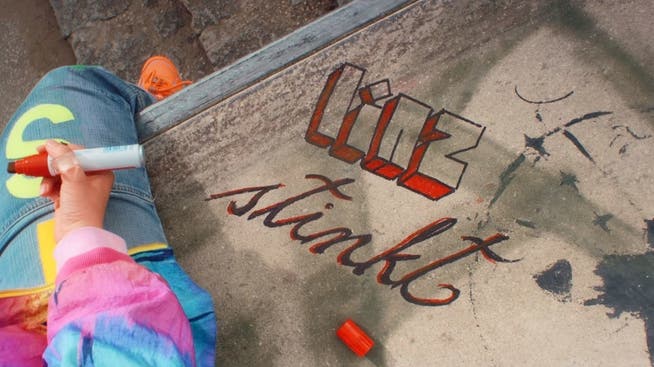
I was reminded of “Beautiful Bruchköbel” by the cinema ad from the tourist association of Linz to attract visitors to Austria’s third-biggest city: Linz ist Linz. Even if you don’t speak German, I’m sure you’ll get the drift. It's a bit warts and all. Linz is described as being “for old people”, “gruesome” and “a bit rascist”, amongst other things.


There have been complaints. From the mayor, from restauranteurs and hoteliers.

But don’t we keep hearing about authenticity in advertising? Isn’t this the big thing? I find it sad that the ad industry is so po-faced and serious these days. A bit of self-deprecating humour, a touch of irony ... it doesn’t seem to be recognised or appreciated any more.


Linzertorte made by me

I’ve never been to Linz myself (although I love Linzertorte), but after seeing this ad, I’m really quite tempted.

Better ironic than (yawn) iconic, I say. 


Monday, 2 August 2021

RETROWURST: Die Kräuterhex August 2003


Rummaging around in the archives, I found this article from August 2003. It relates one of the heftier waves of culture shock I had on coming to Germany: the influence of the Kräuterhex or herb-witch. Did friends and relatives have my best interests at heart when they recommended wrapping my neck in mashed potatoes or smothering my ankles in curd cheese? Was it the language barrier? Or were they having me on?

---------------------------------

This month, I’d like to write about the German drug scene and its chief ‘pusher’- the Kräuterhex or ‘Herb Witch’ who, having died out long ago in the UK, is alive and kicking and plying her trade as well as ever here.


Before I moved to Germany, I’d hear the odd complaint about not being able to get this or that lotion or potion that one can normally pick up in Superdrug in the UK without a full medical examination and the signing and stamping of various forms. I had always assumed that this was a consequence of a privatised health system and a way for the doctors to make money. It probably is, but I was to learn that this was merely a superficial symptom of a deeper underlying cause.


In my first few months in Germany, I got a nasty sore throat. Now, normally, with something like that in the UK, you’d go to Boots and pick up some Strepsils and maybe a bottle of Veno’s. Instead, my mother-in-law suggested that the sure-fire way to get better was to make a Kartoffelwickel. As far as I understood it, this involves boiling some potatoes, mashing them up a bit and wrapping them in a tea towel around your neck. Putting the Kartoffelwickel idea down as some elderly eccentricity, I went into the Apotheke to try and find something more akin to my familiar brands of cough medicine. Instead of my familiar Veno’s, I got given a bottle of something that appeared to be made from ivy leaves, which I had always thought were poisonous.


My mother-in-law’s strange ideas (to my way of thinking) about the healing power of potatoes turned out to be normal in Germany not just among the older generation. When I got an unexplained swelling in my ankles, a friend (some years younger than me) suggested that a Quarkwickel would see that off in no time. This consisted in smearing Quark(curd cheese) all over the afflicted areas and sitting with my feet up. This was very messy indeed, but it did the trick, although I suspected that it had more to do with having a rest than anything else.


During the birth of my son, I wasn’t offered anything to take the pain away (maybe I didn’t scream loudly enough) except a few pinhead-sized homeopathic pills which were meant to relax me. I can’t honestly remember whether they did or not! And then, once I had a baby, the influence of the Kräuterhex increased tenfold. Recipes for colic remedies from bizarre herbs, more Wickels to deal with fever and colds, bath potions and even something totally weird involving some kind of dark brown root vegetable which one had to somehow extract juice from and pipette into the nose to deal with snuffles were just some of the advice from the Kräuterhex in her various disguises of midwife, baby magazines and other new mothers.


So, there we have it – while we grew up with household names such as Alka Selzer, Disprin, Reach for the Rennies, nothing acts faster than Anadin and so on, the Germans grew up with the Kräuterhex and her lotions and potions. When anyone gets a bout of the runs here, Imodium is only in seldom cases the answer- instead; it’s a diet of Coca Cola and salted pretzel sticks (one of the Kräuterhex’s more modern inventions).


The reason behind all of this is partly the retail structure and partly a more deep-seated psychological orientation to health and illness. Legislation (although this is changing) has meant that medicines, even herbally based ones) can only be bought in the Apotheke and many drugs that we can buy over the counter are prescription only. There are no ‘Supermarket’ – style chemist chains such as Boots here, and the Drogeries which are more akin to Superdrug do not sell medicines as such. However, interestingly, Germans don’t find it a nuisance that they have to make a separate trip to an Apotheke to get certain items; their somewhat hypochondriac nature delights in having an excuse to pick up more strange lotions and potions while they are there; items sold only in the Apotheke – skincare or herbal teas, for example, have a certain cachet. In some recent work I did on Vitamin C tablets, consumers generally pooh-poohed the Vitamin C that one can buy in Aldi and other supermarkets; the belief is that these are probably almost placebo-like and that the only Vitamins that are worth taking (even though they are three times as expensive) are the brands one can buy at the Apotheke.


The retail structure in itself is an outward symptom of the underlying psychological orientation to health and illness in Germany. Traditional and ‘alternative’ medicine have never been so divided here as in the UK. It is not unlikely that a ‘traditional’ Doctor would share a practice with a homeopath or that a classically-trained dentist would also practise acupuncture. It all goes back to a more holistic view of the body, mind and soul, which is closer to an Eastern view sometimes that a UK view.


This has huge implications for food, drink and beauty products. There are huge markets here for ‘anything herbal’. What in the UK is a tiny niche, such as ‘Herbal Candy’- like Ricola- is a huge market sector here. Herbal teas are huge - it’s sometimes difficult to find ‘normal’ black tea amongst the array. In alcoholic drinks, there are certainly more varieties of herbal Schnapps than anyone would care to drink while yoghurts pop up with ingredients like hawthorn or Aloe Vera. One of the most popular flavours for children’s sweets and ice cream is Waldmeister - woodruff. While one gets the impression that, in the UK, many of these herbal products are faddish; the old Kräuterhex has such a hold over the German public that her influence will never fade away.

--------------------------------------------

Eighteen years later and not a lot has changed, other than online ordering and the establishment of discount Apotheke chains such as Easy Apotheke, founded in 2004, making potions a little more accessible. 

Oh, and what was the local Greek Restuarant is now a testing centre, with nose-tickling instead of ouzo and souvlakis. And the venue that was host to basketball games, comedy shows and rock concerts is now the vaccination centre. I’m not sure what the Kräuterhex’s cure for Covid was, but I am sure she wasn’t short on ideas.

Thursday, 29 July 2021

Triumph or tasteless?


The flooding in Germany has dominated the news for over a week now, along with efforts to help, financially and through volunteering. One of the more unusual approaches is a campaign called Flutwein, or “Flood Wine”. 

The Ahrweiler region is known for its wine production, and the idea behind this campaign is to to sell salvaged bottles to support the rebuilding of the region and to give those hit by the disaster financial support.

The publicity for the campaign shows “original” bottles, covered in mud and numbered 1 - 1000. Slogans include Unser Schlimmster Jahrgang (“Our worst vintage”) and Trauerburgunder (“Grief Burgundy” - a play on the name Grauerburgunder).

Behind the campaign is a collective of restaurants, wine growers and charity clubs from the region.

The campaign is being run on a crowdfunding site, where the numbered bottles have already sold out (example price: €500 for bottles numbered 100 - 150). Donations can also be made direct, or for unnumbered bottles (e.g. €60 for 3).

Is it tasteless to produce a slightly macabre campaign where many have lost their lives and livelihoods? 

Or do the results speak for themselves - heading towards €900K in donations when I last looked?

Friday, 9 July 2021

The freedom of lancing


LinkedIn started up at almost exactly the time I started freelancing - founded in December 2002 and launched in May 2003. So maybe it’s no surprise that my experiences, highs, lows and progress in my occupation have been closely linked to the way that work-related networking has changed over the years.

When I started up (and at the time I had no idea of whether I’d brave the slings and arrows, or retreat back into classic employment) it was a time pre-social media. I had no office, and was working from an Aldi computer my husband had bought in the previously century. I had a toddler and a freenet email address. I’d written a business plan for the Arbeitsamt but knew that it was as much a fiction as the retro-style adventures I was to write. An exercise in box-ticking only (more of that later).

I knew intuitively that I was likely to get business from people who already knew me and what I was capable of, and their contacts. My working title was “Ideas for Sale” before I hit on Secret Agency. I still love the irony inherent in this name - I’d be a plug-in-and-plan type of freelancer, flexible and happy to fit in to clients’ ways of working, systems and culture. I’d have ideas and experience of methods and tools, but wouldn’t force any propriety straightjackets on anyone. I’d be content working in the background, but would make no secret of who I was or where I came from. I wouldn’t hide behind some corporate-style website using the Royal We, implying I had unlimited resources at my disposal.

By and large, I’ve been happy about how this has turned out. The upside is that being low profile allows me to pursue other interests - writing those books, for example.

But the downside is that there is no safety net when you operate under the radar (I know, a particularly clumsy mixed metaphor).

Over the time I’ve been doing my freelancing, there have been vast changes in the way the freelance world works. Most of these, on the surface at least, have not really improved my lot.

First of all, there has been a huge increase in compliance-type stuff from clients of all sorts - hoops to jump through that are time-wasting and irritating for a one-woman band. Box-ticking, forms to be filled in and signed, purchasing departments’ rules and regulations, certifications here there and everywhere. In summary, a lot of things not being taken on trust, as they were in the past. I understand, to some extent. But it is wearisome.

Then there’s the growth of what used to be called the gig economy. This stretches from the democratic/exploitative (depending on your viewpoint) crowd-sourcing such as Fiverr through to what is referred to as Open Talent. This is the elite end: curated networks of specialists and experts. I’m not sure about Open Talent yet. I have joined a couple of these, and was turned down by one - I suspect due to insufficient attention to Buzzword Bingo. My main concern is that they don’t know me and what I can do, and I’m damned if I’m going to start trying to explain it all.

And the latest development is a Covid-related one as companies re-examine ways of working post-pandemic. A new employment model from Unilever is U-Work, the idea being to have a pool of staff assigned to different roles on a project-by-project basis. This gives the staff in question the benefits of freelance/contract work plus the security of fixed employment as they are paid a monthly retainer. I note the benefit to the company is that this model “avoids the costs of finding freelance workers and getting them up to speed.” I expect a lot of other companies will follow suit.

If I was starting up now, I would do things differently. I’d be all over LinkedIn using the right buzzwords and hashtags, collecting certificates, making connections, speaking the Key Word, algorithm-friendly language about great leaders, amazingly empowering inspiring blah and following the advice about asking questions and writing engaging posts. 

Or would I?

A subversive part of me shudders when LinkedIn suggests phrases I might like to use. I read somewhere, in a discussion amongst creatives about today’s award-winning ads that someone said “I don’t want to be good at doing that kind of advertising.” In the same way, I’m not sure I want to be good at raising my profile.

I still get asked through my various acquaintances in the business - could you, or do you know someone who could ...? And I still believe that companies look for an outside view on strategy - a view from someone independent, free of company culture, processes, philosophies, who is nevertheless prepared to listen and understand, and work out something tailor-made that fits and works.

LinkedIn can become ChainedUp only too easily.


Friday, 2 July 2021

RETROWURST: Time July 2003


With the longest day of 2021 behind us, it seems right that the next article from the pre-Extrawurst archive is one I wrote on the subject of Time, eighteen years ago, in July 2003. I’d been up to the Account Planning Group Germany conference and was fascinated by a talk given by Professor Karlheinz A. Geissler on the subject of the German relationship to speed and time. A prediction was made that “we will be ruled by the mobile phone/communications handset, not by the clock.”

Remember, this was a good few years before smart phones ...

--------------------------------------------------------------

I was up at the German Account Planning Group’s annual ‘Open Source’ event in Hamburg last week, where, sandwiched in between two talks - the entertaining-but-expected (an Army colonel talking about military strategy and what we commercial Planners can learn from it) and the expected – and mind-blowingly tedious (a Management Consultant doing an elongated sales pitch; see www.rolandberger.de for the full horror) - was a fascinating talk from Professor Karlheinz A. Geissler on the subject of Time.


The professor spoke about our relationship with time over history, moving from the time when time and the weather were one and the same (the word for both remains similar in the Latin-based languages such as temps, tempo), to the age of the clock, to the industrial age where man’s speed was no longer limited by nature and through to our own age. He argued that, in our ‘post-modern’ world, the key is no longer speed but flexibility. That is, the people that will succeed in our times are those that have the flexibility to do several things at once, not those who can do one thing faster than anyone else. We will be ruled by the mobile phone/communications handset, not by the clock.


Interestingly, he raised the point that some people/cultures already have a head-start in this new world of flexibility, the US (generally) and working mothers being two examples he cited. Conversely, other cultures may well be handicapped in the adaptation process, especially those who have excelled in the last age. Professor Geissler was not slow in holding up the Germans as the key example here. Maybe the Swiss have a greater obsession with clocks and punctuality, but the Germans combine this with their love of the stopwatch and what it measures - speed, rather than time!


So, this is the country where Michael Schumacher is the most revered sports hero but where you’re not allowed to use your washing machine after 8pm; where 150mph on the Autobahn is totally acceptable if your car is built for it (and most German cars are) but where having a BBQ party that goes on after 10pm is not. Even in German advertising agencies, punctuality and efficiency rule the roost- in some of Jung von Matt’s conference rooms there are no chairs, encouraging meetings to begin and end on time - in fact, there is no English equivalent of the German word Stehtischwhich is literally, a table to stand at. Contrast that with the comfy sofas of UK advertising agencies!


This all brings me on to a topic of huge current interest here in the area of retailing- opening hours. When I first moved to Germany in 1996, the opening hours, even in the big cities, were like something out of 1950s Britain (minus the ration books!) It seemed that what you won on the pubs (most open until 1am), you lost on the supermarkets, which were only open until 1pm on Saturdays (typical German exception of one Saturday per month being ‘long Saturday’ but I was blowed if I could ever remember whether Langesamstag was the first in the month, the last or in the middle somewhere!). Imagine the scene, if you will, of the entire working population of Frankfurt all queuing up at the same three supermarket tills at 12.30pm on a Saturday. I was appalled by this: the grudging acceptance with which the local people regarded this, and the underlying implication that women aren’t meant to be working, except as a good Hausfrau, so they can jolly well do the shopping during the week. Things improved a little a year or two later, with supermarkets opening until 8pm most weekdays and until 4pm on Saturdays.


However, the latest change has met with disapproval from many sides. For the last month or so, the Supermarkets have stayed open until 8pm on Saturdays. The church is up in arms, so to speak, as they see this as the next (final?) step down the slippery slope to that abomination, Sunday opening. (NB. Finding a shop open on Sundays here in Germany- with the exception of petrol stations, airports, railway stations and the odd kiosk- is about as difficult as beating Michael Schumacher round the Nürburgring. Even the DIY and garden centres are geschlossen.) But the Church aside, what is perhaps surprising is the somewhat unenthusiastic attitude of the general population. Who in their right mind, they think, would want to go to a Supermarket at 7pm on Saturday evening, when they should be watching the Bundesliga, throwing half a pig onto the BBQ or baking a cake for Sunday’s Kaffee und Kuchen with the mother-in-law?


The point here is not that the German people don’t like change, but that this is a change that they don’t understand. It doesn’t fit into the unwritten rules of order and efficiency. If someone has to do their shopping on Saturday evening, they must be disorganised (not spontaneous). They clearly haven’t planned ahead. I haven’t been shopping myself yet on Saturday evening, but I’ll make an effort this weekend to tear myself away from the cake-baking, or the BBQ (Bundesliga is in the middle of the summer pause!). I suspect that the people I’ll see; far from being disorganised, will be the sort of spontaneous, flexible consumers who will have to represent Germany’s future as they move away from the age of speed and punctuality to the age of flexibility and multiple lives all lived simultaneously.

------------------------------------------------------------

Pre-pandemic, Germany wasn’t quite on 24/7. Retail opening hours had stretched to 10pm or so, but Sunday remains sacred (except for online ordering, of which more later). 

It’s interesting how the pandemic has thrown time out of the window, along with freedom, while online shopping has devastated the city centre (although local independent shops of the butcher, baker and candlestick maker variety seem to be thriving). 

What intrigues me is that, over the eighteen years that have passed, I can still see Professor Geissler and his antiquated overhead slides before me, and I can recall many of his words of wisdom. 

I can’t remember a single thing the chap from the management consultancy (with his slick PowerPoint presentation) said.

I understand that Professor Geissler doesn’t have a driving licence and lives “watchless”.

Sounds like the norm amongst young people.