Showing posts with label climate. Show all posts

Monday, 24 April 2023

Artificial Politics?


There’s a certain knack to getting "cultural relevance” (my jury’s out on that term at the moment ...) just right, but today I’ve got an ad that does it 100%.

I am sure I’m not the only one whose Instagram feed is swamped with AI-generated art. Some of it fascinating, clever, thought-provoking. Some, less so.

This ad from Fridays for Future (by Fred & Faris, Los Angeles) was released for Earth Day and timing doesn’t get much better than that. I reckon that even within a month, we’ll be sick to the back teeth of AI-generated artwork in advertising. But this is the first campaign I’ve seen where it’s been used to really good effect.

“Earth is no toy”  is a clever idea, well-executed. It’s topical, arresting and fits the “brand” (I expect Greta would smack me round the chops for using that expression) perfectly. OK, I didn’t get that the politikids were meant to be holding the earth like a ball until I read the background, but does that matter?

I would love to see a version shpwing what the G20 leaders really looked like as children. 

Thursday, 1 December 2022

The new pester power


 In the old days of (ugh) Marketing to Kids, Pester Power was a well-known phenomenon: batallions of angry and sulky kids beating their hapless parents into submission to buy the latest Barbie, Lego spin-off set from some super-hero universe, crisp and soft drink flavours, sweets, sweets and more sweets - and, of course, mobile phones and all to do with gaming tech. 

But I noticed a subtle change in the nature of Pester Power, some twelve years ago, at the Christmas Market, where children were encouraged to write their Christmas wishes on a star, to be displayed on a wall. My son was still old-school at this point, with his wish for “Everything from Lego Star Wars”, but this rather greedy wish was over-shadowed by a mass of junior do-gooders, who wished for everything from World Peace to their granny getting out of hospital in time to spend a family Christmas together.

In the latest edition of Globescan’s Healthy & Sustainable Living Report (2022) we can see just how far things have developed. Pester Power has taken a moralistic and activistic turn: "our children are driving a sense of urgency about the climate” proclaims the writer of the report, somewhat pompously.  In the study amongst 30,000 respondents across 31 markets, 63% of those with children under 18 at home agree their children are worried about climate change and the environment.

I assume that the 23% who say their children are neither worried nor not worried have children under the age of 3 or so?

Source: GlobeScan


Of course, this is nothing new. When I was at school, back in the 70s, we were forever doing projects on pollution and the environment, for biology, geography or simply for assembly. I remember having a go at my mum for her fur coat and probably got into a tangled argument with my dad about nuclear weapons.

But it’s an important finding, and it must be difficult for parents, particularly those who are really strapped for cash. It’s one thing to say no to the latest Nintendo game, or Barbie’s pink plastic dream castle, but quite another to say sorry, family, can’t afford that good-for-the-environment detergent: it’s just too expensive and won’t get the mud and grass stains out of your football kit.

But without snuffing out children’s commendable environmental ardour, young people would be well-advised to have a look at their own desire:action gap. I know a young man who merrily voted for the Green Party while leaving his poor parents to sort out the three bursting black bags of completely mixed trash in his dump of a bedroom.

Tuesday, 11 October 2022

A noble yet undervalued craft


I’m pinching someone else’s article this week, because it deserves something more than getting lost in my sprawling bookmark system. It’s by Alex Vuocolo: The Disappearing Art of Maintenance and was spotted by Good Business in their weekly newsletter.

Amongst other things, this article for me highlighted the disconnect between all those trend reports and innovation newsletters and sustainability innovation alerts, and the life that most people lead. My own life is one lived in constant dread of updates, especially as far as my MacBook goes. I’m tottering along with my 2015 model, but fear that the next OS upgrade could wreak even more damage than the last, which rendered two printers obsolete in one fell swoop.

Maintenance, as Alex Vuocolo points about, is about making things last, not repairing what’s broken. It’s conspicuously absent from the “reduce, reuse, recycle” mantra as it doesn’t really fit with the ideas of reduction or anything prefixed by “re-“ as it’s about steady state, not change. That alone doesn’t make the concept of maintenance sound progressive or innovative.

But why must the idea of “sustainability” inevitably be coupled to the idea of “change”?

I’ve mentioned eBikes before - and this article talks about how, for example, the electro vehicle boom, driven by the promise of cutting emissions has caused a surge in demand for metals such as nickel, cobalt and lithium. Using up a different set of the earth’s resources while attempting to conserve another. 

Also highlighted in the article is the abstract nature of the climate debate and emissions goals:

Emissions goals are not unlike GDP targets. Both are administered abstractions, somehow all-powerful and impotent at the same time. They reduce action to aggregates and strip human actors of agency.

Or:

The pragmatism of maintenance work is sorely needed in the climate debate, which is so often preoccupied with end-states that it has no earthly or humanly way of achieving.

Of course, in the real world that most of us live in there are people that service your car, your boiler, your bike - and keep the roads and the railways and the buses in good order. But perhaps it would help to bring this mindset into other areas of modern life, too.

In the end, this is one reason I cannot abide the term “the consumer” being applied to everything beyond that which is actually consumed - from smart phones to cars.

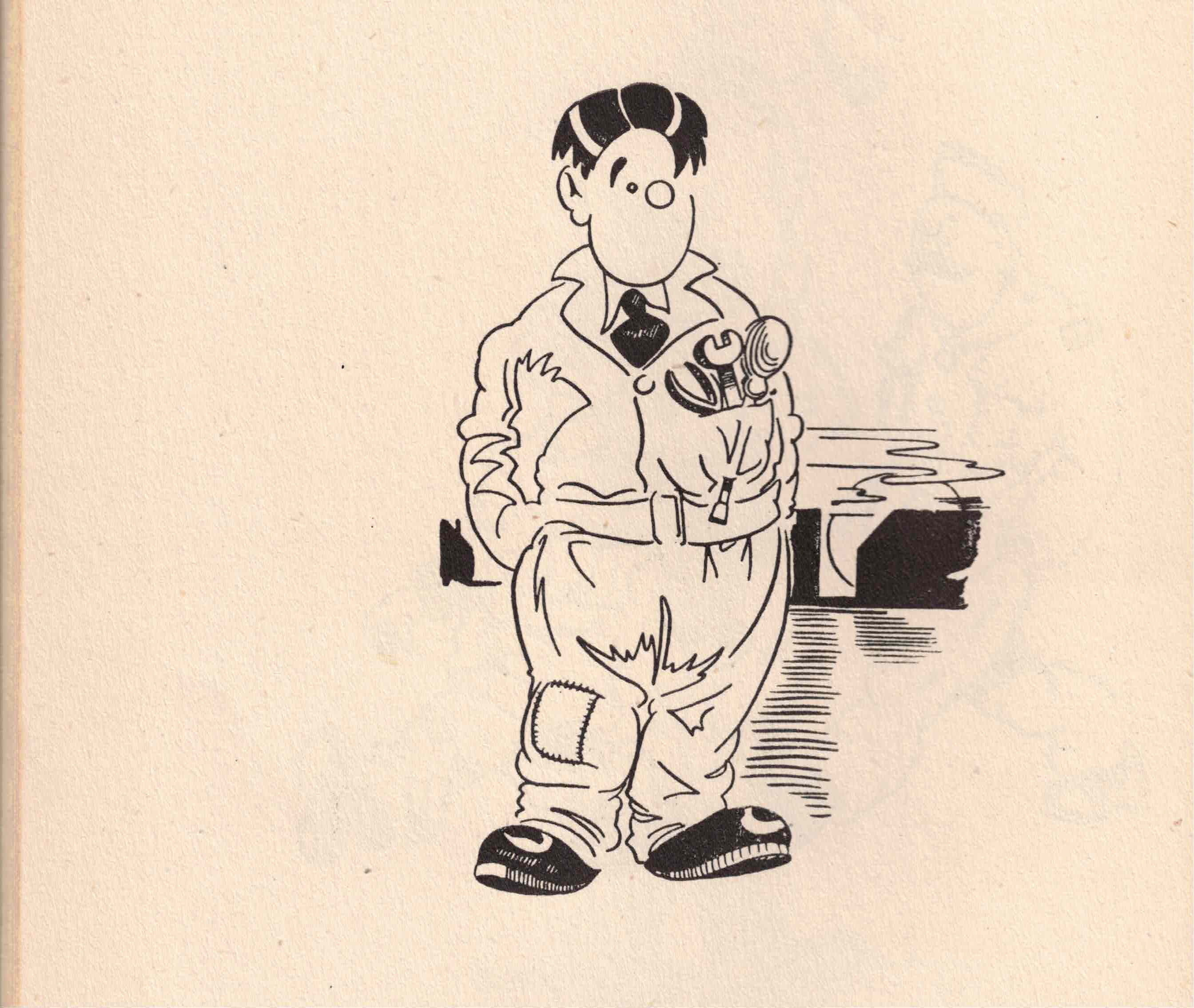
Now, pass me that spanner.