Showing posts with label copywriters. Show all posts

Monday, 9 February 2026

Infected by the machine


Nearly eleven years ago, I wrote of nostalgia for my "pre-internet brain". I was already yearning for a mercurial mystery, an opaque numinosity, a unique contrariness that I feared was slipping away from me.

Today, I had a nagging feeling that, while my pre-internet brain is alive and well, it's gone into hiding. Especially when it comes to its output in the form of work-related writing.

I feel as if my writing is becoming blander round the edges. As if there's a part of my brain that really is infected by AI. I'm not over-keen on putting everything through an AI detector, but gave it a go, nevertheless.   

Client 1

I write articles for their brand communications and media newsletter. As usual, at the beginning of the year, one article is about trends. My first draft was "64% likely human", but by the time I'd incorporated the client comments, it had crossed a line. Into "69% AI probability."

Uh-oh.

I dug out my article on trends from 4 years ago. "98% likely human."

Definitely infected.

Client 2

In this case, I write keynote-type speeches for marketing events. For the 2025 event, the line had been crossed, too: "68% AI probability." For the 2021 speech I was still operating on pre-AI brain: "97% likely human."

There are push and pull factors going on here. From the client side, the feedback is often of the "crisper, clearer, simpler" sort, and I have sometimes been given an AI first draft as a brief, rather than a few bullet points.

It's much harder to extricate yourself from an AI-style as first draft than polish up your first draft with AI.

Then there were the pull factors from my side. As the audience for the articles and speeches is international, I use Hemingway  to keep the language and structure relatively simple. And I probably cut out more colloquialisms than I used to. Killing my darlings for better comprehension.

This is all conscious stuff. But I sense that the infection has worked its way in unconsciously. I am spending far too much time reading stuff online, too much of which is AI-generated. And I suspect my clients are, too. We are all becoming infected. And the expectations of what's a well-written article has changed.

I know that I must push back now. Because I'm not writing for AI and GEO. My audience is 100% human. I'm spending more time on real, paper books. Avoiding AI summaries, going to original sources. 

It's time to wake the non-infected, pre-AI part of my brain up. 

Thursday, 23 May 2024

LinkedOut


 A German network pal of mine recently asked what gets people’s goat about LinkedIn, for a talk he was preparing. Although he called it a rant. 

Replies (in no particular order) included: toxic positivity and enthusiasm, humblebrags, Simon Sinek, “Great Leaders do ....”, banal everyday experiences dressed up as profound insights “My cat was sick in the kitchen today. Here’s what I learned”, or once-in-a-lifetime experiences dressed down as business tricks “I proposed to my girlfriend this weekend - here’s what it taught me about B2B sales”, being scammed - yes, you ghastly creatures that want your grubby hands on my pension, woe-is-me victim stories, self-righteous virtue-signalling posturing, AI-generated and AI-stolen bullshit content, a general lack of lightness all around ...

Phew. I recognised most of it, along with the cultish nature of the site as described here by Coco Khan. She bemoans that the site now has its own language - no surprises there as it’s all prompts and AI. It takes a bit of effort, but I refuse to sound like a 5-year old at a party with a bouncy castle and a clown ("super-excited and thrilled!”), to “reach out”, to blab on about authenticity and vulnerability or read posts that hundreds or thousands have already liked.

What made me sad was Coco’s description of her friend whose experience is rich and diverse, yet doesn’t fit neatly into the boxes of LinkedIn. Know the feeling. And she puts it well when she says: “It’s shifting how we see our accomplishments, what we assign value to and what we don’t.” 

I am not a brand, I am a free woman. Or something. 

But, as a freelancer I’m stuck with it. Sort of at its mercy.

I’ll play the game up to a point. But I’m happy to be LinkedOut when it comes to real life.

My German pal, who’s smarter than me with this sort of stuff advised doing some proactive culling to get the algorithm working more in my direction. And it was strangely satisfying.

Friday, 18 February 2022

Slave to the algorithm


I was a latecomer to Wordle, and snuck in just before the puzzle was taken on by The New York Times. It has kept me amused for a couple of weeks, even if I’ve been kicking myself for breaking my winning streak due to US English spelling (not-twigging-of) a little while ago.

Yesterday, though, I was completely bemused. I put in a five letter word, nothing obscure, and was told that this word was not on Wordle’s list. 

The word in question: “slave.” I genuinely wondered if this was a hiccough in the software, so tried on another device. Same result. Intrigued, I searched for an explanation and found news articles to the effect that there are various words that the new owners of Wordle don’t allow - the word for a female dog, for example, or “words associated with racism” such as “slave”. 

There were, no doubt, words for the idea of “slave” long before the English language evolved. When I think of the word, yes, the Atlantic slave trade comes to mind, but I also have associations with earlier history, Roman times, and the present day - I’ve often been asked to sign documents assuring potential project partners that my little one-woman show does not involve slavery in any part of the value chain.

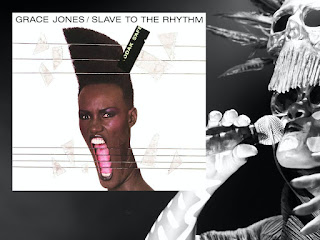
Then there are the more abstract uses of the word - as in that glorious 1980s anthem by Grace Jones. Metaphorical uses, figures of speech, analogies, word-plays. It’s a word with many uses, meanings, nuanaces, contexts.

I’m a writer, and I’ve commented before about the homogenisation of language, as well as the cultural poverty (am I allowed to say poverty?) society is walking into with predictive text and suggested words and phrases. It’s bad enough when suggestions come as to which words you might like to use, but when words themselves disappear from lists and dictionaries? I know language changes all the time, but I am not talking about weird obscure historical words that have had no application for the last five hundred years here.

It’s just a game. OK, it is. But if it’s a game where I have to question every five-letter word and wonder whether it could offend someone, effectively censoring my own vocabularly, then I think I’d rather go back to the Internot and find my ancient Scrabble board game where I can use whatever words I see fit.


Saturday, 15 August 2020

Method in Madness?

There was a time early in my agency career when creativity just happened - in a mysterious way - and questioning how the the creatives got to their ideas was likely to earn you at best a sarcastic riposte, and at worst eternal banishment from the creative floor.

Of course, we had a high-level idea of how creativity worked, but on the whole we were interested first and foremost in cracking ideas that fit the brief - and if they were really cracking, the brief could be made to fit ;)

These days it's all very different. There are no mad geniuses prowling the second floor and throwing typewriters out of windows. We're all team players, and openness and transparency is all the rage, including the tedious, usually post-rationalised blow-by-blow thought process of how you arrived where you arrived. I blame all this Design Thinking gubbins - the thought of scrums and sprints gives me the heebie-jeebies - it doesn't sound agile to me, rather completely exhausting.

Creative processes are described in flow charts and icons:


Occasionally with a few disembodied arms and hands - or brains - to add the "human-centric" touch:


Can I be the only one that feels as if these standardised processes lead to standardised ideas?

Even in a completely different world - literature and fiction - authors seem only too keen to display their working on social media, usually in the form of a forest-slaying over-abundance of Post-It notes:


I really don't want to read that novel, however it turns out.

My favourite representation of the creative process is this one:
I take a deep breath at this point and tell myself that it's a good thing that there are different ways to approach creativity and as long as I'm not forced into one of these flow-charts of Post-It proliferations, then let it be.

Adobe Create have come up with a rather nifty tool (not a process) to discover your own creative type.  No surprise that I was the Visionary (who looks like the lovechild of a cactus and a cucumber - well, that was a surprise).

And, for things to go pretty swimmingly, I have to get together, not with a cactus or a cucumber, but with a Thinker.

Who I am sure comes armed with a stack of flow-charts and a catering pack of Post-Its.

Monday, 9 December 2019

The war against plastic (words)

Good advice, generally, doesn't go out of fashion. I make no excuses for posting this memo from David Ogilvy. Nearly 40 years on, it's as important as ever.

I particularly like points 2, 3 and 4, which always remind me that the best presentations are the ones that are to the point. They get into your mind and stay there. They do this through using everyday, natural language, not what Ogilvy calls jargon and others have called "plastic words."

Plastic words have that Humpty-Dumpty quality that they mean whatever the user wants them to mean in that context - or sometimes they mean diddly-squat because the user doesn't really know what they want to say, only that a particular word gets a head-nod and ticks a box somewhere.

As the authors of that article point out, our language is polluted with these words. I often wonder what on earth we said before we started started talking about engagement, or agility or diversity. Not to mention purpose, impact, sustainability ...

Time to battle with the verbal plastic, as well as all that junk in the sea?

Tuesday, 14 May 2019

Past my sell-by date?

Last week, I thought I'd died and gone to heaven. There, in my local REWE store was a giant array of wine bottles, on sale for the price of €1 each. Just in time for Mother's Day, I thought. I started rummaging through the bottles, slightly embarrassed that I appeared to be the only customer with any kind of enthusiasm for these bargains. There was a lot of dross, but also some good-looking labels, possibly past their best but certainly worth taking a chance on at that price.

Amongst my haul were three bottles of Schloß Johannisberg Gelblack Riesling 2015, which my Vivino app tells me normally retail at around €15. I felt almost heroic, rescuing these wines of noble pedigree from the rummage sale in a one-pig town where hardly anyone would recognise their class, quality and heritage.

The experience, for some reason, brought to mind an article I'd read about ageism in the ad world, particularly in relation to creatives. It's by Madeleine Morris, who has formed a Society of Very Senior Creatives to strike back at feeling of being "invisible and expensive."

Normally, when I'm feeling bright and chipper, and have plenty of work, I don't take too much notice of these articles about ageism, in the same way that I take a lot of the sexism articles with a pinch of salt. I get the feeling that such articles send out messages about how I should be feeling and what I should be experiencing, and there's a slight sense of victimhood about it, which makes me uneasy. I'm sick, for example, of hearing that "women over 50 are invisible in the media" - turn on any medium and you're likely to see Angela Merkel or Teresa May within the first headlines. I think planners may have it easier than creatives in general - it's easier to play the "wisdom and experience" card when you are a strategist.

But sometimes, when I'm having one of my pathetic days (and I do have them), when people don't reply to emails, when I come up against closed doors, when I hesitate about filling in an application form as I know some algorithm has been set up to chuck out anyone born before 1970, then I do start to have nagging doubts.

We drank the bottles of Riesling at the weekend, by the way. The first was distinctly musty and I began to get depressed.

But the second, and third - we couldn't stop at two - were deliciously splendid - in their absolute prime.


Tuesday, 2 May 2017

Octogenarian Flaneuse

I do love a work of fiction about advertising and ad people, and recently enjoyed Kathleen Rooney's Lillian Boxfish takes a Walk. Before I get onto my review, the way I came upon this novel is also worth a mention. It was recommended by my long-lost pen pal from the US, who used the wonders of technology to seek me out and renew our correspondence after a gap of decades. One of the nicest surprises of the last year or so for me! Anyway, that's a whole other story.

The fictional Lillian Boxfish describes her career thus:

I wanted there to be something to do in life besides mate and reproduce and die, and advertising was that, or it was for a long while.

And here's what I thought of the story:

'Before Mad Men (and Woman), there was Lillian Boxfish, or in real life, Margaret Fishback, the 'world's highest-paid female advertising copywriter' in the 1930s. This book is somewhere between fact and fiction, taking the poetry and advertisements written by Margaret Fishback, plus some of the details of her career and private life, and weaving a fictional character, the sparky and spunky Lillian Boxfish, around them.

Being a fan of walking around cities and having worked in the advertising industry, I was charmed by the premise of this book, in which the elderly but sprightly Lillian takes a walk (in her mink coat) around New York on New Year's Eve, 1984, conversing with the various characters she meets while reflecting on her colourful life. She's a wonderful character, witty and acerbic, and it made a change to have to look up quite a few words in the dictionary while reading. Lillian remarks on how her long-copy ads, often in the form of verse, respected the intelligence of the reader, and I did wonder what she would have made of some of the dumbed-down advertising of today.

The book captures the sights, smells and sounds of Manhattan from the Jazz Age right through to the 1980s beautifully - the fire escapes, warehouses, smell of burnt toast, Italian restaurants - as well as the characters: not just the ad men and women, but taxi drivers, barmen, street gangs and shopkeepers.

*Slight spoiler alert* I was slightly disappointed with the last part of the story, which started to feel a little phoney and stretched credibility somewhat. For those who have read the book, I'm referring to what felt like a sequence out of 'Crocodile Dundee' which grated a little.

Despite that, I thoroughly enjoyed Lillian's reflections and observations on life, and the insight into advertising, writing and life.'

Tuesday, 20 September 2016

The Joy of Words

If you look at the history of advertising, it's been a three-parter so far. Back in the very early days, many people couldn't read, or didn't have access to a daily paper, so advertising worked primarily through visuals and symbols. The first part of the 20th century was dominated by words - copy -  and there was a golden age (I think) where art directors and copywriters were put together as teams and produced some of the best advertising ever. This co-incided with the rise of commercial TV.

Then there's this century so far, where screens are all around us, and the emoji has taken the place of the text-speak.

I still have a hankering after words, maybe because I write in my spare time. I recently got the book version of Shaun Usher's brilliant website, Letters of Note. Shaun Usher's favourite of his collected letters (and mine so far) has to be the 1934 covering letter from Robert Pirosh, who at that time was a Madison Avenue copywriter, but had designs on a career as a Hollywood scriptwriter.

How could anyone resist a letter that starts: 'I like words'? And, here it is in its full glory:

Dear Sir:

I like words. I like fat buttery words, such as ooze, turpitude, glutinous, toady. I like solemn, angular, creaky words, such as straitlaced, cantankerous, pecunious, valedictory. I like spurious, black-is-white words, such as mortician, liquidate, tonsorial, demi-monde. I like suave "V" words, such as Svengali, svelte, bravura, verve. I like crunchy, brittle, crackly words, such as splinter, grapple, jostle, crusty. I like sullen, crabbed, scowling words, such as skulk, glower, scabby, churl. I like Oh-Heavens, my-gracious, land's-sake words, such as tricksy, tucker, genteel, horrid. I like elegant, flowery words, such as estivate, peregrinate, elysium, halcyon. I like wormy, squirmy, mealy words, such as crawl, blubber, squeal, drip. I like sniggly, chuckling words, such as cowlick, gurgle, bubble and burp.

I like the word screenwriter better than copywriter, so I decided to quit my job in a New York advertising agency and try my luck in Hollywood, but before taking the plunge I went to Europe for a year of study, contemplation and horsing around. 

I have just returned and I still like words. 

May I have a few with you?

Robert Pirosh
385 Madison Avenue
Room 610
New York
Eldorado 5-6024

Genius.

I have a belief that if we work in Marketing or Advertising, even if we aren't copywriters, we should be able to put together words in a way that shows we like them, love them even. We are in the business of communication, so surely our documents and presentations should be written with care and feeling and attention to the richness our vocabulary gives.

Instead we (self included) so often fall back on whatever the flavour of the year buzz words are. Engagement (which to me is nothing more than an amalgam of the first bits of that AIDA model - awareness/attention and interest/involvement.) Experience. Insight. Content. KPIs.

Next time, I'll see if I can replace those with fat, buttery words, suave 'V' words or even sullen, crabbed, scowling words.

Tuesday, 8 December 2015

Great stories, well told

The connection between ad people and novels is one that continues to fascinate me, not least because of my own rather feeble attempts to be the next J.K.Rowling, ha ha. And I've blogged about ad people that write, most recently here.

There's an interesting article about copywriters and novelists, by Lisa Friedman, here, which looks at 10 reasons that great copywriters (should) make great novelists. There's knowing your audience, there's the killer work ethic, the ability to tell a story, the economical use of language, and more besides. Summing up, it boils down to having an innate feeling for people and what makes them tick, combined with excellent skills of expression. In other words, the ability to tell a great story, well.

And talking of novels, and ad-land, I can most heartily recommend the new book above, Spin My Little World, by Abigail Cocks. Less about ad-land as set in ad-land. The main character, Bo Simpson, crashes and blunders her way through life armed with high fashion, low-life connections, a refreshingly un-PC attitude and lashings of foul-mouthed humour. I'm sure I worked with her once.

I also worry that I was her once.