Showing posts with label trams. Show all posts

Friday, 16 August 2024

Those lazy, hazy, crazy days of summer


A short and sweet post today as the weekend and the high summer outdoors are calling. For those living in Hessen, that will inevitably involve apple-based drinks, with or without that alcohol stuff.

Aren’t the designs for Possmann’s apple juice just perfect? There are so many sludgy, dreary colours around attempting to convey naturalness, making this burst of bright primaries shine even more brightly in comparison. 

Possmann have been making Äpfelwein and juice since 1881, under the slogan “the best thing that can happen to an apple.” The 5th generation of the family is now in charge, and they’re not only the largest apple processing company in Hessen, but the most award-winning cider company in Germany, too. They’re responsible for one of my favourite sights around Frankfurt, too - the colourful tram known as the Ebbelwei-Express.

An apple or five a day (in liquid form) really does keep the summertime blues away. 

Friday, 22 March 2024

A drink in the Black Forest


I first travelled to the Black Forest around the time of this musical masterpiece (or at least, the Herb Alpert version). My parents bought me a little plastic cuckoo-clock-style house, which you could peer into and click a button for changing colourful landscapes - dark pine forests, snow and sky, sweeping lush pastures with perfectly positioned cows.

I didn’t return for more than two decades, which is when I most likely first encountered the wonderful Pils from Rothaus brewery - Tannenzäpfle. The pine-cone beer. The beer has been around longer than I have, and originally featured an illustration of a the typical Schwarzwaldmädel beloved in the wholesome Heimat films from the 1950s. These were a kind of escape into a world that never really was, an attempt to console the German population and blot out some of the stains of Nazism from the national psyche:


The label was redesigned in 1972, with a graphic version of the young lady - nicknamed “Biergit Kraft” by brand fans. I recall that this characteristic bottle was the beer available at the primary school’s “garden” at our local Hof und Gassenfest, along with Baden wines and Schwarzwald sausages, further imprinting the idyllic imagery in my mind. It’s a brand that’s a long way from edgy, gritty, urban pubs or laddish humour. In the past, sponsorships and a bit of outdoor aside, Tannenzäpfle hasn’t been a huge advertiser. But who needs to be, with a label like that?


But that’s all changed. The first big brand campaign for Tannenzäpfle has been developed by Kreuzbergkind (you can’t get less Schwarzwald, or more Berlin than that agency’s name!)

It’s all based around the idea of “Always calm.”


It’s a nice campaign - I like the calm pace, the slowing down, the serenity.

But I wonder: is it a little bit too goody-goody? Substitute other methods of crafting, and it could be for mineral water, or outdoor clothing or something like Bionade. It’s missing the quirkiness of “Biergit Kraft” and her pine cones. 

Pass me a another slice of Schwarzwälderkirschtorte while I consider.

Tuesday, 11 October 2022

A noble yet undervalued craft


I’m pinching someone else’s article this week, because it deserves something more than getting lost in my sprawling bookmark system. It’s by Alex Vuocolo: The Disappearing Art of Maintenance and was spotted by Good Business in their weekly newsletter.

Amongst other things, this article for me highlighted the disconnect between all those trend reports and innovation newsletters and sustainability innovation alerts, and the life that most people lead. My own life is one lived in constant dread of updates, especially as far as my MacBook goes. I’m tottering along with my 2015 model, but fear that the next OS upgrade could wreak even more damage than the last, which rendered two printers obsolete in one fell swoop.

Maintenance, as Alex Vuocolo points about, is about making things last, not repairing what’s broken. It’s conspicuously absent from the “reduce, reuse, recycle” mantra as it doesn’t really fit with the ideas of reduction or anything prefixed by “re-“ as it’s about steady state, not change. That alone doesn’t make the concept of maintenance sound progressive or innovative.

But why must the idea of “sustainability” inevitably be coupled to the idea of “change”?

I’ve mentioned eBikes before - and this article talks about how, for example, the electro vehicle boom, driven by the promise of cutting emissions has caused a surge in demand for metals such as nickel, cobalt and lithium. Using up a different set of the earth’s resources while attempting to conserve another. 

Also highlighted in the article is the abstract nature of the climate debate and emissions goals:

Emissions goals are not unlike GDP targets. Both are administered abstractions, somehow all-powerful and impotent at the same time. They reduce action to aggregates and strip human actors of agency.

Or:

The pragmatism of maintenance work is sorely needed in the climate debate, which is so often preoccupied with end-states that it has no earthly or humanly way of achieving.

Of course, in the real world that most of us live in there are people that service your car, your boiler, your bike - and keep the roads and the railways and the buses in good order. But perhaps it would help to bring this mindset into other areas of modern life, too.

In the end, this is one reason I cannot abide the term “the consumer” being applied to everything beyond that which is actually consumed - from smart phones to cars.

Now, pass me that spanner.


Thursday, 2 December 2021

Grotto or grotty?

RETROWURST is taking a break this month because lazy little me didn’t write any articles in December back in the 2000s as I was probably too busy dashing and blitzing around doing Christmas shopping. But the series will be back in 2022.

Yes, Christmas shopping. There are reminders on the radio - have we bought all our presents yet? I have bought one, and was quite proud of having already done so in November before I heard all those smug so-and-sos with only one still left to buy. 

I am not relishing the thought. Somehow the magic of Christmas past and the twinkling welcome of Santa’s grotto is lost in a mire of masks, pandemics and it’s-all-easier-online-but-bad-conscience-haunting-me.

I’m not sure if the experience was ever that magical, anyway. My only memory of Santa’s grotto in Harvey’s department store in Camberley was being given an empty box. I think amends were made, but still.

But we can dream, and take a shopping trip through the streets, windows, lights and paper catalogues of the past:

There’s shopping in style, even when you’re on public transport. Just don’t spill mulled wine on those collars or cuffs:


Christmas didn’t have to be gaudy. Post-war shortages aside, this was a world where black and white was the norm, certainly as far as brand communications and broadcast media/entertainment went:


Hamleys was the mecca of tinsel and toytown. The 1926 ad offers a number of most suitable gifts for children including “The Crown Tavern”, a pup named “Looney” and what looks like an interrogation device. 60 years later, the store tried a "Teddy Bears’ Picnic meets 333 Men in a Boat” approach:


Does anyone have time or inclination in these pandemic days to linger looking at shop windows? Even war didn’t stop Selfridges in 1916:


This picture, of 1960s Regent Street, seems to sum up my earliest memories. A quick blast of Nina & Frederik, and I’m back there.


Wednesday, 11 December 2019

Polish up those tin signs


I was rather cheered to read in the JWT trendletter that analogue marketing, or the "renaissance of non-digital mediums (sic)", is back.

On closer inspection, the article is more about music and musicians - Coldplay and Radiohead's Thom Yorke, bringing new albums out on cassette and advertising them in quaint old-fashioned ways, such as small ads in local papers, or personally-typed postcards to fans delivered in the good old post.

But there's no reason to stop there. There are so many ways to advertise your brand or cause in real life, from posters to trams to vans to blimps - even on bricks and mortar.

I did learn a new word from the article that I'll have to use somewhere soon: anemoia - nostalgia for a time you've never known.

In the meantime, let's market like it's 1899!

Tuesday, 1 October 2019

Brilliant or bullsh*t?

I've worked on the client side, the agency side and somewhere in the middle, as a consultant. And I still feel these conflicting personas, rather like the Good Cop and the Bad Cop, leaping around in me trying to gain supremacy when I see communication ideas.

Take the recent Burger King "Meltdown" campaign in the UK. The agency side of me is terribly excited about this one. It ticks all the boxes and then some. Where to start? Well, the idea originally came up as a result of a petition from two eco-conscious schoolgirls, Ella and Caitlin, aged 7 and 9. It's big and bold and involving and exciting. It's about actually doing something (people donating unwanted toys, Burger King working with up-cycling partners to convert the unwanted plastic into play areas and trays) rather than just blabbing on and empty virtue-signalling. The execution, from the melting logo to the giant sculpture, is terrific.

And it takes a good pot-shot at McDonald's in tune with the brand's recent edgy attitude campaigns.

My agency side is practically having a meltdown, screaming "what's not to like?" at my less easily-enthused bah-humbug client side.

I don't know. A year or two ago I might have found this original. But now it feels, however good the execution, rather like an opportunistic stunt. One of these. Does it come from the core of the brand? Not really. And sniping at the main competitor merely deflects from the real problem. As pointed out in the article linked above, the campaign broke on the same day that Burger King was presented with an award by Greenpeace for "flame-grilling the Amazon." Perhaps the "Meltdown" campaign name and logo are a little insensitive?

I wonder what our junior eco-warriors think of that?

Talking of which, I'm won't be surprised by a flood of Greta Thunberg wannabes and Fearless Girls appearing in forthcoming brand communications. It has already started, for example, in this campaign for Zürich's public transport (admittedly timed to coincide with Ms Thunberg's visit to the city). The ads are telling us that if we take the tram or trolleybus, we're a little bit Greta.

I'm not convinced there's such a thing.


Friday, 23 November 2018

Free Electric Van

I listened to Les Binet and Sarah Carter talking about their new book (one of those ones I wish I'd written) on a WARC seminar yesterday, and one point they reminded me of was: don't believe all those myths about traditional advertising being dead. Far from it - Facebook advertise in magazines, and both Apple and Google employ posters - yes, old-fashioned billboards - to communicate their wares.

Outdoor advertising still makes so much sense, especially if we really are going to be more and more concentrated into urban areas. And, this week, I also saw a new brand, a start-up in the area of electric mobility.

UZE Mobility, from Aachen are looking to smarten-up and relieve the strain and congestion in Germany's cities, via electro-power, AI, blockchain and all that modern stuff. Their flagship - or flagvan - offering is free of charge van-sharing. As well as running on electricity, the van runs on advertising revenue and data-dealing. The sides of the van are mobile billboards, which can even be bought as the van is in motion. In addition, data about road quality, traffic jams and so on, collected as the van drives around, will be sold to local authorities.

Perhaps the vans will soon be generating their own adverts, too. Also in the news this week was a commercial for the Lexus ES, written by AI:


I do wonder what the creative brief looked like.

Monday, 7 August 2017

Ads are made by fools like me

Back in the 20th century, Ogden Nash wrote a parody of Joyce Kilmer's famous poem, 'Trees' in which he stated:

I think that I shall never see
A billboard lovely as a tree
Indeed, unless the billboards fall
I'll never see a tree at all. 

And in a recent article in Campaign, writer and director Paul Burke also celebrates the billboard, or poster and bemoans its current state. He lays the blame partly on the renaming of the poster into 'out of home media' or 'OOH' for short (although very few examples these days elicit OOHs, it seems.) And partly on the clients, of course.

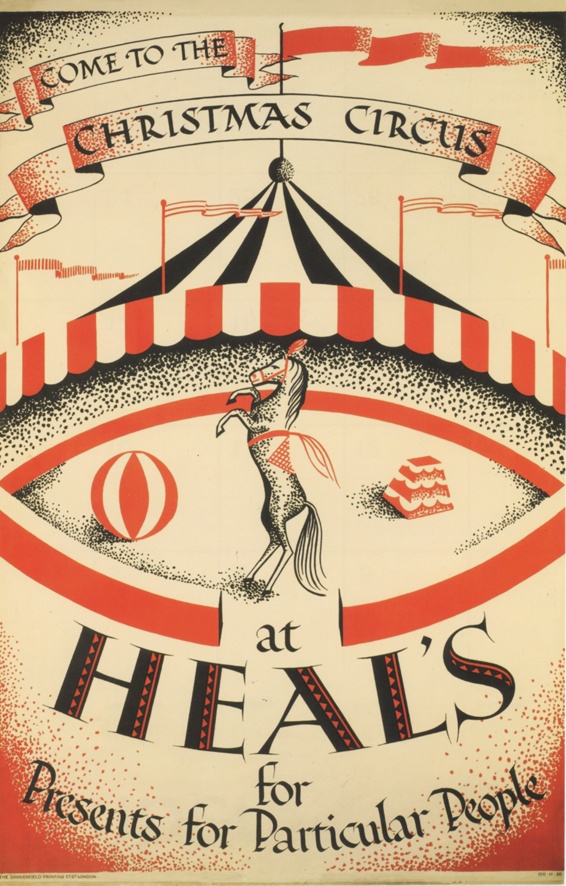
He has a good point, I think. But I wonder if there are other reasons for the demise of the poster. One of them may be the disappearance of what used to be called commercial artists, who weren't necessarily ideas people in the sense that modern art directors were, but who certainly had the craft and skill to touch people's souls through their art as any of the posters on this post will show.

And then there's the other thing. Certainly in urban areas, very few people are looking up at trees or indeed billboards these days. Their focus is on their device. I wonder what Ogden Nash would have made of that? I'd certainly rather be looking up at any of these billboards in its full size glory than down at most of the rubbish that floats across my smart phone screen, like so many falling leaves.


Tuesday, 29 April 2008

Mobile Marketing

I've always found trams rather exotic and romantic in a continental sort of way. Here in Frankfurt, the trams are a rather lurid shade of turquoise but this almost adds to their charm. It's certainly not a shade of paintwork you'd choose for your own car.

I love the way trams glide past you when you're sitting in a traffic jam on the Hanauer Landstrasse or somewhere. And even better than the standard aqua issue are the trams in full advertising regalia. There's one I see regularly done up like hundreds of Maggi enamel signs and I saw a real beauty today: a Lufthansa tram with a clouds and sky artwork to rival that of Michelangelo (well, almost). Maybe there's something not quite right about an airline pushing its wares via an older and more mundane form of transport but as I watched it serenely sailing past, I didn't really care. This streetcar evoked exactly the "consumer response" that I'm sure was desired.