Showing posts with label crowd-sourcing. Show all posts

Wednesday, 27 November 2019

Off-the-peg strategies

Five years ago (gosh, how time flies when you're enjoying yourself) I wrote a couple of posts about crowd-sourcing: not crowd-sourcing the general public for ideas for a new flavour of crisps, or naming a boat, but going into a creative pool (I hesitate to say community) for design and creative ideas.

My conclusion at the time was that I was sceptical, especially when it came to what the creatives got out of it - and that the logical next step, which I rather hoped wouldn't happen, was a similar set-up for strategy.

Since then, I have joined one freelance pool for writers, and I must say upfront that I don't have a problem with the idea of freelance pools in general, and matching up freelancers to clients.

But it's the competitive element that I find destructive.

In theory, accessing good thinkers ("an exclusive, worldwide community of the finest Creative Directors and Planning Directors") to solve tough strategic problems sounds fine. But if this organisation (and others like them) are throwing the client brief out to a number of "the world's best thinkers" then picking the best of what comes back (in their view) for the client, then that is worrying.

It devalues the work of any one particular planner and turns strategic thinking into a commodity that can be bought in bulk.

As a freelancer, I take pride in becoming an independent plug-in for my clients for as long as I'm working with them. I take time and care to listen and learn about their organisation - how things work today, and where their hopes and vision are leading them tomorrow. I ask lots of questions. I'm a part of the organisation for the duration, but an outward-facing one.

I see that as my responsibility, and it goes far beyond the weeks or months that I am working with the brand.

I've tracked down the 1994 all-staff memo from David Abbott that talks about the dangers of "a giant ad factory where quantity is more important than quality". It's just as relevant for strategy as it is for creative: "great work comes with ownership, understanding and time."

I may be old-school, but I firmly believe that strategy is not something where you can fail fast, test and learn and all that design-thinking tra-la-la.



Thursday, 21 April 2016

A jolly Happy Birthday!

Celebrations are in full swing back in Blighty for The Queen's 90th birthday, and I will no doubt join in. But I also want to celebrate a different birthday, for another (excuse the 'i-word') icon. Not a lady, this time, but a rather fine gent.

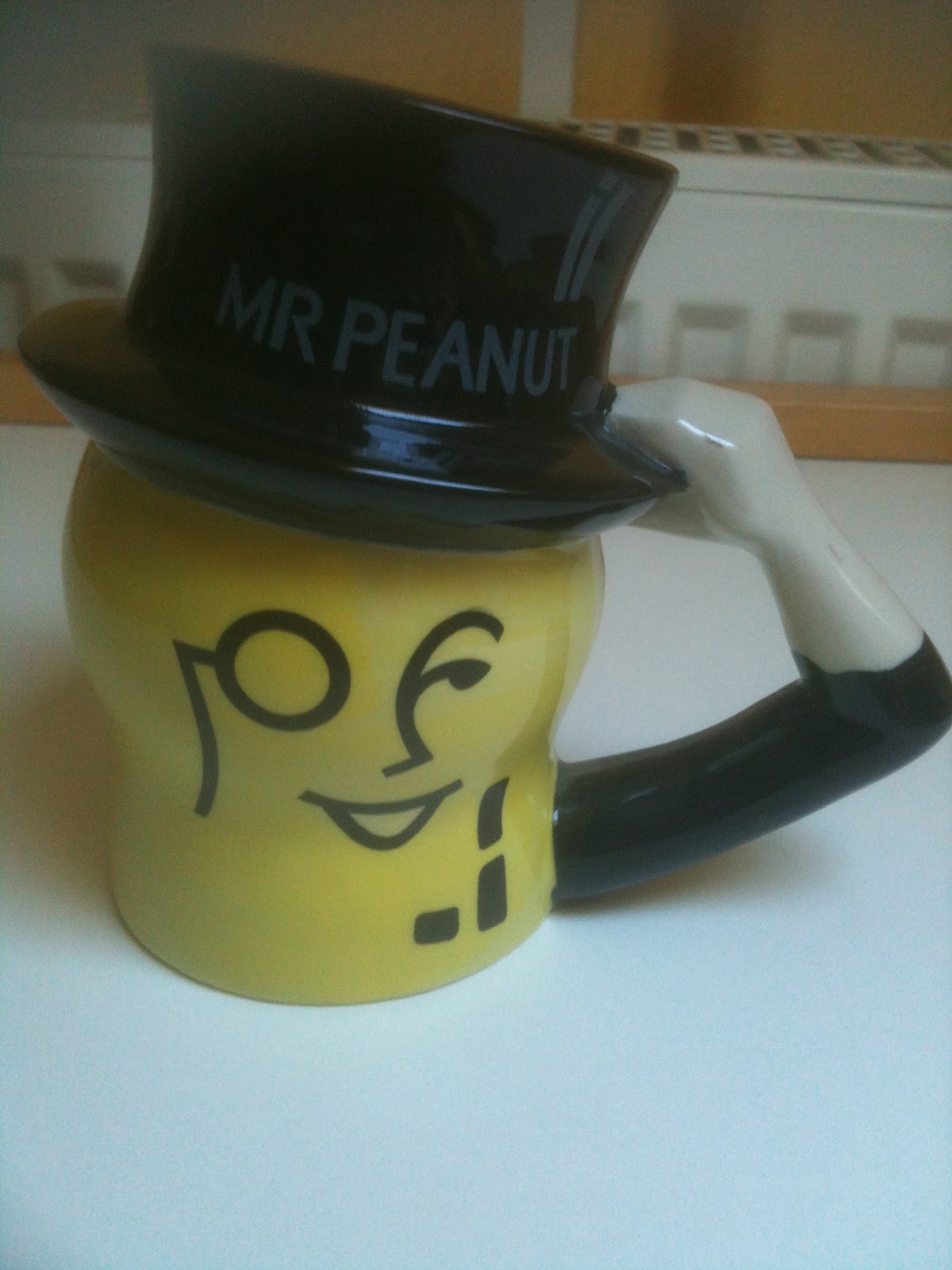
Mr Peanut, of Planter's fame, is 100 years old and celebrated his birthday officially two days ago.

Mr Peanut is one of my favourite brand characters, along with the Michelin man. Not many brand characters reach 100 without being deemed un-PC, too fat, too skinny, the wrong colour, inappropriate or - shock horror - offensive.

Although one or two of Mr Peanut's incarnations are laughable rather than endearing (I am looking at the first NUTmobile here), his longevity surely relies on his staying the sophisticated, nutty gent who promises great quality peanuts. Monocles and spats never go out of fashion.


I'm not sure what year my Mr Peanut mug dates from, but it could as well have been made yesterday.

The history of Mr Peanut is fascinating. In an early example of crowd-sourcing, the original sketches won a competition for 13-year-old Antonio 'Tony' Gentile. Tony won $5 for his idea, which must have been a fair amount of money for a young teenager in 1916. Here's one of his sketches, and you can see the others and read more here.
There's a rather sad end to Tony's story. He didn't go into the world of Madison Avenue, but qualified in medicine and became a surgeon. He died of a heart attack at the tragically early age of 36.

I do wonder, though, what that young boy would have thought if he'd caught a fast-forward glimpse of his creation in 2016.

Friday, 19 December 2014

Charity Past, Present and Future

My memories of charity giving from childhood centre around coins and things - collecting boxes for the Lifeboats being rattled in the town, poppies or Queen Alexandra roses to pin on your coat, my RSPCA and PDSA badges, the Oxfam cards my parents bought each Christmas, putting pennies into a life-size model of a Guide Dog for the blind, raffle tickets...

These days, giving to charity has become not just easier to do, but easier to shout about, too. Buttons on your browser instead of your coat, crowdfunding platforms, Gift Aid, posting your donation on Facebook, PayPal links, timely emails whenever a world disaster occurs and all the rest.

And then there are all those big behavioural campaigns where you can be a walking awareness-raiser, from Movember to No Make-Up Selfie to Ice Bucket Challenge. These have come in for criticism on one side from those who say such actions trivialise the issues that they are trying to create awareness for, and find something sinister in what they see as "branding a disease." And the critics, on the other side, are dismissed as cynical killjoys with a bah, humbug mentality.

It's difficult to tell whether people are actually giving more to charity these days, or whether they are just talking about it more. There are some interesting stats from the Charities Aid Foundation, here. I must say that I was surprised to see which country shares first place with the USA in the World Giving Index.

The World Giving Index is not just about donating money. It also include the elements of giving up time and helping a stranger. And this must be the future for charities - using the possibilities of technology to encourage people to donate not just money, but time, skills and other intangibles. There's a super article by Lucy Aitken of Contagious with some great examples of just that, here.

Sunday, 5 October 2014

We get paid to make choices

Before all staff emails, there were all staff memos. I remember them well from my time at Saatchi in London. I've even kept a few, because they felt important, worth hanging onto. If they were written by one of the creative directors, they would be as carefully and brilliantly written as a long copy ad.

This 20 year old memo from the late David Abbott to all the staff at AMV has recently surfaced on the Creative Review. It's well worth a read as it makes an important point that is even more relevant today, I think, than in the 90s. The point is about ownership and responsibility, suggesting that one creative team should own a project and agencies should be focussing on quality rather than quantity of creative ideas.

Now, I think it may be unrealistic to go back to the days of taking the brief from the client and not letting him or her into the creative process at all until a few weeks later when THE one idea is presented with a flourish. But I do wonder if all the endless tissue meetings and briefings and rebriefings and presentation of ideas in double figures - and at the extreme, throwing the whole thing out to crowdsourcing - mean that we lose focus and quality.

In the end, it is about responsibility. To quote David Abbott: "the person who owns a house tends it more lovingly than the person who rents it."

It's all about making decisions and being able to fight for the choices we have made.

As David Abbott says, that's what we get paid for.

Friday, 21 February 2014

Design Beauty Contest

In the last week, I've been invited on two occasions to give my opinion in a "design contest" hosted by 99designs . One contest was for a logo design, the other for a book cover design. The "clients" had whittled down the entries to 5 or 6 designs and had asked their friends and contacts to vote.

99designs is big business, one of the fastest growing crowd-sourcing outfits today. They currently boast a community of 282,249 designers  (although one does wonder exactly how much of a community this is, as they are all in competition with each other.) As a client, you can buy a package starting from €229 for your design project, which will already give you dozens of designs. In addition to logos and book covers, you can have anything else from T-shirts to illustrations to web pages to mobile apps.

This development from what was a somewhat elite industry based on personal connections and contacts to an internet-based democratic platform is an inevitable one, and has obvious parallels with publishing and the book business.

But is the development welcome? Well, there are clear positives. For clients, especially freelancers and small businesses, there are huge advantages. Not to mention all those self-published authors. It's also cheering to think that 99designs may be offering people a chance or a foot in the door - a single mother in a developing country, or a housebound young person in an inaccessible village. However, I would like to know more about how much the designers themselves are getting out of it. I haven't done the sums but if you're pitching against at least 30 others each time, your chances of winning are pretty slim. And you'll only ever be as good as your last pitch.

The emphasis on the website is more on quantity - how many designs you'll have to choose from. I don't know - as a client I'd rather choose from three stunning ideas than thirty so-so ones. And to get a stunning idea, I think that the designer needs to know my brand or my book or whatever it is pretty well, which comes in part from building up a relationship, face-to-face if possible.

Don't get me wrong: I'm pleased that this exists and might even be tempted to give it a go one day.

But you won't catch me signing up for the next step which is called 99strategies.