Showing posts with label women. Show all posts

Thursday, 22 May 2025

Heads or tails?


I got the sad news yesterday that the headmaster of my first school passed away recently - although he did achieve the grand old age of 96. There’s a Facebook group for ex-pupils of the school and I spent some time browsing old black and white school photos. These were taken on a summer lawn, in front of the rhododendrons, many moons ago. 

The photos were usually arranged so that there was a group of taller, wholesome-looking girls standing in front of the prize cups and trophies. A combination of being small for my age and slightly precocious as far as learning went meant I was never destined to stand behind the cups. I’m somewhere off to the side - in one photo with a badly concealed snigger. I was prone to giggles about absurd and puerile things in those days. Still am.

When I reached secondary school, the teachers were probably relieved I didn’t seem quite as oddball as my brother, who was rumoured to "drink ink and play his trumpet in the toilet.” I was never the out-and-out rebel, bad girl or geek, but I did have a slight dusting of eccentricity and subversiveness. 

Bookish and useless at most sports, I never really wanted to be like David (or Davida) Watts, in the words of The Kinks’ song (performed here by The Jam). When I got to the Sixth Form, almost everyone was made a Prefect. I was one of the few that wasn’t. That changed when I passed the Cambridge Entrance exams, though. I think the head of sixth form even invited me for a glass of sherry in his office. But I shrugged off the smarminess for what it was, played the game and wore my Prefect badge with apparent pride. Although I was more likely to have my nose in something like Colin Wilson’s The Outsider than be patrolling the corridors during Prefect Duty.

I did manage to collect a couple of “Head” titles during my career. I was “Acting Head of Market Research” during our boss’s maternity leave, then later “Head of Planning” at Saatchi Frankfurt. But along with this, I can remember at least one telling-off from a (female) boss about my dress sense. I sat there wearing a long yellow-gold jacket, leggings and pointy black shoes with gold embroidery, like some sort of gender-fluid member of Showaddywaddy. If I’d been tarty or scruffy, it would have been easier to deal with. All the boss could come up with was that the outfit didn’t convey “corporate gravitas” or some such. Again, I shrugged and smiled. Weren’t we an ad agency? Not bloody McKinsey?

But there were plenty of colleagues who did tow the line. Stick to the agenda. They were safe pairs of hands who’d probably stood behind the cups in the school photo. I note that a lot of the women I worked with in the past are now OBEs and Dames. Of course, there were the out-and-out rebels, too - and they were celebrated accordingly.

But I was always a "neither-nor" case. A bit of a chameleon, fitted in when it suited me. Had my independent thoughts but often kept them to myself. 

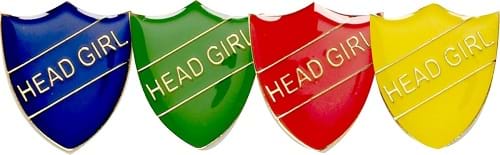
I found this blog post about “Head Girl Syndrome” a few years ago. It’s a little dated now and has a rather bitter tinge - and something of that "either-or" binary. But a lot of it resonated with me. A Head Girl is “a good all-rounder - pretty, popular, sociable and well-behaved.” The description has never fitted me particularly well. The long yellow-gold jacket was better. The author points out how the Head Girl type is favoured by committees, peer review processes, voting and anything that favours consensus. And how “modern society is run by Head Girls, of both sexes, hence there is no place for the creative genius.”

There is a place for the creative genius, of course, but it’s not at the top of a government or commercial organisation. 

Since 2013, when that article was written, we’ve seen yet more dumbing-down and risk aversion in politics and commerce as these are further driven by frameworks, processes, ideologies and dogma. There's a distinct lack of emphasis on independent thought. And it’s pretty obvious that the advent of AI will advance all this normalising and homogenising further despite a lot of noise about neurodiversity. Head Girl CVs are a very attractive catch for AI.

This is a brilliant article by James Marriott of The Times (sorry about the paywall) in which he bemoans the “normie-doom spiral”. In essence:

21st century Britain is beset by mediocrities who rise to the top not by doing anything right but by not doing anything wrong.

Now, I’m certainly not dumping all ex-Head Girls and Boys in with this. I’ve come to terms with my own lack of Head-Girlness. Nor do I hold myself up as a some sort of wronged and unrecognised creative genius. 

I certainly haven’t got all the money that David/a Watts has got - but I’m not a “dull and simple” lass, either.

I’m the Tail Girl. Wagging most of the time, doing the stuff I like, rather than being a nodding dog. 

But I have a sting tucked away, too.


Monday, 2 September 2024

RETROWURST: Women September 2006


Now and again, I find something in the Retrowurst files that I genuinely can’t remember writing. A symptom of ageing brain? I’m not convinced, as much of the category and brand-related stuff seems to have been filed away in a readily accessible place. Discounters to drugstores, beers to burgers. Maybe there’s an element of denial at play, as these pieces tend to be about social issues rather than marketing and brand communications. But what they have in common is that, reading them back nearly two decades later, they feel as if they hail from a different world.

This piece, taking the not-particularly-niche subject of “women”, used two self-help type books (one light in tone and tongue-in-cheek, the other sadly not) to introduce the theme of the lot of women, especially mothers, in Germany in the early 2000s. 

Does anyone remember Das Eva Prinzip by Eva Herman or Das Uschi Prinzip by Meike Rensch-Bergner? I wonder if the books are even still in print ...

----------

A well-known news reader and TV presenter is causing a storm here in Germany with a book that very few people have yet read but that on which almost everyone has an opinion to offer. The lady in question is called Eva Herman and she has called her book “Das Eva-Prinzip”. It really doesn’t matter one jot if you’ve never heard of Frau Herman as she and her book only really play a catalytic role in re-lighting a fire that has been smoldering away here for years.


In “Das Eva Prinzip”, apparently (as I also haven’t read it as the publication date seems to keep moving backwards and forwards like a silly girl who can’t make up her mind), Frau Herman sets out the case that feminism was a big mistake and has only led to women being unhappy, denying their innate womanliness and losing out on having children. It is a call to recognize that men are men, women are women, and men should be out working or hunting and bringing home the bacon and Bratwurst while women should stay at home and look after the children. If we all stuck to the way things should be, a lot more children would be born in Germany, and it would be a much happier place.


This jolly little tome, incidentally, is hot on the heels of another sort of Prinzip“Das Uschi Prinzip”, which was a sort of German version of “The Rules”, giving tips and advice to young women on how the “catch the man of their dreams” by using their womanly wiles to the full rather than behaving like some sort of aggressive second-rate man. (See www.uschi-und-uschi.de where the author has made a whole concept out of this, offering seminars, workshops and the like!)


But let’s get back to Frau Herman. Interestingly, she doesn’t seem to have lived her own life so far according to her own principles and one can only imagine that she has written the book out of the kindness of her heart to stop young women from making the same foolish choices and mistakes that she did. Eva Herman studied for a career in hotel management and moved into journalism and TV. She has already written a number of books on such subjects as breastfeeding and how to get your child to sleep through the night (A sort of German Gina Ford.). In between she has gone through four husbands and has one child from the third of these. Just the sort of person that you want to have telling you how to run your life!


Some commentators have gone as far as to say that Frau Herman’s book has nothing to do with German society as a whole but is her own personal outpouring or sort of therapy to still her longing for a perfect family life that seems never to be satisfied. Eva Herman’s father died when she was only 6, her mother worked and it seems that, to compound this unhappiness, little Eva was not breastfed.


Whether we choose to agree with her or not, Eva Herman’s book argues for one solution to one of the main issues that is facing Germany in the 21st century: one of the largest countries in the E.U also has the lowest birthrate at just 1.35. The future economic implications of this are clear so maybe we shouldn’t criticize Frau Herman too much, whatever her motives, in at least addressing the issue and presenting one way forward (or backward, depending on your perspective!).


There is a strange paradox in Germany whereby men and women have equal opportunities as long as the women are childless. In the school and study years, girls are even ahead of boys in terms of academic qualifications: there are more girls than boys with Abitur, which is like German A-Levels and it is expected that, by 2010, more women will go on to further education than men. But it seems that more and more intelligent and well-qualified young women are opting out of having a family:


26% of 37-40 years old German women are childless.

33.5% of women with further education in Germany are childless.

42% of women born in 1960 who have higher education are childless.


The reason for this is not, perhaps, as Eva Herman suggests, that these young women are making a mistake by pursuing a career, but more because German society in its structure and attitude makes it extremely difficult for women to have a career and a family. Structurally, it starts with the availability of pre-kindergarten childcare which is almost non-existent. Women are encouraged not to go back to work for the first three years (they are not financially rewarded but are at least assured of a job when and if they go back, although the job may bear little resemblance to the one that they left.) It is not unusual for those women that can to plan their children at 3-yearly intervals so that they can start the next round of Erziehungsurlaub as soon as the last one finishes. Employers, with odd exceptions, aren’t exactly welcoming when women come back, and one gets the feeling that a woman who comes back and works part-time is resented as a cost who probably needs re-training and who almost certainly is going disappear punctually each day rather than being appreciated for what she can bring to enrich the company.


You may have noticed “part-time” there. Why can’t these women come back and do a full-time job, you may wonder. The answer lies in the German school system, another example of an element of society that has not kept pace with the modern world. The fact is that in Germany, most children, from the age of 6-19, only attend school in the mornings. It is expected that someone will collect them at lunchtime, feed them, supervise their homework (which also starts at age 6) and then organize and ferry them around to any sports or hobbies in the afternoon. While most UK schools have sports teams, children in Germany have to join a club independent of the school to play football, hockey or whatever.


Some day-care places are available for primary school children, but these are few and far between, and even then, these places tend to be until 2 or 3 o’clock and only if you are very lucky, for a “whole day” which usually means until 4:30 or so. Priority is given to single mothers and cases of financial hardship, not to “dual earners”. With this kind of system in place and no signs of change in the near future, it is no wonder that many bright young women are choosing career over children. And if the system itself wasn’t bad enough, the overwhelming attitude from society in general doesn’t make things any better. There is an expression that seems only to exist in Germany – Rabenmutter – literally “Raven Mother” for any woman that dares to think that she might be able to carry on her career and let her children play happily and supervised by professionals in the company of other children until the late hour of 4pm! Why ravens should be party to this sort of insult is beyond me – there seems to be no biological basis for this and one would have thought that maybe a cuckoo was a better analogy. But perhaps the Germans just love their cuckoo clocks too much to use the bird’s name as an insult!


Interestingly, IKEA have timed their latest advertising campaign here impeccably to fit in with this controversy. Posters have appeared around the cities with provocative messages such as “Women must combine household, children and career!”, “Women who want children must give up their career!” and “Men must go to work, women must change nappies!” This is all a teaser, of course for the IKEA way of a more individual and comfortable life at home, whatever way you choose to live, work and have a family. And that’s the key to it, of course. German women don’t need any more Principles from Eva, Uschi and the rest, just flexibility in the system and support and tolerance from society to run their lives in the way that suits them.

----------

Eighteen years later, many of the mums I knew from the Elterbeirat or Kinderturnen are now Omas. And yes, that is reflected in the German birthrate. The lot of working mums has improved a little, with more Kindergarten places available, for children aged 1-3 as well as the 3 - 6 traditional age group. With increased female leadership in politics and business, and fathers playing a bigger role in Erziehung, society attitudes are shifing. Slowly, but shifting never-the-less.

The birth rate reached its low point a couple of years after I wrote this article, in 2008. It crept up a little, due to increased immigration, but has crept down again in recent years, although not below the 2008 low point.

The rate of childlessness rose up to around 2012, but seems to have stabilised, with around a 20% incidence of childlessness amongst all cohorts born 1966 - 1977 (women currently aged 47 - 58). But the rate is much lower amongst women with a low level of education - at around 11%.

And what of Uschi and Eva? 

Meike Rensch-Bergner is still writing, and also busy coaching, podcasting and running businesses connected with sewing, tailoring and body-positivity in general. 

As for Eva Herman, well, she was sacked from her prominent position as a news anchor by ARD in 2007. She made some unwise remarks about gender roles in Nazi Germany and has now drifted into writing and podcasting outside of the mainstream on Telegram. Topics cover everything from politics and gender roles to spirituality and health.

I haven’t ventured in to see if she’s got anything worth saying, or whether it’s all conspiracy theories and bonkers rants. But then again, I never read her book, either.
  

Friday, 1 March 2024

RETROWURST: Ten years in Germany March 2006


My latest delve around the Extrawurst archives has made me feel uncharacteristically glum. For this month’s Retrowurst was a personal reflection on how life in Germany had changed in the ten years since my touchdown one chilly March morning at Frankfurt airport, in 1996.

Partly because optimism was my default setting in 2006 and partly because those days really were more hopeful than the current grim era, this article makes me yearn for those days gone by. I characterised the changes I observed as Germany moving from its rigid, rulebound, stuffy character to something more flexible, changeable and fluid. 

Shops were opening up on Saturday afternoons and evenings! 

Women were on the up, even mums in the workplace, with Angela Merkel and the “extraordinary” Ursula von der Leyen in charge! 

A vibrant, southeast-Europe-influenced youth culture, galaxies away from the 80s USA-influenced dull rockstar stuff was thriving!

And that’s not all!

--------------------------------

Around about now – I can’t remember the exact date as I’m not yet that German – is the tenth anniversary of my arrival in Germany. Seeing that there seems to be an overkill of anniversary-celebrating in advertising here these days (this is the “can’t-think-of-a-better-idea-so-let’s-use-our-31st-anniversary-and-some-funny-nostalgia-footage-from-the-70s” school of advertising) I thought I’d join in, be a little self-indulgent and let you know what I see as the biggest change factors in Germany since I’ve been living here.


Overall, I suppose it can be summed-up that the Germans are being dragged kicking and screaming away from their rigidity, their rules and their solidity to a more flexible, changeable, fluid way of living. Of course, the rules and rigidity are still there (someone from the local Ordnungsamt could apparently come around at any time and ask us to dig up our laurel hedge because it’s not a plant local to Germany – just let them try that and I’ll give them what-for about flora racism!) but there have been some encouraging signs that things are becoming a little less stiff and stuffy.


From my own point of few, one of the biggest changes that symbolise this relaxation in attitude is the change in opening times for shops. When I first came here, everything shut on Saturday at 1 o’clock except for one Saturday in the month when shops shut at 4 o’clock. To be honest, I could never be bothered remembering which Saturday it was and always braved the crowds of formidable Hausfrauen in a sleepy haze every Saturday morning. The only places where there was an exception to this rule were petrol stations, where one could buy emergency items – I remember being viewed with complete disdain as I bought a packet of rice at five-thirty on a Saturday afternoon – or the kiosks where one can buy beer, cigarettes, newspapers and rather nasty wine. Needless to say, these have a rather dubious clientele, and you wouldn’t want to be spotted by your boss buying a couple of bottles of beer from one: it would send out all the wrong signals! 


Weekday evenings were also not much better, with most shops closing at six, so you’d often have to rush out of work shortly before six, brave the queues, then dash back in to do another hour or two. Gradually, though things have changed. It’s now perfectly possible to buy food and drink until 8 in the evening without being made to feel like a social inadequate and although Sunday opening still seems a long way off, life is a lot less stressed.


Maybe now that they’ve been released from queuing at the Tengelmann checkouts on Saturday mornings and have more time to do something useful and interesting could be one reason that women are (at last!) on the “up” in Germany. I can always remember how completely amazed I was when I arrived here of the conservative, chauvinistic attitude of traditional Germany towards women. I think that, from the outside, one imagines that Germany is a typical modern “Northern European” country, maybe a bit like the Scandinavian countries, in terms of its attitude to women. But my own experiences and those of friends continually proved this otherwise. Young women in Germany are perhaps lulled into a false sense of security: opportunities really are equal in terms of higher education where as many young women are at university as young men. In fact, the men are a little bit “behind” at this stage as the National or Social Service (one year to eighteen months at age 19) is only compulsory for men. And opportunities on the lower rungs of the career ladder seem to be quite fairly spread, too. But it is once women have children that the problems start.


It is an alarming statistic that only half of women born in Germany in 1960 with a higher academic qualification have children. Children are still viewed as a career-killer for women: companies simply do not offer opportunities for senior women executives to combine family and career, childcare is inadequate and the school-system is still based on half-days where the children from 6-19 finish at noon without lunch.


However, with Angela Merkel in power, together with her Minister for Family, Seniors, Women and Youth, the extraordinary Ursula von der Leyen (a doctor, very photogenic, seven children!), the groundswell of opinion seems to be changing. Injustice in the workplace is becoming a topic of public debate and there seem to be real efforts to drag Germany out of the 1950s (and before) in terms of attitudes to and provision for working mothers.


Talking of Angela Merkel brings me on to the next point. Not only is Angie female, but she is also from the former DDR which is a bit of a double whammy. When I first arrived here, the “East” were still very much the poor relatives and somewhat resented. Former West Germans grumbled about the amount of money they were shelling out to the East in taxes and the former East Germans – “Ossies” – were regarded very much as figures of fun: somewhat naïve characters with dreadful fashion sense left over from the 1980s and music taste to match. A few years later, around the early noughties, there was an acceptance that the “Ossies” were here to stay and wave of Ostalgie or “Eastalgia” swept the country with T-shirts sporting logos of former DDR brands, the revival of many “cult” brands and websites devoted to the whole era. Cities such as Dresden and Leipzig were actively pushed not just as tourist destinations but also as potential hosts for forthcoming events.


These days, however, the difference, such as it was, is hardly noticed. The roads in former East Germany are every bit as good as those in the West (thanks to all those taxes, presumably) and in events like the national song contest (a bit of homage to Eurovision) it’s hard to say whether the Neu or Altbundesländer are more innovative and cutting edge when it comes to music and fashion.


On the subject of fashion – not that I’m an expert on youth culture anywhere at my age – it does certainly seem that the influence of the US on young people here has waned. While certain US-originated styles do seem to have an influence, the youth here take those styles and customise them locally. One good example is Hip-Hop which is more often heard here in the German language on the radio than in the original. Interestingly, it seems to be Southeast Europe that has an increasing influence on German youth culture. With large immigrant populations from former Yugoslavia, Romania, Albania and of course Turkey, German middle-class youth has real life “ghettoes and gangsters” in the neighbourhood with plenty of language and dress codes with which to shock traditional parents.


While the kids are getting nicely integrated into Southeast European ways, the rest of the population seems largely happy with closer ties within Europe as a whole. While there was plenty of grumbling about the Euro and how everything had been marked up (ooh, it’s just the same in Euros as in Marks – no pun intended) for the first couple of years, one has the feeling now that people are beginning to see the benefits. It certainly seems to have eased traveling within other Euro countries for many people: driving through Europe these days you hardly notice the borders and you often find yourself asking what country you’re in!


The common currency and a few common “enemies” – not least the war-mongering politicians of certain nations - do seem to have united the people of Germany closer with their immediate neighbours. There is a definite feeling of Camaraderie or I suppose I should say Bruderschaft around, especially in places like the Ryan Air airports. The cheap air travel has also contributed to this Eurocentricity, and popping off to Jerez, Montpelier or Milan for the weekend has become as affordable as taking the family to the nasty theme park half an hour down the road. 


These are just some of the signs I’ve seen over the last ten years of Germany losing its stuffiness and rigidity. I’m sure there are many others and I’ll keep my eyes and ears open too over the next ten years.

-------------------------------

Well, 18 years on, I am German. The shops are still firmly shut on Sundays and Segmüller still runs dire 131st anniversary radio ads. Some things carried on getting better, such as the lot of working mums, but sadly, too late for me. 

National Service has been abolished, but how long before it’s revived in the current war-ridden mess?

What’s of concern is that some things seem to be going backwards - or rather towards a new and different form of stiffness, rigidity and lack of openness. One rule book has been torn up, but there’s a weird new one in place, written by fear. The former East German states are strongholds for the AfD and other extremists of various shades.

And a thousand and one articles about Germany - The Sick Man of Europe. The less I say about Ursula von der Leyen, the better.

Maybe the answer is to dig out my 2006-tinted glasses and philosophise that perhaps a step or two backwards is inevitably the way forward.


Monday, 12 February 2024

Mixed up, muddled up, shook up world


I had a lucky childhood.

I grew up believing I could do anything or be anything I wanted. If I set my mind to it hard enough.

At the age of 3 or so (above) I was convinced I was a dog.

I wasn’t at all concerned about whether I was a male dog or a female dog - it seemed irrelevant. I didn’t have any dolls - just a pack of furry toys. Many of them were dogs.

My hair was cut short and I tended to wear my brother’s hand-me-downs. It was a question of practicality. I did have a blue party dress with a sticking-out skirt, which I hated wearing. Not because it was a dress, but because it was itchy.

The boys’ clothes continued into my teens. I grew my hair a bit longer in the 70s, but so did my brother and most of the boys I knew. I do remember us getting muddled up by an elderly relative, who’d thought “the boy was the older one.” He was in purple cords, I was in a Ben Sherman shirt and jeans. We thought it was funny, a bit subversive. 

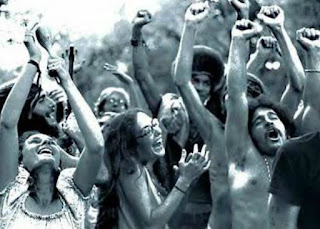
If you look at photos of groups of young people in the late 60s, 70s and 80s, the boys and girls look pretty similar. From Woodstock to the New Romantics. I dug out what I think must be a book to accompany an exhibition, entitled 14:24 British Youth Culture. It was published in 1986.

You can see the effect in these photos of punks and skinheads by Nick Knight.


But something started happening just after my son was born, in 2000. When he was small, our house was a sea of yellow, blue and red plastic. I bought his clothes from flea markets.

But I did start noticing that the brand new toddlers’ clothes in H&M were sectioned off  into “boys” and “girls”. For  “Mummy’s little man” and “Daddy’s princess."

And Lego had started producing rather “girly” toys.

And our neighbours/fellow primary school parents would have parties where men and women sat in different rooms. Or even “women/men only” parties. This latter phenomenon I initially (rather snobbishly) put down to class or maybe educational level. Or possibly even an age thing, although this seemed unlikely as it didn’t seem to reflect any kind of progress.

And that “Women are from Venus, Men are from Mars” book started a whole industry of pop-gender-psychology. Excerpts from 1950s publications coursed around the internet, demonstrating how dreadful life was for women in the 20th century. I found these somewhat suspect - my mum had two degrees and was better academically qualified than my dad.

Ten years ago, we had the whole full-blown pink glitter pony stuff spilling from the kindergarten into adult life.  

And then came the whole #MeToo thing, the victim/oppression/patriarchy stuff and the omnipresent adjective “toxic.” 

I wondered why on earth I’d want to join a “women only” group from my college, that I’d deliberately chosen because it was mixed. And whether segregation really is progress. 

This data, published recently in the Financial Times, didn’t really surprise me.


But some of the extreme reactions I saw on LinkedIn certainly did. A lot of screeching about how this is evidence that all young men are unredeemable sexist and racist bastards.

Still, I can look forward with optimism. I hear there’s a brilliant new invention called “gender-neutral clothing” for children.

Whatever will they think of next?

Friday, 12 May 2023

Find the gap?


A recent campaign from Nurofen has alerted me to a whole rich seam of Home-Grown Problem: Solution advertising that brands can dig into. An appropriate metaphor, as this is all about digging your own gap, and presenting your brand as the superhero that’s going to come along and right all wrongs and injustices.

It all started, probably, with Equal Pay Day and the Gender Pay Gap, which I remember working on with IKEA back in the 2000s. Nothing wrong whatsoever with bringing this inequality to public attention. Equal Pay Day itself was set as how far into the year women must work for nothing to be on the same standing as men. It’s cheering that the date has moved forwards from 26th March in 2010 to 7th March this year. Still work to be done, but good progress.

Now, back to Nurofen. This brand has discovered a “Gender Pain Gap” and created a campaign called “See My Pain” to help to close it. According to Campaign, “Fifty per cent of women feel ignored or dismissed by their GP when it comes to their pain compared to 36% of men.”

Aha! A villain of the piece - UK GPs. A quick search and I found that in the UK, 55% of GPs are female and 45% are male. Hmmm. If I was a  GP and had studied for years to get there, I don’t think I’d take kindly to brand and advertising people giving me a lecture about being sexist and ignoring women’s pain.

It doesn’t help that the creative execution is painful in the extreme. All the usual suspects are there in the film: plinky piano music, tearful testimonials, “victims” telling their authentic stories. And on the website, there’s a ghastly line that looks as if it has escaped from a potboiler paperback in the bargain bookshop’s sale: 5 Women. 5 Stories. 1 Painful Truth.

It’s the sort of thing that feels like a parody and makes me ashamed to be in advertising.

Unfortunately, Campaign is behind a very expensive paywall (a topic for another time) but reading the list of credits for the campaign, my jaw dropped. I won’t name the agency as you can look it up, but it’s one that has a main bit and a specialist health bit. Credits used to mention the main people who created and produced a film. But just looking at my line of work, the following were named from the main agency: Head of Planning, Planning Partner, Planning Director, Planner. Then from the health agency: Planning Director, Senior Strategist - Social Sciences, Senior Expert Strategist. 

7 Planners. 7 Excessive Salaries. 1 Crap Commercial?

Going back to those gaps. Yes, seek and ye shall find. Gaps, seams, unlevel playing fields. All humans are vulnerable to injustices of one sort or another. 

But that doesn’t make us all victims.  

Monday, 16 May 2022

The me-me-me-nopause


There seems to be no pause whatsoever in the media’s current obsession with menopause. The unstoppable flow of articles from female journalists of a certain age, with their intent on playing a sort of symptom Top Trumps are bad enough. And now there’s a hot flush of “taboo-breaking” ads each trying to out-do the next in terms of “reflecting authentic experiences”, smashing stigmas and general mawkishness.

“Our many, varied experiences are brushed under the carpet by shame and indifference” boldly proclaims one agency representative responsible for these ads. An unfortunate choice of metaphor, possibly, when describing “occasional pelvic floor betrayals (sic)”.

“We hope this campaign can reinject humanity and beauty into the life stage, subvert damaging and demeaning stereotypes and help women feel better supported and less alone. We also hope it’ll inspire people to talk to their own loved ones about the menopause — we all know someone going through it, yet we so rarely talk about it. It’s no wonder one in three feel alone during the menopause” gushes another. Does Pseuds Corner still exist? Talk about a high horse!

Now, I know some women have a hard time during the menopause, but I do find this “suffering victim narrative patronising and insulting. Not much better is the shock tactic approach employed by the brand Elvie - not directly about menopause, but certainly confronting one of the symptoms. Im glad I didnt have to walk past this billboard with a few small children in tow.

Why does a normal, natural phase in life have to be obsessed over in this way? My own feeling is that this could backfire and do women more harm than good. It brings out the very worst in the loud and narcissistic look-at-poor-me brigade.

And the cynical part of me thinks back to a whole category of feminine hygiene products that was introduced round about the time I was growing up - panty liners. Are these environmentally-unfriendly products really necessary for the majority of women? Probably not - yet they were marketed as a hygiene essential - the clue is in the name Alldays

Both Tena and Elvie have products to sell to help prevent or deal with urinary incontinence. How much of the normalisation is geared to getting new users, who could probably cope perfectly well without them, to buy these? Hunger for growth wrapped up in a saving hu(wo)manity script - it would be nice to just press the (meno)pause button on all this.

Friday, 11 March 2022

Reinventing the past


My dad used to annoy me something rotten when we were watching something like Colditz or The Great Escape by pointing out inaccuracies in anything from the pilots not wearing masks through to how many stripes a colonel should or shouldn’t have on their uniform.

Now that I’ve reached a certain age, I find myself doing exactly the same when it comes to advertising. When some bright spark starts talking about how such and such a campaign has revolutionalised, disrupted or utterly transformed the category’s communication, it’s usually to be taken with a pinch of salt.

Yes, I know - people want simple stories of from:to, of heroes turning things on their heads, of creatives taking humungous leaps. Short attention span and all that. The vogue for storytelling has a lot to answer for.

Still, it’s sometimes worth putting the record straight.

Recently, in Campaign, I read an article from a chief strategy officer from a major international agency praising Persil’s Dirt is Good campaign. Now, I also admire this campaign, despite its occasional forays into false directions. The campaign has been running for 17 years, which is pretty good going. The chief strategy officer makes plenty of good points about the campaign, yet dismisses all pre-2005 detergent advertising with a sweeping generalisation:

"Historically, the casting and scenarios for washing powder ads were dreadfully homogenous, typically oppressive portrayals of perfect Stepford mums beaming at a neat stack of clean clothing.

I wonder if he ever saw this Ariel ad from 1997 as a lad? Can you spot any of these:

    - Mums perfect kitchen?

    - perfectly folded piles of clothing?

    - oppression?

    - Stepford mums?

No, me neither. All I can see is a brilliant piece of communication, based on a universal human truth: the younger generation think they invented the world.

Sigh.


Monday, 29 November 2021

Tschüss, Mutti!


 I don’t know if there has, or will be, one of those Barbie collectors’ dolls of Angela Merkel, but somehow the commemorative teddy bears seem more apt. Not made by Steiff, but by another German family firm that’s been around for over a hundered years, the teddy bears are of the typical mohair variety with added Merkel touches - the distinctive hairsytle, the red jacket, the necklace in red, black and gold.

Angela Merkel became Chancellor over 16 years ago, in a Twitter- and iPhone-less world.

The public perception of a country is influenced considerably by the personality of its leader - and with a larger-than-life personality, disproportionately so, as was the case with Donald Trump. Angela Merkel is at the other end of the scale to Mr Trump, but on the other hand, the world has had sixteen years of her presence as leader of Germany. While some leaders are all about show, Mrs Merkel projects an impression of substance/integrity and diligence, and the Christian part of her party’s name, and her strong faith result in an impression of universal humanity and decency. But there’s also a feeling that too much is rooted in the past, with a cautiousness or resistence to change. Whether Germany’s slight reluctance to leap, devil-may-care, into the brave new digital world will be the undoing of the nation remains to be seen.

Back in 2009, I wrote a post entitled The Lady’s not for Branding about Angela Merkel’s imperviousness to branding. A lot of it still applies, although journalists have taken to the “Mutti” nickname and the “iconic” (bleurgh!) colourful jackets and “diamond” hands with glee. 

I imagine that Angela Merkel has the same reaction to being referred to as “iconic” as to the commemorative teddy bears - mild amusement. But I expect we’ll never know how she really feels, and maybe things are good that way.

Monday, 28 September 2020

Having it all (or as good as)

When I was a 20-something bright young thing starting in advertising, the women's magazines of the time were full of articles debating whether we women really could "Have It All." One person who has made a pretty damn good job of it is Rita Clifton, CBE. She's someone I can look at and say - yes, she's both personally and professionally fulfilled and very much still at the top of her game. Rita is the author of a new book, entitled Love Your Imposter.

I worked with Rita Clifton in the late 80s and early 90s at Saatchi & Saatchi London. She was my boss on the British Airways account. Reading Rita's book was like leaping into a rediscovered video-tape in a sort of Alice-in-Wonderland fashion: I was back in the crazy world of yuppies and Concorde, shoulder pads, strange new-agey gurus and The Only Way is Up.

Rita always spoke a lot of sense, but never in a preachy kind of way. She led by example, and what an example she was! Reading this book was like listening to her chatting - so different to many business books, with warmth, openness and a sprinkle of self-deprecating humour pervading its pages.

The honesty - and specifically, that you have to work and understand the language of finance to get to the top - is just one appealling aspect of this book. Rather than the glib advice to "be yourself", Rita is very clear that you have to stretch to get on, that there is a skill to knowing when to toe the line, when to fit in and when to stand out, and an art to getting yourself taken seriously. (Oh, those memories from my early career days on being lectured about "gravitas" - not from Rita, I hasten to add). The chapters on finance and numbers were a well-needed kick and reminder to me that I must always keep one eye on solid ground even if the other is floating up in the ether of visions and purposes.

I'm less of a fan of personal branding and the whole personal development shebang than Rita is, but maybe that's telling in itself. At a few points in the book, I had little aha moments about where I've gone wrong, and toppled off the career ladder a couple of times. I even wondered if I have a reverse imposter tendency now and then. The book certainly gave me food for thought, and encouragement that it's not too late, even now ...

I know that Rita worked bloody hard and made sacrifices to get where she is - and this success couldn't happen to a brighter, friendlier and all-round-good-egg sort of person. Thank you, Rita, for giving me the belief that I could make it - even if in the end my choices in life took me in another direction.


Friday, 27 March 2020

Those less fortunate


About a week ago (I have lost track of time in this weird pandemic pandemonium), in the light of supermarket shortages, the photo above went viral on social media. Comments focus on how "heartbreaking" it was, with plenty of weeping emojis and self-righteous indignation about the lack of brain cells of the loo-roll hoarders and their like.

I can imagine that most of these comments saw a tragic scene of a "poor elderly (anonymous) gentleman", sadly bowing his head in silent submission of his fate. The reality, I read later, was a little different. Anthony Glynn, a retired merchant seaman aged 79, had gone out shopping on behalf of his elderly neighbours and had forgotten his reading glasses so was squinting at his shopping list.

This reminds me of my parents, who, in their retirement helped out with "the old people" - in fact, in her 90s, my mum was still doing voluntary work for Age Concern, visiting older people who were housebound. Some of these were a good few years younger than her, of course.

In real life and in marketing (which shouldn't actually be different, but they are), there is an increasing tendency to cast everyone as a victim, to describe huge swathes of the population as generally "vulnerable" - without really saying to what in particular. And yes, human beings are vulnerable - to the COVID-19 virus for example.

But you can be resilient, courageous, even, as well as vulnerable. Society is not simply divided into "heroes and the vulnerable" or (in pre-corona days) into "the toxic and the victims". I found this article by sociologist Frank Furedi particularly illuminating on the current crisis. He calls for a cultivation of courage, and its attendant qualities of altruism, responsibility and wisdom.

Courage is not the same as fearlessness. You can't have courage without fear.

I do hope that one (admittedly not terribly high on the world priority list) consequence of the current crisis is that we'll see all those ridiculous "empowerment" campaigns for the nonsense and home-grown problem:solution guff that they are.


Thursday, 15 August 2019

Tiptoe through the tulips

I'm afraid that this post may have me sounding like a rabid Daily Fail reader, but sometimes I wonder what I'm still doing in this business.

I read that the ASA have banned the first two TV ads under the new rules put in place to "reduce gender stereotyping." Complaints had come in from the public to say that these ads "perpetuated harmful stereotypes." I took a look at the ads, expecting to see something outrageous. Offensive, even.

But I don't think I've seen anything so harmless in my life.

According to the BBC, three people (no, that's not a typo) complained that the VW ad showed women in a passive/stereotypical care-giving role. I'd assume those three people were taking the piss. But the ASA, in their infinite wisdom, have concluded that "this ad presented gender stereotypes in a way that was likely to cause harm."

Cause harm? To whom? In whose view? What possible harm could be caused by seeing a woman on a park bench by a pram for a couple of seconds in a TV commercial? What kind of a world is it where depicting someone as care-giving is "likely to cause harm"?

Maybe the woman in the ad finally had a longed-for baby after several miscarriages. Maybe she's a lesbian. Maybe she used to be a man. Maybe she used to be a wombat for all I know and care.

What on earth happened to imagination? I've posted before about the way everything seems to be taken so literally these days, with demands here, there and everywhere for people of all sorts to "see themselves reflected in advertising".

Please, please, please:

Bring back creative ideas.

Bring back universal human truths.

Bring back advertising as entertainment not a dull bloody reflection of real life.

All that will happen if this policing continues will be the emergence of new stereotypes which will quickly become as irrelevant and yawn-inducing as the old ones.

Who remembers the "new man" of the 1990s?

Wednesday, 4 April 2018

(Home-grown) Problem:Solution Advertising

Advertising in the past (especially from the likes of Procter & Gamble) frequently featured a format known as Problem - Solution. The Problem would be dramatised in a way first to get heads nodding - oh-yes-I-have-those-stubborn-stains-too-but-never-dared-mention-them. Then, in a starburst of glory, the Solution would enter the screen in a heroic pose, possibly accompanied by a man in a white coat or a super-scientific nifty demo.

Once super-hero Solution had done its job, the end benefit would be celebrated with cheesy smiles all around (particularly if the Problem was unsightly yellow stains on teeth, or similar.)

However, after a while, 'Problem Fatigue' began to set into that style of advertising. Most of the world's household stain problems, washday woes and less-than-perfect skin, hair and teeth gripes had been tackled, if not completely eradicated by the various solutions on offer. Companies started inventing problems to which they'd already made the solution. Or dilemmas which no normal person in their right mind would ever entertain. It all got a bit ludicrous.

But a few years ago, advertisers started to strike a rich seam. Problems - less physical, more attitudinal - that the advertising and marketing industry had themselves created.

Take the picture above. Back in the 80s, 90s and even early noughties, clothes and toys for young children were fairly gender-neutral. With a few notable exceptions. But for the last couple of decades, more and more sparkly pink and girl/boy-designated books, toys, birthday cards, wrapping paper  and even cakes and sweets have crept in. So, all of a sudden, there's an issue - gender stereotyping - that brands can bravely fight against. While keeping quiet about who created the problem in the first place.

Ditto Objectified Women in Advertising. There are more than a few plucky brands taking a stand against this issue. Accompanying their efforts is a narrative that suggests that back in the dark ages of the last century, almost all women in advertising looked something like this, unless they were cast into the role of mother/housewife:


And, worst of all, women at the time meekly accepted their lot of how they were portrayed. Really? Maybe most of us had more important things than advertising to worry our pretty little heads about at the time.

While we're on the subject of women, there are those now well-known enemies: flawless beauty:


And stick-thin models:


Again, these 'issues' - which were manufactured by the advertising industry itself - are being used as societal problems which the new, virtuous, purpose-led brands can rush in and solve in a blaze of awards, social experiments and tear-jerking commercials.

What takes real bravery, though, is to admit to having created (or exacerbated) a real problem, like plastic waste,  or  unnecessary additives in foods and make a commitment to do something about it:


Sometimes the world of advertising, with its issues, problems and solutions, feels rather like the world of reality TV, where the winners of one ghastly show are recycled as contestants for the next.

And no-one outside the echo chamber really cares.


Friday, 2 March 2018

Me Johnnie. You Jane.

I don't mind a bit of a brand drag party when it's done in the spirit of fun, even if there is a serious message underlying the carry-on. But with some gender-themed promotions I've seen, I do wonder  what the real motivations are. With International Women's Day coming up, my cynicism radar starts bleeping overtime.

Take the limited (to the U.S. market) 'Jane Walker' Black Label edition. This has been conceived to 'draw more women to the brand' and 'acknowledge a broader push towards gender equality.' OK, on the second part of that, there are donations to organisations supporting women's progress such as Monumental Women. (Whether building statues supports women's progress today is another matter.) But I question whether this is really going to attract women to the brand. Looking at Jane, with her cane and shiny boots, I think she's more likely to attract more men of a certain sort.

The VP of Johnnie Walker, Stephanie Jacoby, says that 'Scotch is seen as particularly intimidating to women'. Now, I don't ever recall having been seriously intimidated by a bottle of Scotch, but there you go. Ms Jacoby is allowed (maybe) to make sweeping generalisations about women because she is one. And she continues '... we like to think of our striding man and our striding woman as really walking together going forward.'

Going forward? Not after a few measures you don't. You go from side to side.

Well, I suppose if the hidden agenda was publicity, I've given them a little more.

I do wonder what awaits us next. Perhaps a gender fluid version, Jo Walker? And what about a few other famous brand icons attempting to attract more women? Can we have a Michelin Woman, maybe? Or a Mrs Peanut?

None of this is new, of course. A Pillsbury Doughgirl was around back in the wonderful gender-bendering 1970s.

Monday, 26 February 2018

Elastic Fantastic

One benefit of the wonderful digital age in which we live is that agencies have become so much more generous with their information and knowledge. You may argue that there's no such thing as a free report, or that if it costs nothing, then it has no value, but I beg to disagree.

JWT Intelligence has recently released a report on the women of what they term 'The Elastic Generation'. It's a UK report, based on research amongst women aged 53 - 72. That age group, born from the late 40s to mid-60s, are more commonly known as Baby Boomers, especially in the US. The re-name has been chosen to reflect this generation's inner resilience, energy, strength and potential - as embodied by, for example, Pauline Black of The Selecter , above.

The report, which you can download here, is pretty comprehensive, substantial, and a million miles from the kind of customer-facing horrors that, for example, P&G put out. There are all manner of interesting links and references, including the fascinating Age of no Retirement

So, many thanks to JWT Intelligence, and I'll finish with two remarks:
It may be my age, but I'm afraid I immediately associated 'elastic' with comfy elastic waistbands, much as I get your reasons for the name.
And - the big question - what happens after 72, or do I have to wait to find out?


Friday, 16 February 2018

Is segregation progress?

Back in the last century, the sexes were segregated - certainly when it came to books and learning. There were boys' schools and girls' schools, and at universities, women's colleges and men's colleges. I considered myself lucky to be growing up when all that was changing, and even made a little bit of history myself as one of the first women undergraduates at Trinity College, Cambridge.

Over the last few years, there seem to be increasing calls for segregation - in car parks, in railway carriages, and more in more in the way some products are sold and marketed. Maybe International Women's Day has brought out the worst in them, but here are just a couple of examples from the (UK) publishing industry.

Penguin are going to pop-up in Shoreditch with their "Like a woman bookshop" from 5th - 9th March. This bookshop will stock only books written by women. A Penguin spokeswoman is quoted as seeing this as a push for "women's voices being heard and taken seriously ..."

Meanwhile, there's the publisher And Other Stories who will only be publishing works by women in 2018.

In my admittedly limited (to children's books) experience of the UK publishing industry, I've noted that it seems, if anything, to be more female-orientated than male. It is rare to find a literary agent for children's books that's male.

Are these activities creating a problem where there is none? Fiction-writing, with its calls for empathy and communication skills seems to be one area, to me, where women might just have the upper hand.

Where there is a problem is in countries whose regimes and cultures still suppress women. This will not be solved by a pop-up shop in Shoreditch. It will only be solved by publishers actively seeking out authors from these countries (and I don't mean comfortable middle-class third-generation UK-based women) and taking on the risks and dangers involved, if they believe that strongly in "making these voices heard/insert next cliche."

Incidentally, I've been invited to join something called Trinity Women's Network and attend several events that they host. Having gone to a mixed college, why on earth would I entertain the idea of segregation now?

Wednesday, 13 December 2017

The Age of Confusion


If I had one wish for Christmas, or even for next year, I'd like to knock all those brands off their faux social mission bandwagons and take an axe to that plinky piano whose music always features behind such creations.

OK, maybe I'm being unseasonably miserable, and maybe the ad for Olay has a fantastic insight that will have women round the world cheering, but I find it patronising. There's the ad itself. Do people really take comments such as 'you're beautiful' and 'you've got a lovely smile' and 'I love your hair' from a random film-maker that they don't know as 'true compliments'? Oh, and incidentally, what if the film-maker had been male? Where would we have been then?

And I have never, ever heard anyone say someone has 'a lovely smile for their age.' Then the rallying call 'It's time we stop defining women by their age.' I wondered who 'we' means in this context. Who is the finger being pointed at? I can only come to the conclusion that it must be Olay pointing the finger at themselves. I wonder if they'll put their words into action?

As (Oil of) Olay, Ulay, Olaz, Ulan and maybe some other permutations and combinations, this brand has invested years in the idea of younger-looking skin.


Today, the product line-up includes products 'For fighting the 7 signs of ageing' while there are anti-wrinkle products classified into age groups 25+, 40+ and 55+. By the way, whether you're 55 or 95, you come into the 'deep wrinkles' category. Sorry.

And of course, the makers of Olay send you a wonderful magazine once you get over the age of 50, together with an incontinence pad sample. You see, they are allowed to segment and judge according to your age, but for the general public, it's a no-no.

I think Olay - or at least the people running the brand - need to work out what they stand for, and what they are offering. At the moment, the messages are mixed and contradictory. It would be a brave move, for example, to accept that many women do want to look younger, even if it's not the most PC, feminist right-on thing to want. (In the same way that many women in the Far East wish for fairer skin.)

And while much of the advertising from the last century is cringeworthy, there's a brilliant ad from the then Oil of Olay which I think captures the spirit of the brand and still works today. Better than 10,000 plinky pianos.


Friday, 21 July 2017

Speed Queen

Procter & Gamble are still sending me Victoria magazine, with its yoga for the over 50s, handy household tips, myths about bladder weakness, menopause horror stories and patronising advice on how to use Facebook. I've blogged before about how dreadfully depressing this all is.

As a complete contrast, here's part of a smashing brand campaign from Renault celebrating 40 years in Formula 1. It features Irish rally driver Rosemary Smith, who is pushing 80 (years, not mph - she's way faster than that!). In the Swinging 60s, girls dreamed of being fashion designers and boys dreamed of being racing car drivers, Rosemary Smith did both - and in this film she fulfills another dream - and so becomes the oldest person to drive an 800 bhp Formula 1 racing car. There are some super photos of Rosemary in action in all her 1960s glory, and the film conveys her zest for life - past, present and future.

Bravo to Renault for this campaign, and standing up to the potential criticism that they make cars for little old ladies. I wonder - is this maybe a crafty admission on Renault's part that yes, they do - and they're both happy and proud to do so?


Thursday, 27 April 2017

Mommy Me

Dove. The brand that kicked off a million 'Purpose Campaigns', some better conceived than others. Marketing people still cite Dove as the Grandmommy of all purpose campaigns, so it's not surprising that all eyes are on the brand when it makes its next move.

Well, Dove has had a baby. Called, unsurprisingly, Baby Dove. So far so good. And to extend the idea of empowering (women) and building self-confidence that the mother brand has, the brand communication is focussing around the idea Trust Your Way. There are no perfect moms. Only #RealMoms. At first glance, a logical extension of an idea that'll probably strike a chord. There can't be a mother alive who hasn't felt pressure from friends, relatives, society to do things in a certain way.

Here's the US launch ad:


This, apparently, sets out to 'shatter stereotypes about motherhood.' Hmm. I wouldn't go that far. Some would describe it as 'heart-warming'. I'm afraid I'd put it in the wallpaper category, with its patchwork of different moms, straight out of 21st Century Diversity Central Casting.

For the UK launch, Baby Dove went for something more controversial. A poster at Waterloo Station asking the question 'Is there a perfect mum' with the visual of a Stepford-Wife-style mother and baby.  The twist was that this image was revealed to be that of an AI-generated woman rather than a real (albeit retouched) photo - that is, a woman who does not really exist. This was all done to provoke debate. You can read about it here.

I'm not sure how much debate was provoked. I only know that if I'd caught sight of that image as a sleep-deprived mum in a hurry to get somewhere, I would probably have merely been irritated and later, felt rather stupid if I read that it was all a marketing trick. And, indeed, I question why Waterloo Station was used. Because of the large numbers of new mums who happen to be passing through, with or without their babies? I think not.

Then we get onto the next subject. Dads. There are one or two references to Dads on the Baby Dove website, but only one or two. Doesn't it make sense in the 21st Century to acknowledge that more and more young fathers take paternity leave?

And finally, isn't this all a bit 'me' focussed? What about the babies? Years ago, when I worked on Pampers and later on Hipp, we learned that mums aren't really interested in other mums. They are interested in babies, and their baby in particular. They're fascinated by their little miracle, how he or she grows and develops, and they're thirsty for information. While I worked on Pampers, the whole advertising direction changed from a focus on Expert Moms to Learning from Babies.

But maybe the new parents of the Millennial generation are different.