Showing posts with label tourism. Show all posts

Tuesday, 1 August 2023

RETROWURST: Greece August 2005


Retrowurst was in holiday modus in August 2005, full of the many and varied joys of Greece. Food, football, holiday fun - but was this a short-term infatuation on the part of the Germans, following the Greeks’ Euro 2004 success?

--------------------------------------------------

The news is official- in Germany; at least, Greece is the new Italy. While that may sound historically incorrect (wasn’t it the other way around in the old days?) there does seem to be a gathering body of evidence here that Greece is taking over Italy’s pride of place in the Germans’ minds, hearts, stomachs and suntans!


It all started about a year ago with football. The surprise winner of Euro 2004 were the Greeks, who, from the opening game on surprised the crowds in the stadiums and in front of the TVs. While critics continued to point out that the football that the Greeks played was uninspired and ugly and others muttered about luck in a sort of sour-Retsina-grapes fashion, the Greeks progressed through the first round, the quarters and semis to the final itself. Now, criticism for playing ugly football and muttering about good luck are well-known to any supporter of the German football team and, if this wasn’t enough to get the Germans behind Greece once their own luck was (uncharacteristically early) up, a quick glance at who was on the sidelines was.


Otto Rehhagel, a not uncontroversial veteran of the Bundesliga as player and trainer, coached and trained the Greeks to victory. Rehhagel has often been criticized for his “old-fashioned” methods in his home country. He famously answered his critics with the reply “winning is what is modern.” Herr Rehhagel has not only gained a couple of name changes since the tournament (“King Otto”, Rehakles”) but also is now an honorary citizen of Athens and was voted “Greek of the Year” by a leading Greek newspaper.


The drama of Euro 2004 was followed closely by the excitement and pageant of the 2004 Olympics, the Opening Ceremony of which also featured Herr Rehhagel/Rehakles. Two weeks of surprise, scandal and achievement under the Greek sun certainly continued to whet German appetites for the country.


Some rather less culturally mighty events also saw Greeks triumphing. In the first German series of “I’m a Celebrity- get me out of here”, Costa Cordalis was crowned Jungle King. Costa Cordalis is a German-adopted Greek singer who had a couple of hit records in the 1970s which are still played at Karenval when people are too drunk to care how cheesy they are. For Costa Cordalis, you need to think Demis Roussos minus the kaftan and a few kilos. And, on the subject of tacky Europop, the Eurovision song contest was won this year by none other than Greece.


On the holiday destination front, many people in Germany, scared-off by terrorist activity in Turkey and Egypt or by natural disaster in the Far East are booking up holidays in Greece. Even the recent Helios plane crash has not much dented the impression that Greece is a “safer” holiday destination than many. Greece has never been associated with the sort of Club 18-30 excess (as in Kardemena for example) in Germany that certain Greek islands and resorts are known (and avoided) for in the UK. While Germany spawns just as many undesirable holiday-makers as the UK does, most of them tend to congregate in certain unsavoury bars and resorts in the Balearics. For historical reasons, the Greeks are probably more prepared to tolerate drunken Brits than drunken Krauts.

Greece has always been a little overshadowed by its two Mediterranean neighbours, Italy and Turkey, from a German point of view. Italy has long been a popular travel and holiday destination for the Germans from Goethe’s time onwards. After all, it’s just over the Alps and these days you can drive there in a day from all but the northernmost areas of Germany. Italy is to the Germans as France is to the Brits - the epitome of the desired lifestyle, food, drink and culture. Turkey is a more recent influence but a very noticeable one with the presence of a large Turkish community within Germany. Turkish shops and restaurants are widespread and popular with many Germans and Turkey itself is a well-loved holiday destination.


This year, however, tourism to Greece has really taken-off. It is almost impossible to get a flight at this stage of the season to any of the islands and many tour operators seem to be booked-out. At least every second person amongst friends, neighbours and colleagues seems to be holidaying in Greece this year.


The discount retailers have really picked up on this trend with Greek-themed offers throughout this summer. For example, Plus (www.plus.de) have a wide range of Greek products on offer this week. There is Imiglykos wine for €1.49 (you’d probably be prepared to sing-along to Costa Cordalis songs after this!), Eos Ouzo for €4.99 (ditto), Olive Oil from Krete, Zeus Zaziki and all manner of stuffed and marinated olives and peppers. It’s not just consumables on offer either: Plus also have a mosaic garden chair and table set, olive and pistachio trees, special dishes for the stuffed and marinated olives and all manner of table linen with an olive design on offer.


The other discounters such as Aldi and Lidl have also had their Greek ranges with everything from cookbooks to garden statues. So it certainly seems as if those that are unlucky enough not to have booked their flights to Greece early will never-the-less have ample opportunity to create their own Taverna in the back garden, sit back in their mosaic stools, slug back a bit of Ouzo and sing along to Costa Cordalis. For my part, I’m off to Paros at the end of September although it may well be that we’ll have had enough of Greece by then!

--------------------------------------------------

Sometimes, looking back at Retrowurst, I wonder where to start, as the changes are so fundamental. But, I can safely say that the German passion for Greece is still very much alive and kicking like a mythical winged horse. The discounters are still celebrating Greek weeks with regularity, offering Mythos and other goodies.

Fifty friends of ours celebrated a 25th wedding anniversary in Matala recently, and the Greece newbies were every bit as enchanted as those who’d been visiting for decades. And last Sunday, our local band managed a rendition of Griechischer Wein just before the heavens opened and rain stopped play - and Fest.

Yamas!

Monday, 13 March 2023

The pylon wears Prada


I’ve been known to come back from ski holidays with an Extrawurst or two hidden in my bag along with the smelly socks, and this year is no exception.

For 2023, it’s a very striking campaign spotted on ski lift pylons, of all things. For Prada, no less - and there’s something rather splendidly unexpected about the combination of high fashion glitz and heavy industrial utilitarianism. Like Gucci and trainspotters. The campaign for Prada Linea Rossa may already be in its second year, as the case study from the agency responsible is dated 21/22. alpdest position themselves as “the alpine media experts”, offering out of home advertising in ski resorts throughout Europe. Media opportunities include ski racks, branded gondolas and, yes, 150 lift pylons across Switzerland’s swankiest ski resorts.

Sadly, though, I don’t think I’ll be splashing out on any of the Prada gear, gorgeous though it is. A €4,250 ski jacket is a swank too far for me.

Tuesday, 10 August 2021

Isn’t it ironic?


 Three or four years ago, I made a calendar for my son’s Christmas present. The calendar was entitled “Beautiful Bruchköbel” and featured our home town’s architectural highlights, many of them sadly demolished now.


We both love that calendar - I loved making it, and I think my son still has it on the wall somewhere. The point being that we both love Bruchköbel, warts and all. 

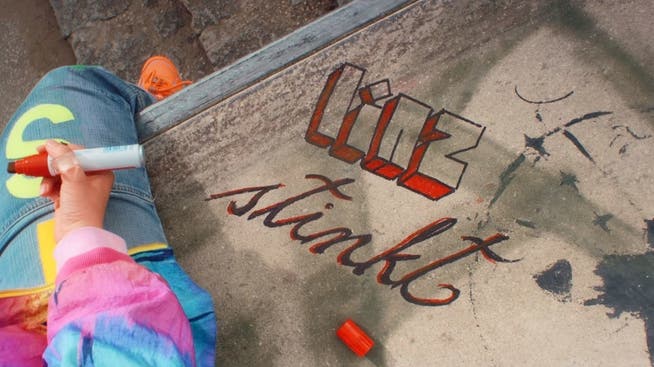
I was reminded of “Beautiful Bruchköbel” by the cinema ad from the tourist association of Linz to attract visitors to Austria’s third-biggest city: Linz ist Linz. Even if you don’t speak German, I’m sure you’ll get the drift. It's a bit warts and all. Linz is described as being “for old people”, “gruesome” and “a bit rascist”, amongst other things.


There have been complaints. From the mayor, from restauranteurs and hoteliers.

But don’t we keep hearing about authenticity in advertising? Isn’t this the big thing? I find it sad that the ad industry is so po-faced and serious these days. A bit of self-deprecating humour, a touch of irony ... it doesn’t seem to be recognised or appreciated any more.


Linzertorte made by me

I’ve never been to Linz myself (although I love Linzertorte), but after seeing this ad, I’m really quite tempted.

Better ironic than (yawn) iconic, I say. 


Thursday, 21 November 2019

Manhattan or Mainhattan? My favourite campaign of 2019

2019 is far from over and can still throw us a few surprises, but I'm going to stick my neck out and say that this is my favourite campaign of 2019.

Normally, expressions such as "programmatic advertising", "data-driven creativity" and "personalised ads at scale" leave me cold (and feeling old, to boot.)

But the campaign from Deutsche Bahn to encourage summer holidays in Germany is all of those, and a masterclass of how it should be done. You see, behind it all is an idea. It's a clever idea that would make a fine poster campaign. Indeed, it may have stuck at being a poster idea had the client had a higher budget.

The genius of the campaign is how Ogilvy Germany personalised the campaign, using destinations that people were searching for online, and matching them with their German Doppelgängers, faster than you can say ... Doppelgängers.

It's a triumph of collaboration - at times over adversity. As well as the budget, which forced the thinking down the "digital only" route, there were challenges sourcing images ("how many do you want"?), with GDPR (using people's Facebook data). And that's before you start on the different mindsets of advertising creatives (the BIG Idea) and the digital performance people (trained to test and learn).

But Ogilvy, Getty Images, Spirable and Facebook all got it together for the client, resulting in the 2 million special price train tickets being sold out in two thirds the normal time.

Who needs exotic locations to do a wunderbar ad campaign?

Monday, 2 September 2019

Conspiracy Communication


Do you know anybody from Bielefeld?
Have you ever been to Bielefeld?
Do you know anybody who has ever been to Bielefeld?

The answer to these questions - even in Germany - is likely to be "no" from most people, and should you answer yes, the likelihood is that you've been brainwashed by THEM. The rumour is - since the early days of the internet 25 years ago - that Bielefeld doesn't really exist.

While devising a campaign for the town, how clever of the Bielefeld Marketing team to avoid the usual route of raiding the happy-smiley stock photos and turning the negative on its head.

The campaign, Die #Bielefeldmillion is offering €1m to anyone who can prove incontrovertibly that Bielefeld doesn't exist. And the campaign has had huge national and international resonance - emails from Azerbaijan to Brazil,  news reports from Australia to India, local firms such as Dr Oetker joining in on the fun.

There 's a lesson here - not just for place marketing, but for any brand. It takes a healthy dollop of self-confidence and humour to admit your brand isn't perfect, and is even the butt of jokes. But something imperfect is also lovable, as both Marmite and IKEA have long proved.

Coming back to Bielefeld, though - if you want to win the €1m, you'd better be quick: the closing date is 4th September.


Friday, 29 March 2019

More than a destination

This time last week, I was whizzing down the slopes of the sunny Dolomites, enjoying a swig or two of Lagrein, munching my way through a Speckplatte and generally admiring the marvellous efficiency of the ski lifts.

I have blogged before about destination marketing, but the South Tyrol, and the way it is marketed, is far more than a destination. The remit of the marketing stretches beyond tourism to agriculture, food and wine and now natural products, for example, in the health and beauty category.

At the heart of it is the umbrella brand created for this unique region, which was originally created and launched in 2005, and has evolved further since. The idea behind it all, or the essence of South Tyrol, if you like, is about "symbiosis of contrasts." Now, that might sound rather intellectual-bullsh*tty (and I am translating from German and Italian here) but it makes a lot of sense. In South Tyrol, Alpine meets Mediterranean, spontaneity co-exists with reliability and there's the best of both nature and culture. It shouldn't work, but somehow it does.

The logo is based on a real Dolomites panorama, and the colours are chosen to reflect the contrasts and variety. It's used from a quality sticker for apples through to livery for trains:


I even saw a ski-lift or two sporting these colours!

Normally, a dual-language brand expression could be a challenge. But, in another example of "symbiosis of contrasts", the use of both Italian and German adds richness rather than complexity.