Showing posts with label politics. Show all posts

Thursday, 22 May 2025

Heads or tails?


I got the sad news yesterday that the headmaster of my first school passed away recently - although he did achieve the grand old age of 96. There’s a Facebook group for ex-pupils of the school and I spent some time browsing old black and white school photos. These were taken on a summer lawn, in front of the rhododendrons, many moons ago. 

The photos were usually arranged so that there was a group of taller, wholesome-looking girls standing in front of the prize cups and trophies. A combination of being small for my age and slightly precocious as far as learning went meant I was never destined to stand behind the cups. I’m somewhere off to the side - in one photo with a badly concealed snigger. I was prone to giggles about absurd and puerile things in those days. Still am.

When I reached secondary school, the teachers were probably relieved I didn’t seem quite as oddball as my brother, who was rumoured to "drink ink and play his trumpet in the toilet.” I was never the out-and-out rebel, bad girl or geek, but I did have a slight dusting of eccentricity and subversiveness. 

Bookish and useless at most sports, I never really wanted to be like David (or Davida) Watts, in the words of The Kinks’ song (performed here by The Jam). When I got to the Sixth Form, almost everyone was made a Prefect. I was one of the few that wasn’t. That changed when I passed the Cambridge Entrance exams, though. I think the head of sixth form even invited me for a glass of sherry in his office. But I shrugged off the smarminess for what it was, played the game and wore my Prefect badge with apparent pride. Although I was more likely to have my nose in something like Colin Wilson’s The Outsider than be patrolling the corridors during Prefect Duty.

I did manage to collect a couple of “Head” titles during my career. I was “Acting Head of Market Research” during our boss’s maternity leave, then later “Head of Planning” at Saatchi Frankfurt. But along with this, I can remember at least one telling-off from a (female) boss about my dress sense. I sat there wearing a long yellow-gold jacket, leggings and pointy black shoes with gold embroidery, like some sort of gender-fluid member of Showaddywaddy. If I’d been tarty or scruffy, it would have been easier to deal with. All the boss could come up with was that the outfit didn’t convey “corporate gravitas” or some such. Again, I shrugged and smiled. Weren’t we an ad agency? Not bloody McKinsey?

But there were plenty of colleagues who did tow the line. Stick to the agenda. They were safe pairs of hands who’d probably stood behind the cups in the school photo. I note that a lot of the women I worked with in the past are now OBEs and Dames. Of course, there were the out-and-out rebels, too - and they were celebrated accordingly.

But I was always a "neither-nor" case. A bit of a chameleon, fitted in when it suited me. Had my independent thoughts but often kept them to myself. 

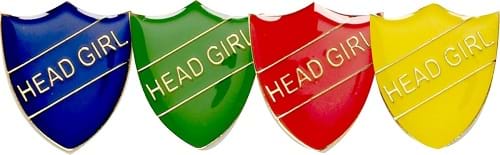
I found this blog post about “Head Girl Syndrome” a few years ago. It’s a little dated now and has a rather bitter tinge - and something of that "either-or" binary. But a lot of it resonated with me. A Head Girl is “a good all-rounder - pretty, popular, sociable and well-behaved.” The description has never fitted me particularly well. The long yellow-gold jacket was better. The author points out how the Head Girl type is favoured by committees, peer review processes, voting and anything that favours consensus. And how “modern society is run by Head Girls, of both sexes, hence there is no place for the creative genius.”

There is a place for the creative genius, of course, but it’s not at the top of a government or commercial organisation. 

Since 2013, when that article was written, we’ve seen yet more dumbing-down and risk aversion in politics and commerce as these are further driven by frameworks, processes, ideologies and dogma. There's a distinct lack of emphasis on independent thought. And it’s pretty obvious that the advent of AI will advance all this normalising and homogenising further despite a lot of noise about neurodiversity. Head Girl CVs are a very attractive catch for AI.

This is a brilliant article by James Marriott of The Times (sorry about the paywall) in which he bemoans the “normie-doom spiral”. In essence:

21st century Britain is beset by mediocrities who rise to the top not by doing anything right but by not doing anything wrong.

Now, I’m certainly not dumping all ex-Head Girls and Boys in with this. I’ve come to terms with my own lack of Head-Girlness. Nor do I hold myself up as a some sort of wronged and unrecognised creative genius. 

I certainly haven’t got all the money that David/a Watts has got - but I’m not a “dull and simple” lass, either.

I’m the Tail Girl. Wagging most of the time, doing the stuff I like, rather than being a nodding dog. 

But I have a sting tucked away, too.


Monday, 2 September 2024

RETROWURST: Women September 2006


Now and again, I find something in the Retrowurst files that I genuinely can’t remember writing. A symptom of ageing brain? I’m not convinced, as much of the category and brand-related stuff seems to have been filed away in a readily accessible place. Discounters to drugstores, beers to burgers. Maybe there’s an element of denial at play, as these pieces tend to be about social issues rather than marketing and brand communications. But what they have in common is that, reading them back nearly two decades later, they feel as if they hail from a different world.

This piece, taking the not-particularly-niche subject of “women”, used two self-help type books (one light in tone and tongue-in-cheek, the other sadly not) to introduce the theme of the lot of women, especially mothers, in Germany in the early 2000s. 

Does anyone remember Das Eva Prinzip by Eva Herman or Das Uschi Prinzip by Meike Rensch-Bergner? I wonder if the books are even still in print ...

----------

A well-known news reader and TV presenter is causing a storm here in Germany with a book that very few people have yet read but that on which almost everyone has an opinion to offer. The lady in question is called Eva Herman and she has called her book “Das Eva-Prinzip”. It really doesn’t matter one jot if you’ve never heard of Frau Herman as she and her book only really play a catalytic role in re-lighting a fire that has been smoldering away here for years.


In “Das Eva Prinzip”, apparently (as I also haven’t read it as the publication date seems to keep moving backwards and forwards like a silly girl who can’t make up her mind), Frau Herman sets out the case that feminism was a big mistake and has only led to women being unhappy, denying their innate womanliness and losing out on having children. It is a call to recognize that men are men, women are women, and men should be out working or hunting and bringing home the bacon and Bratwurst while women should stay at home and look after the children. If we all stuck to the way things should be, a lot more children would be born in Germany, and it would be a much happier place.


This jolly little tome, incidentally, is hot on the heels of another sort of Prinzip“Das Uschi Prinzip”, which was a sort of German version of “The Rules”, giving tips and advice to young women on how the “catch the man of their dreams” by using their womanly wiles to the full rather than behaving like some sort of aggressive second-rate man. (See www.uschi-und-uschi.de where the author has made a whole concept out of this, offering seminars, workshops and the like!)


But let’s get back to Frau Herman. Interestingly, she doesn’t seem to have lived her own life so far according to her own principles and one can only imagine that she has written the book out of the kindness of her heart to stop young women from making the same foolish choices and mistakes that she did. Eva Herman studied for a career in hotel management and moved into journalism and TV. She has already written a number of books on such subjects as breastfeeding and how to get your child to sleep through the night (A sort of German Gina Ford.). In between she has gone through four husbands and has one child from the third of these. Just the sort of person that you want to have telling you how to run your life!


Some commentators have gone as far as to say that Frau Herman’s book has nothing to do with German society as a whole but is her own personal outpouring or sort of therapy to still her longing for a perfect family life that seems never to be satisfied. Eva Herman’s father died when she was only 6, her mother worked and it seems that, to compound this unhappiness, little Eva was not breastfed.


Whether we choose to agree with her or not, Eva Herman’s book argues for one solution to one of the main issues that is facing Germany in the 21st century: one of the largest countries in the E.U also has the lowest birthrate at just 1.35. The future economic implications of this are clear so maybe we shouldn’t criticize Frau Herman too much, whatever her motives, in at least addressing the issue and presenting one way forward (or backward, depending on your perspective!).


There is a strange paradox in Germany whereby men and women have equal opportunities as long as the women are childless. In the school and study years, girls are even ahead of boys in terms of academic qualifications: there are more girls than boys with Abitur, which is like German A-Levels and it is expected that, by 2010, more women will go on to further education than men. But it seems that more and more intelligent and well-qualified young women are opting out of having a family:


26% of 37-40 years old German women are childless.

33.5% of women with further education in Germany are childless.

42% of women born in 1960 who have higher education are childless.


The reason for this is not, perhaps, as Eva Herman suggests, that these young women are making a mistake by pursuing a career, but more because German society in its structure and attitude makes it extremely difficult for women to have a career and a family. Structurally, it starts with the availability of pre-kindergarten childcare which is almost non-existent. Women are encouraged not to go back to work for the first three years (they are not financially rewarded but are at least assured of a job when and if they go back, although the job may bear little resemblance to the one that they left.) It is not unusual for those women that can to plan their children at 3-yearly intervals so that they can start the next round of Erziehungsurlaub as soon as the last one finishes. Employers, with odd exceptions, aren’t exactly welcoming when women come back, and one gets the feeling that a woman who comes back and works part-time is resented as a cost who probably needs re-training and who almost certainly is going disappear punctually each day rather than being appreciated for what she can bring to enrich the company.


You may have noticed “part-time” there. Why can’t these women come back and do a full-time job, you may wonder. The answer lies in the German school system, another example of an element of society that has not kept pace with the modern world. The fact is that in Germany, most children, from the age of 6-19, only attend school in the mornings. It is expected that someone will collect them at lunchtime, feed them, supervise their homework (which also starts at age 6) and then organize and ferry them around to any sports or hobbies in the afternoon. While most UK schools have sports teams, children in Germany have to join a club independent of the school to play football, hockey or whatever.


Some day-care places are available for primary school children, but these are few and far between, and even then, these places tend to be until 2 or 3 o’clock and only if you are very lucky, for a “whole day” which usually means until 4:30 or so. Priority is given to single mothers and cases of financial hardship, not to “dual earners”. With this kind of system in place and no signs of change in the near future, it is no wonder that many bright young women are choosing career over children. And if the system itself wasn’t bad enough, the overwhelming attitude from society in general doesn’t make things any better. There is an expression that seems only to exist in Germany – Rabenmutter – literally “Raven Mother” for any woman that dares to think that she might be able to carry on her career and let her children play happily and supervised by professionals in the company of other children until the late hour of 4pm! Why ravens should be party to this sort of insult is beyond me – there seems to be no biological basis for this and one would have thought that maybe a cuckoo was a better analogy. But perhaps the Germans just love their cuckoo clocks too much to use the bird’s name as an insult!


Interestingly, IKEA have timed their latest advertising campaign here impeccably to fit in with this controversy. Posters have appeared around the cities with provocative messages such as “Women must combine household, children and career!”, “Women who want children must give up their career!” and “Men must go to work, women must change nappies!” This is all a teaser, of course for the IKEA way of a more individual and comfortable life at home, whatever way you choose to live, work and have a family. And that’s the key to it, of course. German women don’t need any more Principles from Eva, Uschi and the rest, just flexibility in the system and support and tolerance from society to run their lives in the way that suits them.

----------

Eighteen years later, many of the mums I knew from the Elterbeirat or Kinderturnen are now Omas. And yes, that is reflected in the German birthrate. The lot of working mums has improved a little, with more Kindergarten places available, for children aged 1-3 as well as the 3 - 6 traditional age group. With increased female leadership in politics and business, and fathers playing a bigger role in Erziehung, society attitudes are shifing. Slowly, but shifting never-the-less.

The birth rate reached its low point a couple of years after I wrote this article, in 2008. It crept up a little, due to increased immigration, but has crept down again in recent years, although not below the 2008 low point.

The rate of childlessness rose up to around 2012, but seems to have stabilised, with around a 20% incidence of childlessness amongst all cohorts born 1966 - 1977 (women currently aged 47 - 58). But the rate is much lower amongst women with a low level of education - at around 11%.

And what of Uschi and Eva? 

Meike Rensch-Bergner is still writing, and also busy coaching, podcasting and running businesses connected with sewing, tailoring and body-positivity in general. 

As for Eva Herman, well, she was sacked from her prominent position as a news anchor by ARD in 2007. She made some unwise remarks about gender roles in Nazi Germany and has now drifted into writing and podcasting outside of the mainstream on Telegram. Topics cover everything from politics and gender roles to spirituality and health.

I haven’t ventured in to see if she’s got anything worth saying, or whether it’s all conspiracy theories and bonkers rants. But then again, I never read her book, either.
  

Thursday, 1 June 2023

RETROWURST: Vegetarianism June 2005


For this month’s Retrowurst, I’m biting into a rather meaty topic. Or not. Back in 2005, I could count the number of true vegetarians that I knew in Germany on the thumbs of two hands. And I remarked that vegetarianism seemed rather less militant and in-your-face here in Germany compared to the UK. How have things developed in the last 18 years? Has Sauerkraut Strudel taken over the world? Or is Schlachtplatte still the order of the day?

--------------------------------------------------------------------------------------------

The other day, I came across a rather unusual situation in Germany - at a lunch for twelve people, half of these decided that they wanted a vegetarian option rather than the roast pork (no surprises there!) that was on offer. The restaurant was extremely obliging and managed to conjure up six portions of something rather tasty involving aubergines in less time than it takes to say Schweinshaxe und Sauerkraut.


What was unusual was that so many of the party wanted a vegetarian option: maybe, predictably enough, all were female, but, interestingly, no-one was actually a “real” vegetarian – it was just that it was a hot day, we were eating outside and fancied something a bit lighter than slabs of roast pork and gravy. In fact, I can count the number of “real” vegetarians I know here in Germany on the thumbs of two hands, whereas almost everyone I know in the UK is either a vegetarian, a “demi-veg”, a poultry-and-fish only, whatever that’s called, trying to cut down on red meat, has given up beef since BSE or is going through some phase involving some combination of the above.


I tried to find some figure on the internet to support this apparent absence of vegetarians and found that, actually, there are more vegetarians in Germany than in the UK, in terms of pure numbers and that around the same % (about 7-8%, depending on which survey you look at) in both countries are actually vegetarian. These figures seem to contradict people’s experience: for visitors from the UK who have a vegetarian inclination, Germany does not seem a particularly vegetarian-friendly place. I often hear complaints that even innocent-sounding soups, fried potatoes or salads turn up with pieces of bacon or other meat in them and that there don’t seem to be very many vegetarian options on menus, let alone vegetarian restaurants.


My first observation on this apparent paradox is this: in Germany, vegetarianism is perfectly acceptable but the vegetarians themselves are not as vocal and “militant” as they may be in the UK. In good restaurants, vegetarian options are always available, but you have to ask for them. The chef will then prepare something almost tailor-made to your tastes and to what is in season. In Italian, Turkish or Greek restaurants, the usual meatless choices are there for the taking (or eating-in) but no menus are emblazoned with V-Signs or other symbols of militant vegetarianism. There are no trendy vegetarian cooks on the TV or blatant “veggie-only” brands of ready-meals in the freezer cabinet. Vegetarians in Germany hide their light a little under a cabbage leaf. What vegetarian restaurants there are tend to be in a bit of a 1970s sackcloth and sandals time-warp- humble, worthy and unassuming. Although vegetarianism has grown since the BSE crisis, there just doesn’t seem to be the “noise” about it that one finds in the UK. Perhaps it doesn’t help that one of the German-speaking world’s most famous vegetarians was He Who Must Not Be Named.


In contrast to the unassuming vegetarians, meat-eaters in Germany are a proud and loud lot. The Germans are totally unapologetic about meat, and no-one is regarded as a pig or a glutton if they manage to devour three or four large steaks at a barbeque - and that’s just the women! A good proportion of red meat in the diet (as long as it is from pigs or cows of German origin) is regarded as normal and healthy and certainly not something to be ashamed of or to try and cut back on. There is a total lack of squeamishness about meat and its origins here. Whereas meat is trimmed and shaped and then wrapped in layers of plastic in the UK supermarket, traditional butchers here still enjoy a roaring trade; meat is minced, sliced or carved with skill and pride before your eyes in Germany. No-one gets too upset about bones, meat on the bone or identifiable parts of the animal here. At one wedding I attended, the main dish was Spanferkel or roast suckling pig (and no, there wasn’t a vegetarian alternative although one could have gnawed on a pretzel or two) and the pigs’ heads were put on display and even photographed amid the other decorations on the buffet table, something that my UK sensibilities found a little odd. Small Gasthofs and pubs will regularly hold something called a Schlachtfest, where meat and sausages from a newly slaughtered pig will be consumed with great gusto. And I remember another occasion where a vegetarian friend of mine from Switzerland turned an interesting shade of green and almost had to leave the table as he watched a group of slim young girls (the types that look as if they survive on lettuce leaves and grated carrots) devouring boiled pork knuckle off the bone in an Apfelweinkneipe in Frankfurt.


So there you have it – it is not so much that vegetarianism is absent or frowned-upon in Germany- it is simply that it can’t make itself heard above the raucous meaty cacophony that is integral to German life. Perhaps it is because the German meat industry has, as yet, proved itself to be BSE free or perhaps it’s because the Germans are so much closer to the land than we Brits, but the day of getting the average German to swap his Schnitzel for a courgette crumble looks to be in the far-distant future, if at all.

--------------------------------------------------------------------------------------------

The first thing that struck me, reading this again, is that I have zero memory of that aubergine lunch, which is rather worrying. Perhaps I made it up. The second thing that’s interesting is that there’s no mention of “vegan”, “plant-based” or “climate change” whatsoever in that article.

Diet has become political in the last 18 years, here in Germany too, with the Greens in power. And this makes it difficult to figure out what is actually happening. I found plenty of articles in UK news sources to suggest that Germans are going vegetarian en masse. But on closer inspection, these are mainly based on interviewing young trendies in Berlin, and an excuse for dreadful punny headlines involving the word Wurst. Who on earth would resort to such cheap journalism?

What reasonable-looking data I could find suggests that vegetarianism is around 10% of the population in both the UK and Germany. And I’d probably have to summon fingers and thumbs on both hands now, especially when it comes to my son’s friends. But on the other hand (hang on, I’ve used both already in the last sentence), meat consumption in Germany is still pretty high compared to the UK and not really falling that much.

I suspect that, as usual, the answer is “both”. More flexitarians and people dipping into veganism and vegetarianism when it suits them, but also more people enjoying the increasing variety of meat and meat products offered. 

And one brand that has got catering for all down to a fine art is Rügenwalder Mühle - a trusted brand that’s been making sausage and cold meat products for nearly two centuries, but is also knocking out credible vegan products faster than you can say Bierwurst.  

Monday, 24 April 2023

Artificial Politics?


There’s a certain knack to getting "cultural relevance” (my jury’s out on that term at the moment ...) just right, but today I’ve got an ad that does it 100%.

I am sure I’m not the only one whose Instagram feed is swamped with AI-generated art. Some of it fascinating, clever, thought-provoking. Some, less so.

This ad from Fridays for Future (by Fred & Faris, Los Angeles) was released for Earth Day and timing doesn’t get much better than that. I reckon that even within a month, we’ll be sick to the back teeth of AI-generated artwork in advertising. But this is the first campaign I’ve seen where it’s been used to really good effect.

“Earth is no toy”  is a clever idea, well-executed. It’s topical, arresting and fits the “brand” (I expect Greta would smack me round the chops for using that expression) perfectly. OK, I didn’t get that the politikids were meant to be holding the earth like a ball until I read the background, but does that matter?

I would love to see a version shpwing what the G20 leaders really looked like as children. 

Thursday, 23 June 2022

Games of Life


It’s often been observed that we learn how to live through play, starting with playing shops or house as toddlers. My childhood included games that involved a historic or sci-fi fantasy world, such as Escape from Colditz or Thunderbirds, but also games that later found direct application in the grown-up world: Monopoly or Go-The International Travel Game.

But these days, do children really aspire to be a jet-setter or propery tycoon? I was interested to hear this week about a new game, developed by a group of young entrepreneurs, whose theme is a little closer to today’s aspirations - tackling climate change.

The group in question is Carducation from a school in Kelkheim, just down the road from here. They quote the inventor of the Kindergarten concept, Friedrich Fröbel - The source of all that is good lies in play (or thereabouts) and their business idea is to educate about important issues via card games. It’s a sort of “Cards for Humanity."

The first card game is called Ecucation - a strategy game in which businesses must balance profit with environmental responsibility, and, as in real life, catastrophes such as flooding or forest fires can turn up unexpectedy to scupper the best-laid plans.

The young start-up has been declared the best school firm in Germany by the Junior-Projekt, which encourages and fosters entrepreneurial business in schools. And the cards have already been seen in the hands of Chancellor Scholz and Vice-Chancellor Habeck.

All-in-all, a neat idea, and one that a few brands could learn from in their ESG communication. All the best to Carducation for the European final in July! 


Friday, 18 February 2022

Slave to the algorithm


I was a latecomer to Wordle, and snuck in just before the puzzle was taken on by The New York Times. It has kept me amused for a couple of weeks, even if I’ve been kicking myself for breaking my winning streak due to US English spelling (not-twigging-of) a little while ago.

Yesterday, though, I was completely bemused. I put in a five letter word, nothing obscure, and was told that this word was not on Wordle’s list. 

The word in question: “slave.” I genuinely wondered if this was a hiccough in the software, so tried on another device. Same result. Intrigued, I searched for an explanation and found news articles to the effect that there are various words that the new owners of Wordle don’t allow - the word for a female dog, for example, or “words associated with racism” such as “slave”. 

There were, no doubt, words for the idea of “slave” long before the English language evolved. When I think of the word, yes, the Atlantic slave trade comes to mind, but I also have associations with earlier history, Roman times, and the present day - I’ve often been asked to sign documents assuring potential project partners that my little one-woman show does not involve slavery in any part of the value chain.

Then there are the more abstract uses of the word - as in that glorious 1980s anthem by Grace Jones. Metaphorical uses, figures of speech, analogies, word-plays. It’s a word with many uses, meanings, nuanaces, contexts.

I’m a writer, and I’ve commented before about the homogenisation of language, as well as the cultural poverty (am I allowed to say poverty?) society is walking into with predictive text and suggested words and phrases. It’s bad enough when suggestions come as to which words you might like to use, but when words themselves disappear from lists and dictionaries? I know language changes all the time, but I am not talking about weird obscure historical words that have had no application for the last five hundred years here.

It’s just a game. OK, it is. But if it’s a game where I have to question every five-letter word and wonder whether it could offend someone, effectively censoring my own vocabularly, then I think I’d rather go back to the Internot and find my ancient Scrabble board game where I can use whatever words I see fit.


Wednesday, 25 August 2021

Tutti Frutti Tonality


In this post from five years ago, I bemoaned the homogenisation of logos, films, language, pretty much everything, in an increasingly formulaic “smoothie society”. So it’s a little ironic that a brand that's ruffling a few feathers at the moment with its tone of voice just happens to be the original German smoothie brand and market leader - True Fruits. 

The current hoohah is between True Fruits and supermarket Edeka. True Fruits had the bright idea, with the election coming up, of a topical brand campaign entitled Die Qual der Wahl (“The agony of choice” or thereabouts). Smoothie bottles are decorated with the names of the six biggest parties in the Bundestag with nine points from the party manifesto printed on the bottles - but two of these aren’t genuine. Can you guess which?

This alone would probably not have caused too mainly raised eyebrows had the company not decided to actually produce the bottles and deliver them to supermarkets. Edeka, for one, were unamused at the idea of displaying an AfD bottle on their shelves, so sent these back. A lively discussion has ensued between the two brands: what is democracy? Is information more important than virtue signalling?


True Fruits was Germany’s first smoothie brand, founded in 2006 by three student friends from Bonn. From the outset, they never wanted to ape Innocent with its goody-goody image and rather twee brand voice, or try and push out-and-out healthiness. So instead they have always emphasised their quality credentials, combined with a provocative tonality in their communication, more reminiscent of Oatly or BrewDog.

In the last few years, brand communication has sailed fairly close to the wind, with smutty humour eliciting complaints of sexism as well as making light of racism (“Our token Black”). Much of this is below the radar (as is the current debate) of those outside the ad/marketing community, and the brand continues to enjoy moderate growth.

What’s interesting is that True Fruit’s brand communication is done in-house - they don’t have an ad or PR agency. This is similar to the Oatly model. In-house communication and agencies used to be rather sneered at by creative agencies - typically it would be something like a Korean car brand who’d take this approach.

But these days the tables are turned. Now it’s the in-house communication that’s often more edgy, more provocative, braver - and more distinctive. The big agencies have had their wings clipped in the interests of diversity, inclusivity and equality - or someone’s interpretation of what those values imply. It’s unlikely that we’ll be seeing the likes of this again: 


Poster for Club 18-30, Saatchi & Saatchi London

Monday, 18 January 2021

Whatever happened to the inno-net?


I've remarked before how the relationship to the internet has changed over the last few decades - from the intrepid surfing and exploring of the early days, to amiable stumbling through to passive feeding. Well, of course, it was never going to stop there. The last couple of weeks have made me wonder if a better analogy for" being fed" could be "unwittingly poisoned".

And I'm also wondering if, these days, it's less Brave New World and more 1984.

In the late 90s and early 2000s, with the advent of Web 2.0, an optimistic and idealistic mood prevailed -  how wonderful that each and every member of the human race could communicate with anyone else they pleased - across and beyond borders. Could social media be the instrument of world peace?

But the realities of what human beings are actually like are now all too apparent, and the answer is: Not Bloody Likely. I'd love to know how often the word "toxic" is used in on- and offline conversations today compared to even twenty years ago.

Human beings don't like other human beings disagreeing with them. Neither do they like to be ignored.

And it's well known that nothing pleases human beings better than having their own opinions confirmed and amplified by others of a similar view. Hence the efforts built into the algorithms to keep people "inside the corral", as Bob Hoffman, the Ad Contrarian, puts it: "the algorithms feed us incrementally more lurid notions of our own dispositions." And this, of course, is in the platform's interest, to sell more advertising space.

I'm not on Twitter, but I did experience the diffusion of an online forum for writers a few years ago. The forum was run on some fairly shaky technology, and in the early days was a convivial and collegial sort of place. Of course we had differences of opinion, but we were all writers, right?

But at some point it started to go sour. A few righteous souls started stamping around and policing the place, which naturally led to individuals of a loud and rebellious nature taking a few pot shots back. Entertaining at first, but inevitably it all got rather tiresome, and writing took a second place. There were even accusations of fixing competition results - a microcosm of what's happening across the pond, if you like. Then at some point the shaky old software finally gave up the ghost.

New groups formed - a big shiny commercial one from the original hosts, as well as others created by individuals of one hue or another. It's accepted we'll never be the big happy friendly cloud crowd we were ten years ago - although maybe that was an illusion, too.

This brings me to this article by Aris Roussinos which suggests that maybe Europe needs to get out of the information and (Big) tech stranglehold as well as China's industrial and economic stranglehold. Could this be the beginning of the deglobalisation of the Internet? A European, civilisational internet?

Or maybe just civilised would be a start.


Monday, 7 December 2020

A brand with a view


 I've always been a little queasy about the idea of brand loyalty, for reasons outlined in this post from 2013. Relationships, loyalty, Lovemarks - the whole tra-la-la. Interesting enough as an analogy, maybe, to kick off thinking, but in the end, brands ain't people. You don't get much back for your investment of faithfulness and duty.

Amazon demonstrate this again and again, despite all their claims to be the most customer-centric company in the solar system, or whatever it is. I've been writing book reviews for at least a decade and a half, and once reached the dizzy heights of being a Top 1000 reviewer, which I mistakenly took for recognition from my book-loving chums at Amazon. This year I was brought down to earth. My reviews, in English, of English language books, are no longer accepted by the UK or US sites. 

Why? It's transactional - and illogical. I spend buckets of money (yes, I know, I'm not proud) for Kindle books, but this all goes over the German site. So I can only post my reviews there. OK, not the end of the world, in the great scheme of things, but it makes me feel a touch miffed. 

Still, despite evidence to the contrary, the brand-as-human business isn't going away. In the last couple of years, it's taken on another form, which is possibly more alarming than all the brand-as-best-friend, brand-as-enabling-partner tosh.

Call it brand activism, purpose campaigning, venturing into the social and cultural space (why is everything a space these days?), taking a stance, having a point of view - brands are turning up the righteousness level on the virtual latter-day sandwich board of what should surely be re-named "political media".

This is bad enough, and of course you can ignore most of this guff, but the alternative is presented as "staying silent" or "bland corporate statements" - an implication of "if you're not with us, you're against us."

Well, I'd say this isn't the alternative. For me the alternative is to put the creative and media money and effort into creating distinctive, entertaining, useful or informative communications that sell the brand and grow the business.

Brand values are one thing, although whether these are distinctive is up for debate. Who doesn't want to have integrity and honesty? But a point of view? A human being has a point of view. A brand is not a human being, despite all the useful analogies. And as for the people who work for that brand - well, they are likely as not going to have different points of view. And this is a good thing. 

Insisting on a party line for a brand is absurd - and will only serve to make the world a dull place indeed.

Sunday, 8 November 2020

Days of Hope


I've noticed that my blog has become slightly serious and grumpy round the edges of late. And that it's been ages since I've done what I used to love doing - finding an ad that's got a really good idea behind it, and singing its praises.

Well, here we go - two campaigns via the agency Quiet Storm as part of the Create not Hate initiative. This has the aim of bringing more young people from ethnic minority backgrounds into the creative industries.

The "Racist Dinosaur" campaign was created by Jet Harris and Le'vaughan Smith, who are both 16, and I think from Merton, which is my old stamping ground in South London.

Then there's another great idea - "Racism is ridiculous" based on a "What If ...?" question - in this case, what if dogs were racist?


Barks & Spencer is inspired! This campaign was created by 22-year-olds Finton Hurst and Mariana Gonzalez. 

What do I like? Well, where do I start? Both campaigns are packed with insight, cleverness and mischievous humour. And they are both based on a simple idea, the "What If?" question in one case, and the idea that racism is a dying relic from the past, summed up by the clever endline "Make Racism Extinct" in the other. A recipe for effectiveness.

My hope is that the ad agencies will encourage more of this, more doing and acting. And less making pompous statements about giving people voices and letting them see themselves in ads (which is incredibly patronising), issuing sanctimonious reading lists and ticking boxes to keep the inclusion and diversity police happy.


Wednesday, 28 October 2020

Two tribes?


I've mentioned the work of More in Common before - in Germany, for example, where we see what are thought to be the traditional "fault lines" of society - like East: West - aren't, really.

I'm often mildly irritated by the attitude of the London-centred UK ad community and how out of touch many people in agencies seem to be with the rest of the country. A problem we don't have to such an extent in Germany as the ad industry isn't so concentrated into one city - and advertising was never on a self-important pedestal in the way it was in the UK. As an aside, I remember thinking that I'd be considered a more interesting and acceptable dinner party guest here if I worked selling insurance.

I don't like to sing a report's praises until I have read it, but I've had a look at the executive summary of Britain's Choice (launched on Monday 26th) and it has certainly whetted my appetite for the full Monty, all 291 pages of it.

The sound-bite that I'm sure will hit most people first is what we sort of knew all along - that there's a group "Progressive Activists" who are around 5 times more likely to post political stuff on Twitter and other social media than any of the other 6 groups. So, if you're using a research method that relies on what "people" are saying on social media - particularly if the topic is political - then it's likely the research will be biased.

But that aside, there is plenty in the report to give me hope. The seven groups are described as the fragments in a kaleidoscope - they are drawn together to form patterns around issues where there is common ground. 79%, for example, are proud of the advancements the UK has made in equality between men and women.

Both "hate speech" and "political correctness" are seen to be problems by the majority.

And most want to see a Britain that is hard-working, environmentally friendly, compassionate and honest.

Hooray for that.

Meanwhile, the two tribes can go on bashing each other's filter bubbles over on Twitter to their hearts's content. 

Friday, 2 October 2020

Back to Business


I recently read a document that was recommended via one of the world's biggest and most influential planning communities. It was called the Visibility Brief and has been produced by a well-established US agency. The brief is described as a "bias firewall" to be used in the creation of "more representative cultural goods". 

Using the search function, I looked for the following words in the brief:

Objective. Sales. Growth. Creativity. Effective.

None of these words have been used at all in the 19-page document.

This experience is similar to one related by Steve Harrison in his excellent book, can't sell won't sell

Steve wondered how he could help his clients in the coming recession, and what role in general the creative industries should take to keep the economy afloat during these "challenging times."  In June this year, he emailed the D&AD asking for a reading list of How To books or articles - useful stuff such as Advertising on a small budget, Writing copy that Sells, Creating a website that generates sales, How to plan media, How to write a brief and generally How to go about developing effective advertising in any medium.

The only reply he got was an "out of office" one.

However, the D&AD subsequently posted a couple of reading lists on their website: one of #staycation reading (rather heavy), replaced by 85 assorted sources to "educate yourself" about BLM.

These examples are symptomatic of the way that the ad industry has lost the plot and taken its eye off the ball, the main theme of can't sell won't sell

Reading this important book over the last couple of days, I realised that these ideas have also been at the forefront of my thinking over recent months.

The ad industry has become side-tracked and distracted away from its core business. One factor behind this is that agency people - particularly managers - are becoming increasingly less divergent in the way they think, and the values and opinions they hold. A consequence is that UK TV ads are markedly more annoying and less enjoyable than they were a couple of decades ago. They're also far less likely to be funny. And it goes without saying that this has consequences for effectiveness.

With a huge recession already kicking in, now is the worst possible time for this to be happening.

I strongly recommend this book - it's highly topical, funny, sharp, credible and readable.

My only little quibble (planner alert!) is that there isn't enough here about brand-building as driving long-term revenue, profit and general prosperity as well as short-term immediate sales effects produced by advertising.

It's given me a kick in the ivory tower for when I get too up in the clouds about purpose (I have my own views on purpose, here). I do hope that advertising doesn't become a completely dirty word, and that everyone in the industry can get on with what we do best - and get back to business.


Wednesday, 23 September 2020

Why can't we live together?


At the end of 2019, I blogged about reconciliation, in the hope that 2020 might be the year, both on the political front and in the world of marketing, that we might be able to reconcile differences, establish common ground and move forward on this basis.

Unfortunately, the common ground that came upon us was something we hadn't wished for - a rather nasty and persistent virus.  The first couple of months did see some pulling together against adversity, which I think gave me renewed hope in humanity and what we can achieve if we work with what can unite us and leave divisiveness behind.

But unfortunately, the old divisions have crept back and new ones have come to the fore. And yes, I do believe that without differences and a certain amount of friction and tension, there's no progression, but in the world at large as well as the microcosm of marketing, there still seems to be a lot of black and white thinking going on.

Binary debates in marketing Source: Martin Weigel

Rather than aligning myself to one camp or another, I've learned along the way that the truth about these things usually involves "a bit of both", whether its human and machine, purpose and profit or brand-building and activation.

There a super article from Tom Roach here, which looks at the false choice between long- and short-term marketing or brand/performance. The approach is to harmonise short-term sales and long-term growth, with "share of search" as a promising metric to predict market share that both camps (if we really have to have these camps) can get behind. Thus selling "both immediately and forever" as Jeremy Bullmore put it.

Mark Ritson has summed all of this up rather well in his article about "Bothism" - the rare capacity to not only see the value of both sides of the the marketing story, but actively consider and then co-opt them into any subsequent marketing endeavour in an appropriate way.

And yes, I do have The Beatles and The Stones, Oasis and Blur in my music collection. As well as a lot of other weirder stuff, which is another story.


Wednesday, 9 September 2020

The only thing we have to fear is fear itself


In the lead-up to the US Election, the fear-mongering has long since started. Of course, playing on fear has been the weapon of choice for propaganda and political campaigns since civilisation began. Alarming visions of the future should you not vote for us and they get in.

And what better time to play the fear card than now, when most people of the world have just reason to be utterly terrified if they stop too long to think about it.

Fear is one of those nasty psychological levers that's also given advertising and marketing a bad name. It's used in more subtle ways, of course. It used to be fear of what the neighbours might think, fear of not keeping up with the Joneses, fear of being a failure.

Fear of problems you didn't even know you had.

These days it's fear of everything from not being popular enough on social media, through to saying or doing the wrong thing regarding social issues, through to completely ruining the planet for future generations due to lazy, selfish and thoughtless behaviour. On top of all the other fears.

A lot of this fear ballyhoo must come from the culture and worldview that pervades many organisations (maybe more so during these times, when people are genuinely frightened for their livelihoods). The acronym  of the VUCA world is still very much in evidence - as well as the advice on how to arm yourself against it via the alternative VUCA (Vision, Understanding, Clarity & Agility)

Sensible advice. And yet, it all still feels like there's a war on, that everyone is in mortal danger, that we need strong generals and superior firepower. I recently read Empire of the Sun, and the way that young Jim manages to survive the war in the internment camp is to relish it. I thought about my own spin on VUCA here, where volatile becomes spontaneous, uncertainty becomes surprise, complex becomes diverse and ambiguous becomes enigmatic.

Should we be taking it as a given that uncertainty is always bad?

As C.G.Jung put it,

…I had the feeling that I had pushed to the brink of the world; what was of burning interest to me was null and void for others, and even a cause for dread. Dread of what? I could find no explanation for this. After all, there was nothing preposterous or world-shaking in the idea that there might be events which overstepped the limited categories of space, time and causality.


Monday, 29 June 2020

Your business is none of my politics

When I was a bright young thing in my 20s, I joined the ad agency that had put Margaret Thatcher and the Conservatives into power. I never worked on the Conservative party account personally. I wouldn't have refused (as I wouldn't have refused working on Silk Cut at that point) although I would have found it quite daunting. I don't know if everyone who worked on the account had to be staunch Tory supporters, or whether a few wild cards were brought in to challenge and play devil's advocate.

It may seem odd to younger readers, but I didn't necessarily know the politics of my colleagues. I knew what their favourite tipples were, which films they'd seen, their favourite bands and possibly who they'd slept with last Friday (if the office gossip machine was working). But politics and religion weren't discussed. Not with workmates and certainly not with clients. Salary was another thing. You didn't go blabbing about it - maybe that was a deliberate ploy from management in general to avoid transparency and fairness. Maybe it was what we thought at the time - decency and respect, and an avoidance of vulgarity. Or, I expect, a bit of both.

The world is a different place today. I've been spending more time on LinkedIn and a couple of Facebook groups for brand and communication strategists.

To be honest, these online places sometimes feel like snake pits.

Should "we" be buying so-and-so marketing guru's book, given his "uneducated" or "offensive" tweets on a completely different theme?

Pushing of pdfs, books, "voices" to follow and other assorted resources to "educate ourselves" so that "we" finally "get it."

People being sworn at, generally harangued and told they have "issues they need to work on" if they dare to say that (maybe) strategy isn't political.

Everything from hate to food has become politicised.

You could be forgiven for thinking you'd stumbled into the desperate-to-impress anarcho-extremist- nihilist group in Fresher's week. I sometimes wonder why on earth these people are working in advertising agencies and for-profit organisations - surely it's all just a trifle hypocritical?

My politics have evolved in the last thirty years. I have achieved some reasonably dizzy heights in my career as well as fallen down in the gutter a couple of times. I've learned from that. But I still don't think I need to talk about who or what I vote for with clients, let alone complete strangers on the internet.

It's not about bravery, or speaking up. Nor do I want to avoid being uncomfortable. A certain amount of discomfort helps growth, I know that.

But it is about understanding people - whether clients, customers, people you're communicating about your brand with. You don't know what they've been through, what their views are, what their experiences are, what makes them tick. And the best place to start for understanding is common ground - something you can agree on as fellow human beings.

From there on you can agree to disagree - a phrase I hear only too seldom these days.


Wednesday, 19 February 2020

Come together

Reading the stream of marketing newsletters and articles about younger people (or GenZ if you must), you'd think they are all utterly obsessed with social activism and eco-activism and think about precious little else.

I often wonder about the difference between my online reading (which is predominantly UK/US or other English language media) and what I observe around me here in Germany. So I was interested to come across the organisation More in Common who are dedicated to looking into the divisions in society, finding the source of these and working towards more social cohesion.

One report concentrates on Germany. The received wisdom in Germany is that society is divided politically (Right vs Left), geographically (former East vs West) and probably by age, although there isn't quite the obsession with Boomers, GenZ and the rest, which I find refreshing.

Instead of political views and demographics, More in Common groups people on the basis of values and beliefs - for example, authoritarian tendencies, perception of threat, personal responsibility and ability to take action and so on. Six groups emerge (I do question whether grouping people in this way and creating new "tribes" as well as talking about "fault lines" is possibly counter-productive, but I guess it's a means to an end). And what's interesting is that these 6 groups fall into three layers.

There are the Polarised, who are the loud and opinionated ones who dominate public debate and social media.

There are the Stabilisers, who are generally satisfied and optimistic, and could be called the backbone of society.

And then there are the Invisible Third - less integrated, less visible and less engaged.

There's little evidence of an East/West split, contrary to popular opinion.

How can marketers and brands use this? Well, instead of doing the easy and obvious thing, and getting embroiled in a debate with the polarised, through a "social experiment", for example, maybe brands can look to engaging and involving the Invisible Third, or harnessing the optimism and community spirit of the Involved and Established.

Going back to the young people, 45% of those aged 18 - 29 belong to the Invisible Third (Detached and Disillusioned).

Rather than listening to those that shout loudest, perhaps we should tune in to those on a different wavelength to see what they really care about.

Monday, 30 December 2019

Roaring reconciliation?

I visited the UK just before Christmas - my flight was on election day. I was dreading more-or-less every possible outcome of the election, but when I heard the result I felt a surprising sense of relief. I say sense, although it made no sense at all. I have been unhappy about Brexit since the referendum. Over three years of trying to explain, trying to understand ...

I turned up to a party with old friends. Some of them staunch Labour supporters, others keen Brexiteers. But the result was hardly discussed. I could sense my feeling of relief amongst the entire company. No, it's not necessarily what we all would have wished for, but that wish would never have been granted. There were no fights, no name-calling. We'll all still be friends at the turn of the next decade.

I was reminded of what I read in Most Contagious - in the preface, the Editorial Director, Alex Jenkins, says: So, if we can't predict the future, how can we prepare for the next decade? My advice is to hang onto this word: reconcile ... I believe that the people and the brands that will be successful in the next decade are the ones that can reconcile.

It's about changing the vs. to an and.

Digital and traditional
Computers and humans
Short-term activation and brand-building

When I returned to social media, it was all still there: vile name-calling for those that have another opinion, people expressing their distress and feeling of betrayal at the election result (often on the behalf of less-fortunate others who probably voted in the opposite direction), crude generalisations and plenty of prancing around on high horses. It all seemed so yesterday, so dated.

I wonder if one consequence of digitalisation is that our brains have become digital? When you look at an analogue clock, it's an analogy or representation of the passage of time. The infinite possibilities and the exact time now are viewable at a glance. All possible times can be seen, and they co-exist as a harmonious whole.

But a digital clock just gives you one time - now. You can't see the spread or scope. It's a "single version of the truth" and if you don't agree, you must be stupid. Or ill-informed. Or misled by enemy propaganda. Or in some foreign country where they do things differently.

Now, have I fallen into my own trap with analogue and digital? Quite possibly - and that's another area where there should be no vs, only coexistence.

The last 20s were roaring. I'm hoping the coming 20s will roar with reconciliation and resound with the things that bind and unite us.


Wednesday, 4 December 2019

How green was my valley?

In the last few weeks, I have noticed crosses by the side of fields while driving. The first couple, I probably didn't register - assuming they were shrines put up at the site of road accidents. But then I noticed something unusual - the crosses were green.

While walking the other day, I came across (ha, ha!) one by a local field, and attached to it was a notice addressed to walkers:

This campaign - Grüne Kreuz - is a "silent protest" from German farmers to lobby the government and powers-that-be to respect their work. It's about everything from dumping prices at the supermarkets, importing cheap goods and giving in to public pressure (maybe too hastily) on environmental protection issues, such as the use of fertiliser and pesticides.

The protest took on a new angle last week when thousands of farmers (and tractors) descended on Berlin. That, I expect, wasn't so silent.

Whatever your views on the issues regarding agriculture and the environment, this does strike me as a masterstroke in terms of campaigning. Using fields as a medium for the campaign and a symbol that immediately evokes interest. The mainstream press tends to be one-sided on this topic and I know I've heard a lot more in the last year about saving bees than I have about farmers' livelihoods.

Farmers for Future, perhaps?


Tuesday, 27 August 2019

What is a better world, anyway?


The recent death of Lord Bell has made me realise just how much the politics of the average ad-person has shifted in the last couple of decades. OK, back in the 1980s, I was working for the agency that were Margaret Thatcher's "favourites", but nevertheless, it would have been a brave person in almost any of the top agencies who openly admitted to voting Labour. They would have been thought a dreadful hypocrite at best.

These days, according to The Empathy Delusion by Reach Solutions, 44% of UK advertising and marketing people identify their politics as "left", 36% as "centre" and only 20% as "right." The report is fascinating, as it reveals that despite priding ourselves on our superior empathy (a delusion), people in the ad industry are as out-of-touch with the man or woman on the street (aka the "modern mainstream") as were their Bollinger-swilling yuppie 1980s predecessors - but living in a bubble of a completely different character, on the opposite side of the political battlefield. And quite possibly even more out of touch.

Someone with a mind set that's liberal/left has a narrower (or more focussed, if you prefer) moral compass, where more emphasis is given to the more "individualising" moral foundations - care/harm and fairness/reciprocity - than those characterising "binding/ethics of community" - in-group loyalty, authority/respect and purity/sanctity - when making decisions on right and wrong, better and worse. The sample of advertising and marketing people in the study exhibited "different cultural and ethical settings" to the "modern mainstream."

I could take issue with all sorts of things in this report - were the two samples age-matched, for example? And isn't this sort of analysis divisive, therefore stirring up a hornet's nest while not being terribly helpful in terms of offering solutions? But some of the findings made me question my own biases and assumptions - obsession with "the cult of the individual"? Guilty as charged.

And it explains a lot about the current debate on Brand Purpose, especially the blurring of edges between purpose and cause-related marketing.

If brand purpose is about a positive contribution to a better world, maybe we should ask ourselves what we mean by "better". No-one wants a worse world, surely? Could it be that, for a lot of advertising and marketing people, a "better world" is mainly about care/harm and fairness/reciprocity relating to the individual?

For all its conservative leanings, at the agency Saatchi & Saatchi, we did always try and find a Simple Universally Recognised (Human) Truth. Something that united humans despite differences.

Perhaps it's not looking for purpose as such that's wrong, but we should broaden the scope of where we look - and what comprises a "better world."

A world with fewer pubs closing, for example?

Monday, 3 June 2019

Silence of the brands

"If you can't find something nice to say, keep your mouth shut" is good advice, in my view, for brands (or the people running them) as in life.

I'm generally not keen on brand communication that's based on the "slag off the competition" strategy. There are a few rare cases where this is done well, but in the usual scheme of things, it ends up sounding like bitching. Or politics (if there is a difference).

Maybe that's no surprise these days. In the days of people "demanding" that brands have values, a purpose, stand for something and/or take a stand, and gushing and cooing all over the latest trendy issue-based film, maybe it's no wonder that some brands - who just want to sell their loo cleaner/razors/fast food - get a bit narked.

For example, if you're up against Starbucks, you may well lose patience with all the politically-correct ballyhoo that could possibly take some of your higher-minded customers. So you might be tempted to put out a message that reinforces what you are all about, plain and simple, while also taking a swipe at all that political purpose conversation codswallop.

Which is what Dunkin Donuts have done: the VP Brand Stewardship has put a message around social media - "it's donuts and ice cream - just be happy." As reported in the (conservative) magazine Human Events.

Part of me kind of agrees with the sentiment, but the cynical part has a question.

In this day and age, maybe refusing to go political is a political stance in itself.

In a world where free speech is OK, so long as it's the right political hue, and where brands are encouraged to take a stand as long as it's for something in the liberal-left arena, maybe a brand like Dunkin Donuts looks at its customer heartland and decides that the safest way to get those people on side is to take a swipe at the competitor, knowing that it's not the coffee that's up for criticism, it's the politics.

I prefer my brands strong and silent - doing what they do best, without taking potshots at others.