The 2026/7 season has just kicked off, and here's a jolly marvellous ad from bookmaker Paddy Power to get us into the spirit.
It sums up the weird and wonderful world of football fans. There's great casting, an idea, plenty of clever references to spot, attitude in spades - and the best tagline I've heard for a long time.
Why the football not?
Congratulations to brand and agency - BBH London.
I bet (ahem!) it's even got some of those sanctimonious types who'd never work on gambling or alcohol accounts thinking.
I never thought that a cryptocurrency ad would make me chuckle - but this one from Coinbase raised a wry smile.
As part of the Brexile process, I’m making a list of reasons I’m glad to be jumping ship - to keep me going when I get second, third and fourth thoughts. These range from seeing my favourite local curry house being torn down unceremoniously to pretentious restaurants charging £6 for a couple of pieces of non-descript bread to no beer on tap at the local.
I’ll just play this gem next time I start to get the staying pangs - 2 minutes of squalid, crumbling, bleak, rat- and rubbish-strewn Brexit Island, all to a jolly Oliver!-style song-and-dance number.
I woke up in the night during the annual carnival carousing. On the way back from the comfort of our own bathroom I wondered why on earth I’d never blogged about what must be one of Germany’s absolute brand leaders.
It’s a brand whose name has become the generic here, like Tempo. I’m talking about the humble Dixi-Klo. From building sites to Fests of all kinds, here’s a brand that’s not going to save the world, but has certainly saved most of us from nasty spots of bother and embarassment.
The Dixi-Klo was invented, and given its name by a US soldier based in Germany, Fred Edwards. While on manoeuvres in 1973, he identified a gap in the market - presumably through bitter experience - as an alternative to the proverbial convenient grove of trees.
A German company founded Dixi’s main rival, TOI TOI ten years later. Toi Toi Toi is best translated as “touch wood” - so a remarkably clever brand name all in all. The two businesses fused in 1997 and now give jobs (big and little) to over 4,000 people. TOI TOI & DIXI is said to be “the world’s largest portable restroom provider.”
On the company website, you can even find a Fan Shop, which sells everything from cool bags to drinking flasks to carnival outfits (could cause all sorts of kerfuffle for the inebriated and short-sighted as well as the wearer, I fear). And my favourite - an air freshener to hang in your car.
Who said Germans are short on humour?
I haven’t seen many case histories on TOI TOI & DIXI on LinkedIn, but both are brands that deserve a little more praise.
The classic question on Meaningful Brands goes along the lines of “which brands would you miss if they were to disappear tomorrow?”
One reason that so much advertising looks identikit these days is the obsession with representation and “people who look like me.” I’ve discussed this in relation to static images already here and here. With film, taken to its logical and literal extreme, the result is invariably one of those generic creations that resemble what we used to call a mood film. No story, just a series of vignettes showing different people all using the brand.
But with a distinct move back to more entertaining and humorous advertising, it’s time to look behind that mirror. After all, Alice found some pretty weird, neat and entertaining stuff there. And Just Eat have done just that with a delightful series of short films. Close your eyes and listen - you can probably identify with the conversation in at least one of these films.
Maybe the voices even “sound like you” - or someone you know. Now, open your eyes - someone who “looks like you”? Unlikely, unless you get your kicks dressing up in a furry bunny costume at weekends.
These Wes Anderson-style puppets are the latest in a run of pretty impressive advertising from Just Eat. I am unfamiliar with the brand as I don’t live in the UK, but I know a good thing when I see it as far as creative goes.
Animals and brand mascots have always been a useful trick in the ad magician’s box.
Cute cats and dogs behaving (almost) naturally - either for “natural fit” brands (real life, like Arthur the white cat, or cartoon like "Cats like Felix like Felix”) or for brands where the association is built (the Dulux dog, the Andrex puppy).
Anthropomorphised animals of all sorts - again, either real or animated/puppets - the Cresta and Hofmeister bears, the Duracell and Caramel bunnies, the CompareTheMeercat bunch, the PG Tips chimps, Tony the Tiger from Frosties ...
Or the vaguely humanoid product mascots - Bertie Bassett, the Michelin Man, Mr. Peanut - although these may be more vulnerable to changing times, as M&Ms have demonstrated.
Given the popularity of cat, dog, wombat, capybara, llama, guinea pig and marmot films on social media it’s a wonder that casting a few furry friends instead of casting around to find someone that “looks like me” hasn’t been revived earlier.
I've noticed a couple of ads - very different but on the same theme (or insight, if you will) that have made me wonder if British humour and general silliness is making a comeback after all those dreary plinky-piano angsty offerings.
Now, of course, I don't see "someone who looks like me" in this ad. But, boy do I identify with it!
I've suffered delayed luggage recently and can seriously understand this chap's pain on missing his beans. My trips to the UK usually involve stocking up on various comestibles. This article - not sure how old it is, but its probably from the last couple of years, lists the Top 10 most popular British products globally, via The British Corner Shop. And the Top 3 are Warburton's Crumpets, Heinz Baked Beans and Cadbury's Flake. So Heinz and their agency, Wieden & Kennedy London, have even done the data-fuelled, fact-based thing, yah, boo, sucks!
None of my absolute favourites made the Top 10, funnily enough. No Marmite, Colman's, or Gordon's Sloe Gin. But maybe these are acquired tastes, given that this is global sales.
I do hope that the ad world will see a return of self-deprecating, batty British humour post-Brexitpermacrisisetcetc. After all, it is Too Good To Leave Behind.
This 10,000 word essay may be the best thing I’ve read this year related to my work. Here’s my review:
I can thoroughly recommend this essay on the nature of the two brain hemispheres - what they do and what they’re like. Why we need both and why as a society we’re becoming left-dominated, with less appreciation of tone, irony, metaphor and humour.
Forget the simplistic, convenient explanation that “the left brain is rational and the right brain is emotional” - this isn’t the point. In McGilchrist’s own words, “one way of looking at the difference would be to say that while the left hemisphere’s raison d’etre is to narrow things down to a certainty, the right hemisphere’s is to open them up into possibility.”
In my last post, I referred to a talk by Orlando Wood, which sent me down an Orlando-shaped rabbit hole in search of more of his wise and wonderful thinking. He has published two books, Lemon and Look Out, which sound well worth reading. And as a preview, there’s a 20 minute film, produced in June 2020, those heady days when we thought the pestilence was as good as all over ...
I don’t think a marketing-related film has ever made me feel homesick before, but I’m afraid this one did, with halcyon scenes of the Thames in all its midsummer glory. Where the Lemons Bloom starts with an anecdote about Goethe, and how working as an administrator for the Court of Weimar stifled his creativity, so much so that he took off and fled to Italy in the middle of the night.
This reflects Orlando’s premise: that advertising has become less effective over the last fifteen years or so, due to a shift to the left-brain mode. Flatter, more abstraction, less holistic, less employment of metaphor and humour. No doubt a consequence of the obsession with being “data-driven”.
And it’s not just marketing communications. Culturally, the effect is only too apparent - intense focus on particular words, often taken out of context. Obsessions with categorisation and labelling people. A widespread sense of humour failure and lack of appreciation of nuance.
Is human intelligence becoming more artificial, I wonder?
Three or four years ago, I made a calendar for my son’s Christmas present. The calendar was entitled “Beautiful Bruchköbel” and featured our home town’s architectural highlights, many of them sadly demolished now.
We both love that calendar - I loved making it, and I think my son still has it on the wall somewhere. The point being that we both love Bruchköbel, warts and all.
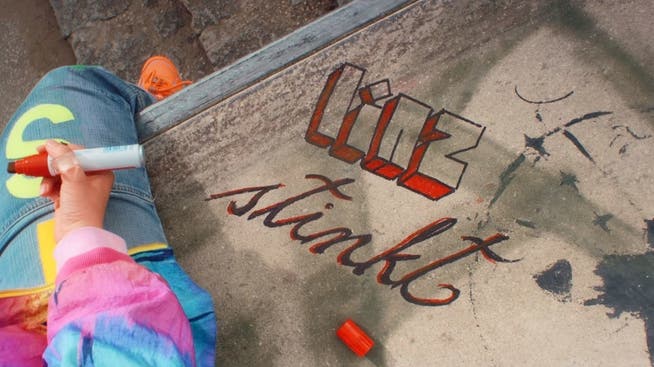
I was reminded of “Beautiful Bruchköbel” by the cinema ad from the tourist association of Linz to attract visitors to Austria’s third-biggest city: Linz ist Linz. Even if you don’t speak German, I’m sure you’ll get the drift. It's a bit warts and all. Linz is described as being “for old people”, “gruesome” and “a bit rascist”, amongst other things.
There have been complaints. From the mayor, from restauranteurs and hoteliers.
But don’t we keep hearing about authenticity in advertising? Isn’t this the big thing? I find it sad that the ad industry is so po-faced and serious these days. A bit of self-deprecating humour, a touch of irony ... it doesn’t seem to be recognised or appreciated any more.
Linzertorte made by me
I’ve never been to Linz myself (although I love Linzertorte), but after seeing this ad, I’m really quite tempted.
Comfort and joy may have been in short supply this year, despite many of us forced back into our own comfort zones for rather too long. It's been clear that for brands, too, communications have been created with something of a "walking on eggshells" mentality, with concern over tone-deafness and misreading the mood of the nation.
This somewhat restrictive approach, worrying about getting it wrong rather than determination to get it right, has led to a lot of bland, joyless and strangely soulless advertising and other communications.
Joy is a good start, but joy always feels a little bit sanitised and homogenised, like a choir of over-zealous evangelists. Especially when it pops up in a marketing plan which eulogises over making each touchpoint a "joyful connection".
I hope next year, advertising can dust down its entertainer's glad rags. Not merely joyful, but bringing us belly-laughs, mischief and mirth. Witty repartee, farce, a subversive smile. Whimsy, euphoria, glee and giggles.
I sometimes wonder if people in the marketing and advertising business have as much fun as they did years ago. It does all seem to have become terribly serious and worthy, with the only source of amusement Tom Fishburne's excellent cartoons.
But every now and then I see something that I wish I'd done. This time, it's Waccenture, a parody of all those smart-arse consultancies:
Turning the obvious into insights, customers into data-points and creativity into algorithms.
From the ghastly stock pictures, to ample use of placeholder text, to clickbait "insight article" headlines quoting phoney research, to the "6-D Process", it's just a little too close for comfort.
What I would call "cause marketing" - anything that tries to elicit a behavioural change on a social or environmental issue - is something I've spent rather a lot of time whingeing about on this blog. Plinky piano music, "social experiments,"dubious "insights" - I have had a go at them all here.
This week, I've been pleased to see at least two ads where their creators have looked at social issues, but used real insight, cultural awareness and clever observation in the development of the creative strategy, then executed with charm and humour. One is DIVERSish for the Valuable500, created by AMV/BBDO, above, and the other is a completely different audience and issue - Eat them and Defeat them, from ITV and Veg Power, created by Adam & Eve/DDB.
I do hope this is a change in course from that cheesy morass of sentimentality we've been seeing in recent years.
As someone who has worked in advertising for more years than I'd like to admit to, the thought that often provided me with the best guidance is: "it's only advertising." Perhaps that hides a regret that I never became a brain surgeon, or something equally useful, but it has certainly saved my sanity more than once.
When I worked in the UK, I admired the way that the ad industry constantly took the mick out of itself, from ridiculing preposterous product demos to beer brands sending up pompous and pretentious perfume ads.
I've commented before that the industry seems to have lost its sense of humour of late, and it seems ironic that it's a beer brand that's being parodied in the video from Oasis (owned by Coca Cola) above. The Togetherness Bottle campaign, created by The Corner, London, has a subversive swipe at all those worthy ads with their plinky piano music and social experiments: "Brands acting holier than thou while everyone knows it's about sales, not saintliness," as its creators say. It's all part of an overall marketing strategy from Oasis, #RefreshingStuff, that the brand has been pursuing since 2015.
It's a fun idea with a serious point behind it for all marketers. Purpose is important for brands, but it really doesn't need to be about stopping wars, obliterating sexism/racism/anyotherism, empowering women, one of the United Nations Sustainable Development Goals or saving the world in any other way.
It could just be about refreshing people with a cooling fruity drink and a bit of a laugh when advertising people get too up their own bottoms.
I'm reading a delightful novel at the moment: A Gentleman in Moscow by Amor Towles. The story is that of a Russian aristocrat who is placed under indefinite house arrest by the Communists in the 1920s for writing a subversive poem. And that house arrest is in one of the grandest hotels in Moscow. The story rambles around the hotel with the Count, the eccentric characters he meets and the absurd situations in which he finds himself.
One such is the Second Meeting of the First Congress of the Moscow Branch of the All-Russian Union of Railway Workers. The Union's Charter is under discussion, particularly the 7th sentence of the 2nd paragraph, which concludes with what we marketeers (shhhh!) might call a Mission:
"... to facilitate communication and trade across the provinces."
And, oh dear, does the word 'facilitate' ever come in for some stick! Far too tepid and prim to suggest pounding steel and rippling manly muscles and shovelling coal! Some alternatives are suggested, such as to spur, to propel and to empower, which all come into hot debate. Eventually:
"... a suggestion came from a shy-looking lad in the tenth row that perhaps 'to facilitate' could be replaced with 'to enable and ensure.' This pairing, the lad explained (while his cheeks grew red as a raspberry), might encompass not only the laying of rails and the manning of engines, but the ongoing maintenance of the system ..."
And so, after more hot debate, the alternative is adopted.
If that one amused you, you may also find that this tickles your fancy, too. Perfect for collecting a few meaningless phrases to throw into the next strategy meeting. And I don't think many of us can put our hands on our hearts and say we've never used this kind of lingo.
I'm convinced that when researchers from the future find some of our strategy documents, they'll be as bemused as if those documents were in Russian - or Ancient Greek.
A week later, and I'm still on my soapbox about humour (or lack of) in advertising. I read a super piece by Paul Burke in Campaign entitled No laughing matter: Why Advertising isn't funny anymore. The guilty are all called out and charged, from the Client to Sir Martin Sorrell and his bean counters, from Tony Blair to the Creative Department. Well worth reading: even if advertising isn't funny anymore, this article is, particularly the paragraph with the ghastly client marketing-speak.
One potential culprit, or group of culprits not mentioned in the article, are what we used to call target audiences. The people 'out there.' With social media, the stereotype of 'Disgusted of Tunbridge Wells' (usually a retired colonel) has been replaced by a whole army of militant social justice warriors, just waiting to spring onto your ad from Twitter, Mumsnet, Facebook, you name it, and give it a good savaging. Advertisers and agencies live in fear of causing offence and outrage. 'All publicity is good publicity' has its limits. It's one thing upsetting a stuffy retired colonel, but quite another offending an entire generation.
But I question: are the new audiences lacking in humour? Do they take a masochistic delight in ads 'making them cry?' I'm not sure. There's still plenty of humour around. But I feel sometimes that it's only the medium that's changed. Youngsters used to tell jokes in the playground, that they'd heard on TV, or through word of mouth. Now they flick through 9gag. And maybe show their mate if it's particularly funny. But the jokes haven't really changed. There's stuff on there that I remember from my schooldays, and that's going back.
20 years ago, it was cool for creative people to be finding inspiration on the internet. But, as I've said before, we've gone from surfing to stumbling to being fed as far as the internet goes. I think - and hope - that there's a huge opportunity for brands and the creative people who work on them to reclaim humour. Fresh, new humour that fits to the brand and comes from observation of life out there, not rehashed old chestnuts from the internet.
I'm convinced that people are even more well-disposed towards a brand that can make them laugh as one that makes them cry.
When I was little, I wanted to be a spy. I got off to a good start, studying Psychology at Trinity College, Cambridge but somehow got side-tracked into the wonderful world of advertising and marketing.
My children's books:
http://www.burmeon.com




 Posts
Posts