Showing posts with label Austria. Show all posts

Monday, 27 April 2026

Robert, Andreas and déjà vu


On my way back from Canada, flying far above the endless acres of wilderness, something drew me to the film Train Dreams on the in-flight entertainment. A good choice, I think. It reminded me of the life my grandparents must have had when they emigrated to Canada in the 1930s and built up what my cousin referred to as a homestead.

But it also, strangely, reminded me somehow of home in Germany and how that all came about. Meeting my husband in an Austrian mountain hut. Gradually, it dawned on me. Train Dreams is the American cousin of A Whole Life (Ein ganzes Leben) by Robert Seethaler. 


Both are the story of one simple man’s life, with identical plot points (orphan beginnings, dangerous outdoor work, brief happiness with wife and child until disaster strikes, coming to terms - or not - with old age and the world’s progress). The overall themes of the beauty and dignity of solitude, the interaction of man and landscape are common to both. The time and feel of the settings are similar, even though the actual places are far apart.

Although Seethaler’s work came first for me (the book was published in 2015, the film followed in 2023) Denis Johnson’s novella first appeared in 2002 and was republished in a different form in 2011. So if anyone can be accused of copy-catting, it’s Seethaler and not Johnson. 

But I’m prepared to give Seethaler the benefit of the doubt. We got this frequently when I worked at the ad agency. Similar ideas would pop up all the time. Call it spirit of the age or maybe synchronicity - coincidences that seem menaingful but with no apparent causal connection. 

Madame Bovary, Anna Karenina and Effi Briest are all the same story. And, in the same way that 19th century readers had an appetite for extra-marital affairs and their consequences, perhaps 21st century readers and viewers need stories about the simple life, about our place in nature and the satisfaction of solitude. 

To me, it’s less copy-catting and more about tuning in to our collective humanity and what’s missing from our lives.


Friday, 2 January 2026

RETROWURST: Austria January 2008


Back in January 2008, I had a little slalom through Austria and its brands such as Red Bull, Almdudler, Meinl, Handl, Giesswein and Pez.

----------

Maybe because I have just come back from my skiing holiday and maybe because it’s one of the host countries for the European Cup this year, I thought I would take a quick look at Austria and a few Austrian brands this month.


When most people in the UK think of Austria, they think of Vienna or Salzburg, of skiing or the Sound of Music, of the blue Danube or Apfelstrudel or of Sachertorte or Lederhosen. But when we think further, we see that Austria is a land of contradiction. On the one hand, there are the years of civilization and great culture and philosophy and on the other hand there is the dark period of history last century. This is the land that produced Mozart, Strauss, Schubert and Freud as well as Arnie, DJ Ötzi and Hitler. The population is a multi-ethnic mix, but almost all speak German. 


Austria has a total population of 8.2m, just a tenth of that of Germany. A quarter of these live in Vienna or its suburbs. The ethnic mix includes Hungarians, Croatians, Serbians, Bosnians, Czechs, Slovenians, Turkish, Italians and Albanians as well as the “Roma” who are an officially recognized ethnic minority. This reflects Austria’s key position in the centre of Europe and its imperial history.


Austria is one of the top 10 richest countries in the world with a very high standard of living. Employment is relatively low at under 5% (c/f Germany at 9%) and the economy shows a positive development above the EU average.


Austrian values include love of the beautiful countryside (much of Austria is mountainous), pride in traditions including food and music, love of closeness of family and friends, Gemütlichkeit (unique feeling of “cosiness”) and pride in roots and longevity. Many families in Austria have lived in the same town for generations and family firms are abundant. Although they like to think of themselves as a progressive company, Austria is woefully behind other EU countries regarding the status of women. There are precious few women in senior management or in politics (for all Germany’s backwardness in this area, at least we have “Angie”!) and there is a huge salary gap between men and women in equivalent positions. In a largely catholic country, women are not particularly encouraged to go back to work after having children and childcare facilities are inadequate.


Some Austrian Brands

Red Bull: covered in a previous Extrawurst

Some of the Austrian values are reflected in some classic Austrian brands that I have chosen to give just a little snapshot of. 


ALMDUDLER

www.almdudler.com

If you thought that coffee, or some nasty Schnapps was the national drink of Austria, you would be wrong: it’s Almdudler! Almdudler, for those who have not tried it is a “herbal lemonade” – actually, it tastes a bit like ginger ale. Almdudler the company has been going for over 50 years, and the website has a competition at the moment for the “best traditional costume couple”. In case you’re missing a jaunty feather hat or Edelweiss choker to go with your Dirndl, you can also buy these from the Almdudler site.


MEINL

Julius Meinl started roasting coffee on the family stove in Vienna in 1862 and popularized freshly roasted coffee. Since this time, the company has not looked back, despite excursions beyond the core competence into retail, for example. The logo of the “little coffee boy” is very well-known and reflects the history of coffee in Austria: coffee was brought to Vienna by the Turks in 1683.


HANDL

www.handltyrol.at

Handl sell dried bacon, ham and sausages in many varieties and make use of Tyrolean imagery on their packaging, reflecting the authentic nature of the products. They had a very interesting media idea to advertise their sausage snack products with posters at ski-lift stations in the winter season: after all, a spicy hard sausage is just the thing for those long rides in the chairlift!


GIESSWEIN

www.giesswein.com

Giesswein are based not a million miles from Kitzbühel and are known world-wide for their boiled-wool jackets and slippers which are available in both traditional and fashionable styles for adults and children.


PEZ

The name PEZ comes from the German for Peppermint, Pfefferminz. It may surprise you to know that what became part of pop culture in the US was invented in Vienna in 1927. The sweets were introduced to the US in 1952 and, in 1955; the first character dispensers were introduced. These have become cult collectors’ items which are collected with the fevour that some collect Kinder Surprise figures here in Germany. I am sure that Arnie would agree that sometimes you have to get out of Austria and over to the USA to get people to take you seriously!

----------

While the political situation in Austria has got a little messy in recent years, Austria’s brands all seem to be on Red Bull. This brand is now worth €8.7 billion and is growing by 11%. Generally, Austrian brands are doing better when it comes to growth than those of their German-speaking neighbours. Following Red Bull in 2nd and 3rd position are two banks - Erste bank and Raiffeisen Bank International (RBI). Also notable is the grocery discounter Billa, part of the REWE empire, growing at a whopping 70% in terms of value. 

And maybe the sweetest get-together on the branded front is Almdudler with Haribo - not Gümmibärchen, but Gümmipärchen!


Thursday, 19 October 2023

Love, peace, piss-ups and brass music


Ten years ago, if you’d told me the gin market would shortly explode and still be gaining sales in 2023, when young people are allegedly drinking less alcohol, my head would have been surprised. 

But not my heart. I’ve always loved gin and know that it's a damned good thing. It just needed the right time, the right conditions and some clever marketing to get it back in vogue.

I came across something that reminded me this a few weeks ago, on a late summer holiday to Baska, on the island of Krk in Croatia. Something I had always loved given a bit of reinvention, a bit of borrowing from popular culture - and being lapped up like crazy by people young enough to be my grandchildren.

The event in question was Brass Palmas . This is the beach party event associated with the Woodstock der Blasmusik  . The experience was quite surreal. At one end of the beach at Baska there’s a nudist resort.

At the other there are trumpets, tubas, trombones, saxophones.

Buckets of beer and cocktails.

Dirndls, Lederhosen and plenty of Skipton Alfie-style loud beach pyjamas.

Imagine the slightly staid world of oompah music given a large shot of festival/club/Ibiza atmosphere, and there you go.  The kind of mix that sounds ridiculous on paper, but just works in reality - and how!

There’s a party boat, a pool party, and non-stop music, dancing and drinking from stupid o’clock onwards.


And behind it all is some very neat marketing - brilliant brand name and logo ... and of course all the merchandise you could possibly want.


It’s a blast!

Tuesday, 4 October 2022

RETROWURST: Germany’s European Neighbours October 2004


I was a little startled when I read this Extrawurst from October 2004 about Germany’s European neighbours. As well as a write-up on the two European countries that Germans are most in love with, there’s a quick round-the-clock of the nine immediate neighbouring lands.

-------------------------------------------------------------

Germany is often described as the centre of Europe- the word ‘heart’ has perhaps too many emotional connotations for a people who pride themselves on Ordnung. And, being one of Europe’s largest countries, Germany has a lot of neighbours, nine in total. I thought it would be interesting this month to have a look at how the Germans typically view their neighbours and which products and brands are associated with these countries.


As is typical with neighbours, the German view of the people of the lands surrounding them is not all roses. Views range from ‘dull but tolerated’ to out-and-out rivalry and hate! But before we come onto that, let’s have a look at the European countries that can- in the eyes of most Germans - do no wrong. Number one for most Germans has to be Italy. Italy is far enough away and separated by mountains and a couple of other countries not to suffer the over-familiarity and thus contempt of the countries on the doorstep. Italy stands for the ideal lifestyle for many Germans and there is something for everyone from the beaches, to city style and culture, to the mountains of the South Tyrol. Italian food and drink are adored by the Germans, the supermarkets are brimming with Italian brand names such as Barilla, Averna and Ramazotti and there is an Italian restaurant or ice cream parlour on just about every street corner. One needs look no further than the irritatingly successful Ferrari/Schumacher combination of German efficiency and determination combined with Italian passion and flair to see this relationship in action.


A little further away but also beloved by the Germans is Ireland. The combination of Celtic tradition, a pride in beer brewing and a love of music is seen by a lot of Germans as an idealized version of themselves. Groups such as The Corrs or The Kelly Family are very popular and Kerrygold and Guinness are well-known brand names. Irish pubs can be found in even the tiniest of villages in Germany and the only cheese you are likely to find in a German supermarket from the British Isles will be Irish, rather than English, Cheddar.


So, back to the neighbours, going around in a clockwise direction. We’ll start with France. Germany has a rather uneasy relationship with France. Although Germany ganged up with France last year to form the backbone of ‘Old Europe’ against Bush’s war, past history still bears its influence. On the one hand, there is a grudging admiration for the French ‘Joie de Vivre’ and general enjoyment of the good things in life but there is some feeling that the French are rather too much in love with themselves, don’t work hard enough and don’t take enough pride in their homes, towns or environment generally. Products and brands associated with France are Citroen, Peugeot, Renault, Elf, cheese and wine, President and L’Oreal.


Luxembourg is associated with very little except money, more money and yet more money, so we’ll move quickly on to Belgium. The Germans view the Belgians as down-to-earth and a bit dull. Belgium is associated with cycle-racing, chocolates and beer, although the beer is not considered as good as German beer. This brings us on to Holland where the relationship seems to be a mutual hate: hate! There is a bit of a paradox with Holland as the Germans grudgingly admit that Amsterdam is actually quite a fun, interesting and cultural city but that the rest of Holland is full of big, narrow-minded, people who pollute the German autobahns with their caravans and litter at holiday-time! There are a fair number of brands and products associated with Holland: - Phillips, Heineken, Amstel, Cheese (Gouda & Edam), flowers and vegetables. But the overall impression is that be it beer, tomatoes, cheese or the people themselves, everything is a bit kitschy and tasteless. Needless to say, the people of Holland don’t have many kind words for the Germans either!


Moving further north we come to Germany’s Scandinavian neighbour, Denmark. Of all the neighbouring countries, Germany’s relationship with Denmark is perhaps the most positive. The Danes are considered to be a happy people, proud of their country with a very fair and modern social system. Products and brands associated with Denmark are Beer (Tuborg and Carlsberg), dairy products (Arla), bacon (Tulip) and fish products.


Unfortunately, the Germans generally have a negative view of Poland and the Polish people, perhaps because, reading between the lines, they feel threatened and still guilty about history. At its most bigoted, which, sadly, seems to include a fair proportion of Germans, particularly older people and those from the former East Germany, the Polish are regarded as car thieves or at very best casual workers for the harvest. Although the Germans are quite happy to adopt a sportsman such as a boxer or footballer with Polish origins as one of their own, the general view seems to be that the Polish are lazy and unmotivated. Perhaps this will change if more young Germans can throw off their prejudices and see for themselves the dynamism and development of Poland in the last ten years or so. Products associated with Poland include certain types of sausages and poultry (ducks and geese) traditionally consumed in Germany in November and December including the Advent and Christmas period.


The German view of their Czech neighbours is much kinder. The Czechs are respected for their sporting success in Ice Hockey and Football. They are thought to be a nice bunch of people who one could drink a gemütlich beer with. The Skoda/VW partnership symbolizes this relationship and other brands associated with Czech Republic are beers such as Budvar.


Austria is a very popular holiday destination in winter and summer and the people are described as simple (in the positive sense), straightforward, a slow pace of life and gemütlich. There are plenty of food and drink products associated with Austria including wine, Schnapps, dried sausages (Landjäger), coffee, cakes such as Sachertorte and Germknödel (a sort of giant sweet dumpling). Also associated with Austria are crystal ornaments (Swarovski) and many products and brands associated with mountains, hiking and skiing such as Blizzard skis or Meindl hiking boots.


Finally, we come to Switzerland to complete the circle. The Swiss are thought to be somewhat snobby, stuck-up and obsessed with money. They are considered by the Germans to be proud and obstinate. Brands and products associated with Switzerland include Swatch and Smart, dairy products (Gruyere and Emmental, yoghurt, Emi, cheese fondue and raclette) plus big food corporations such as Nestle.


I have made a lot of generalisations here which probably do the Germans a disservice but it’s certainly a lot milder than a typical article in the Daily Mail about the Germans!

-------------------------------------------------------------

The startling came not so much from what’s changed (not much, to be honest - the love affair with Italy is alive and well, fuelled by Aperol Spritz), more from how I have changed.

I admitted to generalising in the article and, boy - I certainly wouldn’t write something like that now! Is it ageing? Am I simply more sensitive and aware to nuances (for example, how there’s a kind of blending and merging aroud the borders rather than a sharp change)? 

Or was life just simpler then? 

Tuesday, 10 August 2021

Isn’t it ironic?


 Three or four years ago, I made a calendar for my son’s Christmas present. The calendar was entitled “Beautiful Bruchköbel” and featured our home town’s architectural highlights, many of them sadly demolished now.


We both love that calendar - I loved making it, and I think my son still has it on the wall somewhere. The point being that we both love Bruchköbel, warts and all. 

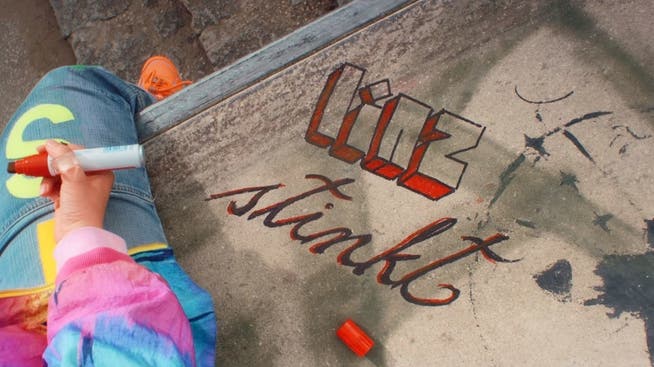
I was reminded of “Beautiful Bruchköbel” by the cinema ad from the tourist association of Linz to attract visitors to Austria’s third-biggest city: Linz ist Linz. Even if you don’t speak German, I’m sure you’ll get the drift. It's a bit warts and all. Linz is described as being “for old people”, “gruesome” and “a bit rascist”, amongst other things.


There have been complaints. From the mayor, from restauranteurs and hoteliers.

But don’t we keep hearing about authenticity in advertising? Isn’t this the big thing? I find it sad that the ad industry is so po-faced and serious these days. A bit of self-deprecating humour, a touch of irony ... it doesn’t seem to be recognised or appreciated any more.


Linzertorte made by me

I’ve never been to Linz myself (although I love Linzertorte), but after seeing this ad, I’m really quite tempted.

Better ironic than (yawn) iconic, I say.