Showing posts with label cars. Show all posts

Wednesday, 8 July 2026

RETROWURST: Wizard ads, old boy (March 1968)


Chocks away and time for a swift flypast of the world of print advertising in the 1960s. Some of my earliest memories of advertising trace back to this era. I've had a delightful trip down memory lane in the pages of Punch, the RAF Fiftieth Birthday Number, dated 13th March 1968.

I'll start with the two best-placed (and most expensive) ads. Back cover and inside front cover. These were the pole positions back in those days. And it's no surprise that they're occupied by two of the brands most associated with pilots and derring-do:


I love the sheer heroic aplomb of these ads. There's a supreme confidence about them, a simple assuredness, rather reflecting the character of the (idealised) target audience.

The colour ads in the body of the magazine are a little more subtle. The reader has to be momentarily distracted from the cartoons and articles and find something intriguing enough to look further. Here are two booze brands - Martini and Guinness:


The advertising spans the expected categories - ciggies, booze, clothes, cars, travel, banking - with brands such as Senior Service, Glenfarclas, Courage, Wolseley, Church's Shoes, Trevira, Lombard Banking, TAP Airlines, Pure New Wool/Woolmark and High Speed Gas (remember that?)

And there were job ads, too. I expect this wasn't designed to be an interactive ad, and it's probably as well I didn't pursue a career in Art Direction:


Punch, like many of the brands featured, died with the 20th century. 

But there's a useful archive here , should you want to see what raised a chuckle or two in the days when pilots weren't on automatic.

Friday, 1 September 2023

RETROWURST: Advertising Agencies September 2005


In September 2005, I indulged in a bit of navel-gazing about ad agencies, which may have seemed self-indulgent at the time. But it’s certainly fascinating to read with 18 years’ hindsight.

In this article, I referred to the “new media and internet specialists” who tended to lurk around Berlin. How quaint. And then, I was very snooty about mozzarella and cherry tomatoes on sticks.

On a positive note, I cheered German agencies' success at Cannes that year. And commented that Planning had perhaps achieved critical mass in Germany. Were the two connected? I wonder.

------------------------------------------------------------------------

Last week, I attended the “Night of the Lions” in Frankfurt; one of the German advertising industry’s yearly highlights where hundreds of advertising types gather to see creatives getting their prizes and viewing the reel of the gold, silver and bronze film winners. I say “one of” for good reason. While, in the UK, I assume this sort of thing would always take place in London, the German advertising industry has a number of centres including Hamburg, Frankfurt, Düsseldorf and Berlin. In addition, many major (-ish) agencies have their offices in Munich or cities in the former East Germany, such as Leipzig. If there is any tendency at all to who sits where, Frankfurt and Düsseldorf tend to be the German offices of the multi-nationals with Hamburg being home to the original German agencies that grew up in the 1980s and early 1990s such as Springer & Jacoby and Jung von Matt. Berlin tends to house the newest agencies and many of the new media and internet specialists.


Although there has been much talk from the industry press of the revival of German advertising creativity after many years of doom and gloom, I did find my experience last week a bit like being in a time-warp. The event was held in a former tram depot all decked out in black with a bit of white, as were most of the rather earnest-looking guests. There were Caipirinhas at the bar and bits of mozzarella and baby tomatoes on sticks (which I have always considered the 1990s version of the 1970s cheese `n` pineapple). I’ve now been freelance for nearly three years and haven’t worked full-time in an agency for nearly five but it didn’t really look to me as if things had moved on much.


Working in advertising here in Germany (funnily enough, one never says “being in advertising” as one might in the UK) doesn’t really carry the cachet that it might in the UK or USA. Advertising is not really regarded as a profession here and certainly does not have the glamorous image that it might have in other markets. At a party, if you own up to “working in advertising”, the subject is quickly changed, rather as if you had admitted to having something to do with second-hand cars. You would be better off to try and disguise your role as a “consultant” in some way as this at least suggests better academic credentials. “Real” professions, such as being a doctor or a lawyer, are what buy you points here in Germany. So extreme is this tendency that even some of the creatives who went up to collect their gongs last week were announced as “Dr So-and-so” in a totally non-ironic way. Academic qualifications are often made much of in agency credentials presentations which came as something of a surprise to me, coming from a world where a PhD is something that a London-based creative is about as likely to own up to having as piles.


Maybe it’s no surprise, then, that one area of the German advertising industry which seems to be on the up at the moment is Planning. From my own perspective, it does seem that Strategic Planning in Germany has now achieved critical mass. The annual Open Event of the apgd in June seemed packed full of young faces and the organisation now seems to have got its act together in offering training for young planners. Although the apgd has been in existence for nine years now (I had the dubious privilege of sitting through its inaugural constitutional meeting) it was perhaps a little handicapped in its early years by an over-intellectual, inward-looking attitude (typified by endless humourless debates about “The definition of planning” “Whether one is a strategic planner or a creative planner” and an article laying out “a segmentation of planners.”)


In a typically German way, the most “intellectual” of advertising’s disciplines now seems to be feeding the right stuff to the creative folks to make some damned good ads. It is no surprise to learn that some of the agencies that did well at Cannes are those with a strong planning tradition: Springer & Jacoby, who have their own Planning Consultancy, Jung von Matt, where one of the MDs is a planner and chairman (female!) of the apgd and Heimat, where another Planner has his name over the door (unusual in German agencies.)


So, back to Cannes, or at least to that converted tram depot in Frankfurt. Germany has done rather well at Cannes this year, 4th overall in terms of Lions won, whereas they were struggling in the double-figure rankings just a few years ago. In fact, in the area of film, Germany achieved the joint third placing (with France) after the USA and UK in 2006 with a total of eight film Lions won.


It’s probably no surprise to here that many of these Lions, including the gold, were won for car advertising. The Germans are actually rather good at car advertising, just as they are rather good at cars. The gold winner, entitled “Sound of Summer” is a lovely piece of film for the Mercedes sports from Springer & Jacoby based on the visual creative idea of sound frequencies. This is a great spot that combines the German passions of cars and music, and you don’t see a single car (except in your imagination, of course). A bronze also went to S&J for their Mercedes C-Class spot and to McCann Erickson for their Astra spot where the car replaces the dog in the owner’s affections as “man’s new best friend.”


Another great German passion is DIY (I’m sure you’ll all have heard that here, the DIY enthusiast doesn’t just stop at a few shelves, he is more than likely to build his own house!). Another bronze lion went to the Berlin agency Heimat for their work for Hornbach DIY stores. Here, the German members of the jury had the difficulty of explaining the underlying concept of a member of a surrealist-nihilist-punk group reading the Hornbach catalogue aloud, but they succeeded, the films are a hoot in any language and Heimat deservedly won.


What appears to be a bit of an oddity on the prize list is Jung von Matt’s silver for K-Fee, which is a coffee product. Not a category so close to German hearts, you may think. Furthermore, the creative idea is a downright weird (if highly effective) demonstration of the product’s stimulating powers. You are lulled into a false sense of security by what you think will be a typical, clichéd advertising spot when something suddenly pops up and screams at you at a high decibel level. But here’s where the link happens. Guess what kind of cliché is used to lull you into that semi-comatose state? That’s right - a typical scene of a beautiful car driving through a rolling rural landscape. You can almost hear the “Sound of Summer” before the scream so rudely interrupts you.

---------------------------------------------------------------

Well, Hornbach are still making great ads, eighteen years on. 

What I perhaps wouldn’t have predicted is that the ‘Dr So-and-So’ syndrome has really caught on. Worldwide. Even in the UK. Ad people desperately trying to demonstrate their gravitas to keep the management consultants after their jobs at bay. The geeks and nerds really have inherited the earth.

Back then, I said that a PhD is something a London-based creative is about as likely to own up to as having piles.

These days, I think they’d probably own up to their “lived experience” of haemorrhoids, too, in the interests of empathy and authenticity.

I’m off to make some - ahem - mozzarella and cherry tomatoes on sticks.

Tuesday, 11 October 2022

A noble yet undervalued craft


I’m pinching someone else’s article this week, because it deserves something more than getting lost in my sprawling bookmark system. It’s by Alex Vuocolo: The Disappearing Art of Maintenance and was spotted by Good Business in their weekly newsletter.

Amongst other things, this article for me highlighted the disconnect between all those trend reports and innovation newsletters and sustainability innovation alerts, and the life that most people lead. My own life is one lived in constant dread of updates, especially as far as my MacBook goes. I’m tottering along with my 2015 model, but fear that the next OS upgrade could wreak even more damage than the last, which rendered two printers obsolete in one fell swoop.

Maintenance, as Alex Vuocolo points about, is about making things last, not repairing what’s broken. It’s conspicuously absent from the “reduce, reuse, recycle” mantra as it doesn’t really fit with the ideas of reduction or anything prefixed by “re-“ as it’s about steady state, not change. That alone doesn’t make the concept of maintenance sound progressive or innovative.

But why must the idea of “sustainability” inevitably be coupled to the idea of “change”?

I’ve mentioned eBikes before - and this article talks about how, for example, the electro vehicle boom, driven by the promise of cutting emissions has caused a surge in demand for metals such as nickel, cobalt and lithium. Using up a different set of the earth’s resources while attempting to conserve another. 

Also highlighted in the article is the abstract nature of the climate debate and emissions goals:

Emissions goals are not unlike GDP targets. Both are administered abstractions, somehow all-powerful and impotent at the same time. They reduce action to aggregates and strip human actors of agency.

Or:

The pragmatism of maintenance work is sorely needed in the climate debate, which is so often preoccupied with end-states that it has no earthly or humanly way of achieving.

Of course, in the real world that most of us live in there are people that service your car, your boiler, your bike - and keep the roads and the railways and the buses in good order. But perhaps it would help to bring this mindset into other areas of modern life, too.

In the end, this is one reason I cannot abide the term “the consumer” being applied to everything beyond that which is actually consumed - from smart phones to cars.

Now, pass me that spanner.


Friday, 27 May 2022

On your bike


I was asked yesterday if I’d be getting an eBike. 

The answer to that is no, certainly not in the immediate future. Why not? For the same reason that I sigh when I read all about the latest “sustainable innovations” praised in the various marketing and innovation newsletters I receive, be these fashion, electronics, cars or bikes

I have a perfectly good bike and don’t need a new one. Ditto T-shirts, trainers or cars. And I particularly resent “built-in obsolescence” which isn’t just a feature of mobile phones these days. 

The uncomfortable truth is that infinite economic growth on a finite planet just isn’t possible. A recent report by Unicef found that if everyone in the world consumed resources at the rate of OECD and EU countries, 3.3 earths would be needed to keep up with the consumption rate.

I do sometimes wonder what’s going to happen to all those eBikes once the novelty wears off - and to the perfectly good bikes languishing in dusty garages and cellars as a result of this boom.

“Within the constraints of the planet" is often added as an afterthought when marketers talk about growth, but perhaps it’s something that should be brought to the forefront more often. The planet is something we must all share. Share in the sense of apportioning something finite, not the more current use of sharing as a term for making public - and quite often, showing off.


Tuesday, 25 January 2022

Government Health Warning


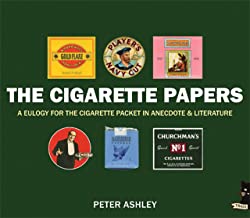
I’m not sure, any more, if I can remember cigarette packets or advertising without a Government Health Warning attached.Ssuch things are now confined to the annals of nostalgic ephemera, preserved for posterity in, for example, Peter Ashley’s marvellous publications (see above).

I’m certainly getting used to warnings on bottles of booze about this or that and drinking responsibly, and to traffic lights on food (the subversive part of me is keen to buy those with Ds and Es and red lights, as they’re likely to taste better - treat me like a child, and I’ll behave like (a naughty) one). 

And, if I was French, I’d have to start getting used to this sort of stuff on car ads, too. From March, under a new law, car ads in France will have to carry environmental warnings advising potential car-buyers (and, I suppose, anyone seeing the ads) to consider alternatives: “think about carpooling” or “for short journeys, walking or bicycling is preferable.” Weirdly enough, these same warnings will be on ads for electric cars, too, according to the article I read in The Times.

I expect a lot of this will fall on deaf ears. Those that feel vaguely guilty and are receptive to the message may take note, but the overgrown boy-racers about to splurge on their next revving, powerful, polluting beastie won’t pay the least attention.

I’ve always felt that making the alternatives more attractive is the best way to change behaviour rather than ticking people off. I quite like this ad from Heineken for the 0.0 “Cheers with no alcohol” beer. Nicely put together, and there’s a real insight there - sadly missing from so much current advertising.

Or - and now I have a chance to wallow in some Saatchi & Saatchi nostalgia from the last century: one of the best ads they ever did. 


 Credit: The Advertising Archives

Who remembers this one? It’s Relaxby Saatchi & Saatchi, directed by Tony Kaye, from the late 1980s, for Intercity.

Simply glorious - who needs a car?


Monday, 4 October 2021

RETROWURST: Top Euro Brands October 2003


This month’s Retrowurst, from October 2003, is one of those lazy ones where I didn’t bother writing anything particularly original, but instead chose to rehash a report from someone else. In this case, Interbrand’s Best Global Brands.

Interbrand won’t be revealing their top of the pops until 20th October, so we’ll have to make do with last year’s ranking to see who’s still in and who’s definitely out. 

In 2003, 8 of the Top 10 brands were of US origin, and that’s now 7 out of 10. However, two of the three non-US brands are from Asia-Pacific, with only one European origin brand in the Top 10. Nokia is long gone, so this year it’s Germany which has that honour - with Mercedes at No. 8.

European-origin brands aren’t doing badly as far as the Top 50 goes. In 2003, there were 4 German-origin brands in the Top 50 and 2020, there are 7. The usual suspects from the auto branch, or mobility, or whatever it’s called these days, plus SAP, Allianz and adidas. 

France had 2 brands in the Top 50 in 2003, now there are 5 - from the luxury/fashion/beauty side of things (those old stereotypes live on) - oh, and AXA too. (Louis Vuitton, Chanel, Hermes, L’Oreal)

UK are no longer in the EU or the Top 50 brands, I’m sorry to say.

------------------------------------------------------------------------

I thought I’d refrain from writing anything about the Oktoberfest this month and turn my attention to something of more general European interest. While looking through Interbrand’s League table of the Top 100 Global Brands for 2003, it struck me that, despite the trend to globalisation, we in ‘Old Europe’ are actually best at doing what might be expected from the old stereotypes. Indeed, glancing at the list reminds one of all those ‘heaven and hell jokes’ which preface every other newspaper article about Europe - ‘heaven is where the police are British, the cooks French, the engineers German, the lovers Italian and the Swiss keep the time. Hell is where the police are German, the cooks British, the engineers French, the lovers Swiss and the Italians keep the time’ - or however the thing goes.


Before I get onto what I mean, I’ll just preface this by giving a few provisos about the Interbrand Top 100 table- first, it’s about global brands, so to get onto it, your brand must be over $1 billion, it must be global (with at least a third of sales outside your home market and good distribution across all major continents) and you must have publicly available marketing and financial data (which excludes big players like Visa, the BBC and Mars). Secondly, the brands are listed in order of Brand Value- a complex calculation in which Interbrand take a large number of difference forces and influences into account to work out how much a brand is likely to earn in the future, discounted to a present value based on risk. So we are not talking anything simple like sales or awareness here.


Some general observations about the Top 100- it is dominated by US origin brands, as one might expect. Eight out of the Top 10 brands are US, covering categories as widespread as soft drinks (Coca Cola), software (Microsoft), entertainment (Disney) and tobacco (Marlboro). The Top 5 brands are all US (Coca Cola, Microsoft, IBM, GE and Intel), with Europe first making an entry at number 6 with Nokia. The Far East, in the form of Japan, makes its first entry at position 11 with Toyota. It’s actually surprising; perhaps, that the top brand from Europe should have the (relatively) obscure homeland (to us Brits) of Finland. In fact, without wanting to sound rather unpatriotic, Great Britain does not figure as prominently in this table as we would perhaps like. Maybe we’re not good at global brands but, as a country that prides itself on the quality of its marketing and advertising, particularly in relation to some of our European neighbours, we don’t seem to cut it in the global arena. The Germans, for example, have four brands in the Top 50, including Mercedes in the Top 10. The French have two brands in the Top 50. The only brand from GB in the Top 50 is HSBC at position 37- successful though HSBC undeniably is; it is hardly top of the wish list for ambitious marketers or advertising agencies hoping to produce stunning creative work.


So, onto the stereotypes. I’ll start with the Germans, as this is an Extrawurst. In the Top 100 for Germany are Mercedes, BMW, SAP, VW, Adidas and Nivea- so very heavy on the cars and technology with a bit of sport and wholesome body care in addition. Scandinavia boasts three brands in the Top 100; Nokia, Ikea and Ericsson- to be expected from thinly populated countries with huge pine forests! For France, we have the expected mixture of luxury goods, beauty, food and drink with the Louis Vuitton, L’Oreal, Chanel, Danone, Hermes, Hennessy and Moet & Chandon brands. Italy is fashion, fashion, fashion with Gucci and Prada. With Nescafe, Nestle and Rolex, the Swiss are heavy on chocolate and watches. The Netherlands have a rather mixed bag (but somehow appropriate) of electronics, oil/exploration and beer - Philips, Shell and Heineken are their brands in the Top 100. And, finally, the combination of banking, exploration/oil and journalism topped up with booze (HSBC, BP, Reuters, Shell, Smirnoff and Johnnie Walker) could only be British!


What is there to be learned from this? Firstly, I think it says that provenance is important, even in these days of globalisation. One way of looking at it is to use your national stereotype to your advantage in creating your brand- Lufthansa is one of the most preferred airlines in Europe for short-haul due to people’s perceptions of its absolute punctuality and reliability but loses out to the Far Eastern carriers on long haul, where service is a more important deciding factor. Or, alternately, cause disruption by creating a brand that is unexpected, given your national stereotype- who knows - maybe an Italian engineering giant or a Swiss range of ‘love toys’ could top the Top 100 yet!----------------------------------------------------

Of course, the big change is that the tech brands dominating the Top 50 were still in Kindergarten back in 2003. It’ll be interesting to see if and how the big German brands reinvent themselves over the next decade - or whether they’ll be history, like those Scandi mobile phone brands from the early days of the 21st century.

P.S. HSBC did feature in my last post with their advertising, so maybe I was a little hasty dismissing them as unlikely creative fodder - or maybe it’s a sign of the times

Saturday, 18 July 2020

Travelling hopefully

One description of the current "coming out of COVID" phase that particularly rings true for me is that we're all teetering on a tightrope between hope and anxiety. The anxiety is a form of constant fear of the unknown, acknowledging that we simply aren't as in control of anything as we once thought we were.

I felt this tension as I booked up my first trip back to the UK recently. Travel and tourism is a category that is arguably the most disrupted by COVID, and also one of the most disrupting to the planet. That brings a double tension into play - should I really be making this trip, not just for my health, but for the health of the planet?

I've had flurries of emails in the last few weeks from airlines, rail companies and hotels. These all take much the same form:

Inspiring the hope: talk of renewal, freedom, reopening. New journeys and destinations. A world waiting to be discovered. Wanderlust. Beckoning pictures of azure waters, golden beaches, midsummer mornings in the far North.

And at the same time, reassurance to calm the anxiety: #WeCare, worry-free travel, safe and comfortable, relax, protection, well-being, flexibility, hygiene, Bring Me Home promise.

I suspect the way we travel will change permanently, as it did after 9/11, and there will be no going back in terms of the new safety measures introduced. But I also wonder if there will be a going back in the way that travel is regarded - instead of "jumping on planes" and "ticking off the bucket-list" I agree with James Bidwell of Springwise who says that travel and tourism will continue to contribute massively to diversity, cultural understanding, education, a global outlook and to contribute to a more harmonious and peaceful world for all. 

I see a future for travel and tourism which is more conscious, and goes back to a certain degree of exclusivity - that travel becomes a privilege, not an automatic right. And if the excitement and magic of discovery returns, that can only be a good thing. 

I paid double what I would have done last year for my ferry crossing and don't begrudge the price.

I'm hoping it'll all be plain sailing and will see you on the other side!


Thursday, 15 August 2019

Tiptoe through the tulips

I'm afraid that this post may have me sounding like a rabid Daily Fail reader, but sometimes I wonder what I'm still doing in this business.

I read that the ASA have banned the first two TV ads under the new rules put in place to "reduce gender stereotyping." Complaints had come in from the public to say that these ads "perpetuated harmful stereotypes." I took a look at the ads, expecting to see something outrageous. Offensive, even.

But I don't think I've seen anything so harmless in my life.

According to the BBC, three people (no, that's not a typo) complained that the VW ad showed women in a passive/stereotypical care-giving role. I'd assume those three people were taking the piss. But the ASA, in their infinite wisdom, have concluded that "this ad presented gender stereotypes in a way that was likely to cause harm."

Cause harm? To whom? In whose view? What possible harm could be caused by seeing a woman on a park bench by a pram for a couple of seconds in a TV commercial? What kind of a world is it where depicting someone as care-giving is "likely to cause harm"?

Maybe the woman in the ad finally had a longed-for baby after several miscarriages. Maybe she's a lesbian. Maybe she used to be a man. Maybe she used to be a wombat for all I know and care.

What on earth happened to imagination? I've posted before about the way everything seems to be taken so literally these days, with demands here, there and everywhere for people of all sorts to "see themselves reflected in advertising".

Please, please, please:

Bring back creative ideas.

Bring back universal human truths.

Bring back advertising as entertainment not a dull bloody reflection of real life.

All that will happen if this policing continues will be the emergence of new stereotypes which will quickly become as irrelevant and yawn-inducing as the old ones.

Who remembers the "new man" of the 1990s?

Sunday, 10 February 2019

On (and off) the road

In the light of the recent UK advice to parents about restricting children's screen time , I was interested to see a new idea from Volkswagen's Amsterdam-based agency, ACHTUNG!

When I was young, car journeys inevitably involved looking out of the window, either aimlessly, or possibly in conjunction with an I-Spy book or a game of something like Pub Cricket. But these days, children probably don't even know if the car has windows, so intent are they on peering down at their screens.

But using an idea rather like Pokemon Go, the new location-based app, "Road Tales" (Snelweg Sprookjes) combines real-life objects with the imagination of children's authors and the young listeners and viewers to create personalised adventures - for example, a tunnel may turn into a rocket.


An imaginative idea that's entertaining for the 4-11s, useful for their parents and will add to the perception of the VW brand as both family-friendly and innovative.


Friday, 23 November 2018

Free Electric Van

I listened to Les Binet and Sarah Carter talking about their new book (one of those ones I wish I'd written) on a WARC seminar yesterday, and one point they reminded me of was: don't believe all those myths about traditional advertising being dead. Far from it - Facebook advertise in magazines, and both Apple and Google employ posters - yes, old-fashioned billboards - to communicate their wares.

Outdoor advertising still makes so much sense, especially if we really are going to be more and more concentrated into urban areas. And, this week, I also saw a new brand, a start-up in the area of electric mobility.

UZE Mobility, from Aachen are looking to smarten-up and relieve the strain and congestion in Germany's cities, via electro-power, AI, blockchain and all that modern stuff. Their flagship - or flagvan - offering is free of charge van-sharing. As well as running on electricity, the van runs on advertising revenue and data-dealing. The sides of the van are mobile billboards, which can even be bought as the van is in motion. In addition, data about road quality, traffic jams and so on, collected as the van drives around, will be sold to local authorities.

Perhaps the vans will soon be generating their own adverts, too. Also in the news this week was a commercial for the Lexus ES, written by AI:


I do wonder what the creative brief looked like.

Thursday, 20 September 2018

When did hate become so hateful?


One of the most-loved and award-showered ads from the early years of this century was Honda's 2004 "Grrr" campaign from Wieden & Kennedy, otherwise known as "hate something, change something." In a novel and charming way, it told the story of how hate (in this case, of smelly, noisy, environmentally-damaging diesel engines) can become a force for change. I'm not sure how the "new" diesel engines now stack up as I'm not a engineer, or an environmental technologist, but that's another story.

Fourteen years on, and hate is still all over the place, it seems. Hate speech, hate crimes, haters who gonna hate, stop the hating, ad infinhatum. But to my perception, at least, "hate" has become political, and advertisers and marketers are firmly against it (when it's of the right type). PayPal, Airbnb and others of their ilk don't want your business if it promotes hate, violence or racial intolerance. I'm OK with the latter two, but listing "hate" in there implies that it's only hate directed in certain ways that's not acceptable.

Are Honda engineers allowed to hate polluting diesel engines?

Am I allowed to hate PayPal (if only temporarily) because despite being all high and mighty and putting the blockers on any hate they find unacceptable, they are completely inaccessible and couldn't give a toss that my account has been hacked, until I write to them in Luxembourg via good old pen, paper and stamps?

And yesterday, Contagious chose Channel 4's "Together Against Hate" as their campaign of the week. In the campaign against online abuse, insulting comments from people on social media are superimposed on ads that have run on Channel 4 recently.

I don't know.

Why give these witless morons yet more attention? I know, I know, I'm adding to it. I don't read comments on YouTube and the like because I know exactly what to expect, and it's minutes of your life you won't get back. When I was a child, we were told "ignore them, and they'll go away" if someone was calling you names. These nerds, sitting in front of a pile of empty pizza cartons typing their playground insults with greasy fingers, who wouldn't say boo to a goose in real life, just aren't worth anyone's time or trouble.

Meanwhile, I'd like to reclaim "hate" back from its specific, politicalised meaning. It can be a force for change, not only something to make a stand against.

Hate something, change something, make something better.

Friday, 21 July 2017

Speed Queen

Procter & Gamble are still sending me Victoria magazine, with its yoga for the over 50s, handy household tips, myths about bladder weakness, menopause horror stories and patronising advice on how to use Facebook. I've blogged before about how dreadfully depressing this all is.

As a complete contrast, here's part of a smashing brand campaign from Renault celebrating 40 years in Formula 1. It features Irish rally driver Rosemary Smith, who is pushing 80 (years, not mph - she's way faster than that!). In the Swinging 60s, girls dreamed of being fashion designers and boys dreamed of being racing car drivers, Rosemary Smith did both - and in this film she fulfills another dream - and so becomes the oldest person to drive an 800 bhp Formula 1 racing car. There are some super photos of Rosemary in action in all her 1960s glory, and the film conveys her zest for life - past, present and future.

Bravo to Renault for this campaign, and standing up to the potential criticism that they make cars for little old ladies. I wonder - is this maybe a crafty admission on Renault's part that yes, they do - and they're both happy and proud to do so?


Wednesday, 26 October 2016

Mächtige Marken

I spent last weekend in Munich - which involved rather a lot of beer, and sport, but also a good amount of strolling around the city. In comparison to Berlin, or Frankfurt, it's noticeable just how many huge, grand buildings stand around every corner. And there's something about brands that hail from Munich that's similarly grand, pompous even. Even if Google, Facebook and amazon are leading the world today in terms of brand value, there is something insubstantial about their very nature.

Will they really be around in 100 years?

The three Mächtige Marken that dominate Munich are all centenarians.

There's Allianz, whose massive Arena has dominated the city since 2005. Allianz itself was founded in 1890, and is No. 51 in Interbrand's Top 100 brands by value - and growing at an impressive +12%.

Of course, you can't talk about the Allianz Arena without mentioning FC Bayern München, founded a decade later, in 1900. I often think brands have a lot to learn from sports teams - certainly when it comes to fans and loyalty. I visited the FCB Erlebniswelt - an absolutely up-to-date immersive experience and museum celebrating the story (so far) of the club.

Then we come to a modern-day version of one of those pompous Munich palaces: BMW's 'Four Cylinder' building above. BMW is the relative youngster of the three, celebrating 100 years this year. This brand is No. 11 in the world, according to Interbrand, and continuing in double-figure growth despite the doom and gloom about urbanisation and young people not buying cars any more.
There were enough young people milling around BMW World  and the museum - temples to the past, present and future of BMW cars and motorcycles, as well as Mini and Rolls Royce.

And this is the key to the success, and longevity of these proud and powerful brands. Strength from heritage and a focus clearly on the future.

Friday, 7 October 2016

Where are they now?

It's that wonderful time of year again when Interbrand come out with their report on Best Global Brands. It's always fascinating to look back into the dim and distant past to see who the top dogs were then and now:

2006                                                                       2016

1. Coca Cola                                                         1. Apple
2. Microsoft                                                          2. Google
3. IBM                                                                  3. Coca Cola
4. GE                                                                    4. Microsoft
5. Intel                                                                  5. Toyota
6. Nokia                                                               6. IBM
7. Toyota                                                              7. Samsung
8. Disney                                                              8. amazon
9. McDonald's                                                      9. Mercedes-Benz
10. Mercedes-Benz                                              10. GE
11. Citi                                                                 11. BMW
12. Marlboro                                                        12. McDonald's
13. Hewlett-Packard                                            13. Disney
14. American Express                                          14. Intel
15. BMW                                                             15. Facebook

As is my wont, I've categorised these brands into the sign of four:

Winners - huge value and rank gain
It's GAFA! (Now that we don't have Brangelina any more there's a new compound noun ...)
Facebook, Apple, Google, Amazon

Staying Around - impressive growth, rank held/gain
Samsung, Mercedes-Benz, BMW, Toyota

Slippers - lost rank, small/moderate growth
McDonald's, Disney, Microsoft, Intel, Coca Cola

Losers - lost value and rank
American Express, IBM, Hewlett-Packard, GE, Citi, Nokia, Marlboro

I'm pleased to see a couple of classic German brands holding their own in the tables. But where are the Brits? Uh-oh ...

Monday, 14 September 2015

"I have been memorising this room..."


One aspect of marketing of durables that I find fascinating is the process via which ownership develops. For consumables, ownership is brief. But if I buy a car, a house, a sofa, there's an initial period in which, even though I've paid for whatever it is, it doesn't really feel as if it's mine. Until I've lived with it for a while - until it has gathered personal meaning and accumulated memories. And then, years later, when the thing is as far from shiny new as you can get, it's almost impossible to throw it away, precisely because of those memories that it has accumulated along with the dust.

The clip from Queen Christina, apart from one of the most classy interpretations of a one-night stand in a dodgy inn that's ever been shot, brings the point home. Garbo, or Christina, knows she will never be in that room again, so she tries to commit every aspect of it to memory, through touch, sight and smell.

Maybe these days the dodgy inn could offer a similar service to this lovely idea from Minnesota-based Faribault Woollen Mill and their agency, Fallon. To add value to their woollen blankets, which are often passed on as family heirlooms, The Memory Mill can collect memories-yet-to-be made. Through the ID number on the blanket's metal tag, the new owner can access, for example, a letter that their gift-giving relative wrote years ago.

What I like about this idea is the combination of the real and digital world and the long-term thinking involved. And in these days where we're going to be owning less, and paying more by the minute or hour (Car Sharing, for example), it's a great way for a maker of durable goods to remind us of the joy of ownership - of the object and the memories associated with it.

Friday, 7 August 2015

Women and children first

So many marketing activities seem rather insubstantial and throwaway in these digital days. But I've seen a couple of great ideas in the last couple of weeks that operate purely in the real world of things you can touch, hold and use to your benefit, both from brands thinking about the values of family and safety.

The first idea is from Hyundai, together with their agency CREO/Y&R in Slovakia. Slovakia is hit by reductions in hospital funding, with the result that many newborn babies are pushed around in supermarket trolleys. Hyundai have developed a hospital trolley specially for new borns, as a generous gesture to help young families while putting just a little branded hint in their direction exactly when they may be thinking about getting a new, safe, family-minded car.


And then there's an idea from Vodafone in India, together with Ogilvy Mumbai. It's an umbrella/parasol that doubles as a weapon (maybe inspired by the late, great Patrick MacNee?). The cultural observation and insight here is that many men from villages are forced to leave their wives and families to seek work in big cities. They send their earnings home via Vodafone's transfer service. Of course, women collecting the wages are feeling vulnerable enough anyway with their husbands away, but even more so carrying the cash around. So the umbrella can help to give them more of a feeling of security.


Simple, but effective ideas of substance. No deep philosophical insight, just a down-to-earth and practical understanding of people's needs at different times in their lives. And ideas that will still be there tomorrow.


Wednesday, 29 April 2015

Painting for Life


There's nothing more satisfying than a good idea where everything just fits. The product, the concept, the brand, the communication, the timing. Often these ideas come from those New Kid on the Block brands, who are less weighed down from Old School Marketing baggage, Brand Identity manuals and Corporate Guidelines.

So, it's especially cheering when such an idea comes from a brand that's been around for decades, like Volvo.

The idea is Volvo LifePaint, a safety spray for cyclists (and kids' helmets, dog leads etc. etc.) that's invisible at day but shines at night - I used to know quite a few people like that (!). There's a whole website dedicated to LifePaint here.

Volvo have taken their core brand equity - safety - and instead of chucking it out on the grounds of not being exactly scintillating, have re-interpreted it in a particularly Swedish, democratic way:

Road safety shouldn't be for the few...

Less a case of thinking outside the box and more a case of thinking outside the car.

Wednesday, 3 December 2014

From Motoring to Mobility

Cars, or should I say Automobiles, were one of the obsessions of my generation. As children, boys and girls alike poured over Observer's Books. We collected Matchbox Toys, Dinky Toys, Corgi Toys. We were given a pedal car as a special present. We helped Mum and Dad wash their cars (by hand) and watched the neighbours polishing up their cars. On Sundays, it wasn't unusual to go out for a drive. Not to get from A to B but simply for the whole family to enjoy motoring.

The automobiles in those days were works of art - beautiful and characterful - and those still running can make us gasp today. And a few years later, in the 80s and early 90s, success was measured by what you managed to land as a company car, as well as the size of your wage packet.

Children these days still play with cars, of course, and brands such as Hot Wheels, which I remember from my childhood, are still with us. But there has been a fundamental shift in the way we think about cars - as a means to an end rather than an end in itself.

In the same way that many younger people these days don't have a landline, more and more young people, particularly those in cities, don't own a car. The car-sharing market, made possible by technology, is booming. Car-sharing, whereby one can set up an account, rather like a phone account, and have almost instant access to vehicles on a pay-by-trip basis has been driven (arf, arf) largely by companies of German-speaking origin. Brands like the Swiss Mobility and car2go - recently arrived in Frankfurt - are leading the way.

As trends go, Car-sharing ticks plenty of boxes. There's the meshing of the real and virtual world, the sharing economy, urbanisation, sustainability and so on. It's also a way for established brands - both car manufacturers and traditional car rental companies - to refresh their image and to be at the forefront of innovation.

Who knows - maybe one of these brands will introduce Classic Car Sharing, combining the dreams of childhood with the technology of today.