Showing posts with label local. Show all posts

Monday, 16 June 2025

Potemkin Perfection


I don’t often read recently-published novels. Probably due to my weird penchant for living in the past, and I often think the old stuff is going to be more enduring. But now and then I have a go at something new, and, in the case of Perfection by Vincenzo Latronico, I was pleasantly surprised.

Here’s what I made of this tale of two digital nomads set in the first two decades of the 21st century:

-------------------------------------

This is a brilliantly observed novel, describing in detail the life on- and offline of a young couple, from the early 2000s to 2019. I say “the life” in singular, as Anna and Tom, digital creatives, are written mainly as one entity. The pair are originally from Italy, but find their way to buzzy Berlin at the time of the digital boom and the rise of social media.

Reading the first few pages, you wonder if you’ve stumbled into a talking IKEA catalogue or similar. The style is unemotional, descriptive, rather flat. This is curious initially, but soon mesmerising as you drift into a curated, algorithmically determined world where the public persona rules supreme and reality is “stuffed away into huge, clear storage boxes.”

Of the couple, the author writes: “Anna and Tom had grown up with the notion that individuality manifested itself as a set of visual differences, immediately decodable and in constant need of updating”. Their Instagram world of curated ephemera includes vintage clothes, cupcakes, crystalline coastlines, airy apartments, flowers and book covers. And “they would find themselves utterly mesmerised by the apartment, kale salad or kitten of someone living two blocks or two continents away. They would get worked up about silly fights between strangers.”

Offline, Anna and Tom live in a similar bubble, together with kindred ex-pat creatives. They frequent trendy clubs, Instagrammable restaurants and edgy art exhibitions. This bubble is like a 21st century global digital version of a Potemkin village - curiously flat and lacking in substance.

Gradually, the pair recognise a lack of purpose or fulfillment and attempt to rectify this via volunteer work in a refugee camp. But their digital creative skills cannot be usefully deployed here.

As the years pass, the couple sense the pain of a generational change and leave Berlin, returning to Southern Europe. Although the ending hints at a new stability, one cannot ignore the date - 2019. My mind continued to tick over when I’d finished the book, wondering what happened to Anna & Tom (and their ilk) in the pandemic.

Insightful, thought-provoking, well-written and translated, “Perfection” evokes the spirit of the early 21st century in Europe (almost) perfectly.

-------------------------------------

And even though I’m a little older than the protagonists, I had several ouch-been-there-done-that-moments.

Needless to say. I read Perfection on my Kindle, as is my wont these days. I still hanker after real books, to be honest, yet this was the perfect book to read on Kindle, which enhances that flat, Potemkin village feeling. 

Just as I’d finished the book, though, I saw a wonderful sight just down the road which could just be the start of the way back to real books. It’s kind of the opposite of a Potemkin village - an inside-out bookshop - Bruchköbel’s very own bricks and mortar brand.

Our relocated local bookshop, the Rathaus Buchhandlung, designed by the Artbau Gruppe. Congratulations to all concerned, and much success with the new shop. 


Friday, 2 May 2025

RETROWURST: Apples May 2007


It’s the merry month of May and apple blossom time - and 18 years ago, my Extrawurst article was all about apples. The varieties, the orchards, the cakes, the juice and that Hessian speciality, Apfelwein.

--------------------------------------------------------

Around about this time of year, on the gentle hills around Frankfurt, the orchards are in full bloom, which brings me on to the subject of the German – or more specifically, Hessian, love-affair with the humble apple. Although the Germans are only fourth in the European league of apple-growers, behind Poland, France and Italy, they are passionate about their apples, particularly in the Bundesland in the middle of Germany, Hessen, where I live.


Some 1,500 apple varieties are grown in Germany, but only 30-40 of these are widely available or commercially important. The number of varieties in general is declining with fewer and fewer home-grown varieties available in the supermarkets. The traditional way of growing apples, the Streuobstwiese, where a mix of different fruit trees of different ages co-exist in an orchard, together with typical fauna and flora, is also on the decline, being taken over by more formal – and efficient, from a commercial view – plantations. The decline of the Streuobstwiese is of concern, not only to environmentalists, but also to honey producers and many average Germans. Especially in the area around Frankfurt, it is not uncommon for people to own a few trees in such an orchard and to sell the fruit off in the autumn to one of the local producers of Apfelwein, of which more later! In almost every village there will be an active Apple or Fruit Tree Club, whose members vigorously undertake such projects as reviving old apple varieties or giving technical demonstrations of tree pruning to local schools!


Apples are a mainstay of German cooking and baking. The average German recipe book will give you more recipes for Apfelkuchen than you could have dreamed possible. There are apple crumble cakes, apple sponge cakes, apple strudels and even cakes made with Apfelwein! In addition, Germans munch through litres of Apfelmus, which is like apple sauce, or baby food, depending on how you look at it, every year. Apfelmus is available in huge jars in every Supermarket and, instead of a couple of spoonfuls with the Sunday roast pork; Germans ladle it over yoghurt, pancakes, quark and specially made potato fritters, or Kartoffelpuffer.


Moving on to the subject of juice, the Germans are a pretty thirsty nation when it comes to fruit juice, slurping through 41litres per head per year. Of this, 11.7l is apple juice, followed by orange juice at 9.8l. Apple juice mixed with mineral water (Apfelschorle) is the acceptable non-alcoholic drink for adults and the standard for children whose parents don’t want to fill their little ones with additives and nasties. The apple juice available ranges from the “industrial” fizzy drink end to the “artisan” organic end of the market.


At the “industrial” end is the Coca-Cola brand, “Lift”, which is a sparkling apple/water mix and sold in 1.5l Coca-Cola bottles. On the website, www.lift-schorle.de, you can see the rather alarming TV ad for Lift: it gave me bad dreams, anyway! At the gentler end of the market are a lot of more “authentic” products, often produced by smaller, local producers. Visiting the websites of these, you can easily overdose on total fruity wholesomeness! One example of a fruit juice producer local to me is www.rapps.de, another is www.beckers-bester.de.


Rapps also produce Apfelwein, the “national drink” of the Frankfurt region. Apfelwein is a very tart form of cider with 5.5-7% alcohol. It’s said, even by locals, that it takes at least two or three glasses before it begins to taste OK! Apfelwein is the official name, but there are almost as many different names in dialect for this drink as there are producers, centred on Franfurt in mid- and south-Hessen. Apfelwein was first recorded in Frankfurt in 1600, but there was already a Reinhaltsbestimmung (Purity Charter, similar to that for beer) in 1638, which producers still have to follow. And although too much Apfelwein can be a disaster for stomach and guts, it rarely gives you a headache!


Apfelwein is available at most pubs and restaurants but there are also Apfelweinlokale, marked by a green wreath over the doors, which specialise in the drink and traditional hearty Hessian food to accompany it (N.B: not recommended for vegetarians or the faint-hearted!). The rituals surrounding Apfelwein are many and strictly adhered to, even after a number of glasses! The wine is brought to the table in a large blue and grey earthenware jug, called a Bembel, which keeps it cool, and is drunk out of diamond-patterned glasses called Gerippte. It is said that these glasses come from the time before cutlery, when fingers greasy with boiled pig fat would be more likely to be able to hang onto a glass with a texture to it, especially after the second Bembel!


The famous Apfelwein producers in and around Frankfurt include www.possmann.de, who also run the Ebbelwei Express, a brightly-coloured tram that tours Frankfurt while the guests enjoy a glass or two of Possmann’s best. The largest producer is www.hoehl-hochstadt.de . There are many smaller producers around and many of the juice producers also make Apfelwein. One such is www.kelterei-heil.de, where the website reflects the image of the apple to the Germans: a kitschy country idyll. You will be disappointed to see that you have missed the Apfelblütenwanderung(“Apple Blossom Hike”) on the 1st May, but you can still enjoy the photos of hearty and wholesome German folk yomping through pretty orchards on the site.


However, hidden within this website are signs that the humble German apple may be getting subversive in its old-age. Kelterei Heil has launched a new product called Fichtekranz. Actually, on closer inspection, it is clear that it is not a new product at all but some sort of sheep in wolf’s clothing. Fichtekranz is none other than good old Apfelwein mixed with water or with lemonade but bottled with a minimalist, trendy label. The strap line actually translates as “from happy apples” (meaning, hopefully, that it is organic, rather than injected with any dubious substances!). There is a chance for hip young things to participate in the brand, by designing their own label for it, in return for a bit of word-of-mouth promotion. Fichtekranz is available in Frankfurt’s hipper clubs which would never have dreamed of serving anything as rustic as Apfelwein.


So, maybe this is the way forward for a traditional drink: to use the tactics of Bionade and move Apfelwein away from the boiled pig legs and into the “see and be seen” clubs of the big city.

--------------------------------------------------------

As I expected, the Apfelwein producers have been busy getting a bit of modern marketing in the whole mix. The Walther family live in our street and they, for example, are constantly launching new variants based on Apfelwein to increase its appeal. There’s a rosé variety and an Apfel Secco, reflecting trends in (mainly female) wine consumption. And there are special editions, too - for example made from Braeburn apples. The design and idea has a bit of a single malt vibe.

But its not just about hip and trendy. The interest in regional, local and authenticity has given Apfelwein a boost, I suspect. Provenance and history are now something to be celebrated, not disguised in the latest cool outfit. Apfelwein culture was added to the UNESCO Intangible Cultural Heritage list in 2022. A former colleague of mine has opened the Apfelwein Galerie in Frankfurt, offering tastings as well as art and photography. And just down the road, in Hanau, we now have an Apfelwein Museum.

I’m hoping that in eighteen years, our harvest from Carlos (our very own apple tree) will be more impressive than last year’s ;)

Wednesday, 13 December 2023

Everything, everywhere, all at once


According to Interbrand, Amazon is the world’s third biggest and most valuable brand. Next year, the company will clock up 30 years in business. I’ve watched it grow from an “internet bookstore” (how quaint) through a destroyer of the small and local to a paragon of customer-centric brand virtue (according to Interbrand). And back and forth again. Amazon nows occupies a position of what I’d call uneasy ubiquity.

My own relationship with Amazon illustrates this perfectly. I resist Amazon as default, in the same way that I avoid booking.com. And yet - I’m trapped with my Kindle. And sometimes, Amazon is the only practical option. 

This is what Amazon have understood. And it’s what they understand by customer-centric (rather than people-centric). When people are in customer mode, when there’s something they really, really, want, and they want it quickly and cheaply, reliably delivered, noble principles go out of the window. Amazon understand the power of “make it easy, make it convenient.”

So, when you already offer “everything”, where can you go from there to make things even easier? You try at “everywhere”. So people don’t even have to leave their favourite social media app, let alone their armchair for (almost) instant gratification. Amazon have partnered with Meta, as well as Pinterest and Snapchat to link your account and shipping address for a check-out without checking-out of the app. 

I won’t be joining in, as I’m old and contrary. But I doubt that’s of much concern to Amazon. They are probably more perturbed that, at this stage at least, TikTok aren’t playing ball, either.

Wednesday, 3 May 2023

RETROWURST: Public Holidays May 2005


Here we go on another trip back in time, to my reflections on the merry month of May in Germany, with its glut of public holidays. Off I went, following the tipsy processions through the fields and woods, slurping down Maibowle on the way.

I must have got bored of that topic as the article then lurched into the subject of greeting cards in Germany. If my memory serves me correctly, I had a project on the go on this theme.

--------------------------------------------------------------------------

It’s May and that annoying time of year again, if you work in the UK, when every time you call your colleagues in Germany or other continental countries, they seem to be having yet another public holiday or, worse still, they had a public holiday yesterday, which was Thursday, and are having the Friday off for good measure.


Public holidays come thick and fast after Easter here in Germany; there’s the first of May, of course (although we don’t move this around if it inconveniently falls on a weekend as it did this year; it would be most un-German to call the third the first, or whatever) and then we’ve just had Father’s Day and Mother’s Day in quick succession. Mother’s Day is understandable enough; this is the same as in the UK (on a Sunday) except that it’s in May instead of March, possibly to provide a better fresh seasonal flower selection. Father’s Day is a little more difficult to understand- it is actually Himmelfahrt or Ascension Day in the Christian Calendar but has been hi-jacked somewhere along the way to celebrate all that is manly and fatherly. Typically, it is a good excuse for men to go out for a long walk through the woods and fields, pulling a little cart heavily stocked with beer and Schnapps. These expeditions start fairly early in the morning and the progressively drunken procession lurches from one beer garden to the next, occasionally topping up in-between from the little cart. Sons are often included from a relatively early age, usually as an insurance measure to pull the cart or find the way home once the fathers become incapable. All this is rather different from the genteel coffee, cake and flower arrangements that constitute the typical Mother’s Day. So much so, that, recently, in the spirit of equality, groups of women can now also be observed on Father’s Day, crashing through the foliage to enjoy the odd glass of Prosecco.


No sooner are Father’s and Mother’s Days over than is Pfingsten or Whitsun and another long weekend (elongated even further in Frankfurt with the celebration of Waldchestag, or Woods Day on the Tuesday- yes, you guessed it- more drunken lurching and frolicking in the woods!) upon us. Sometime in late May or early June is Fronleichnam (or Happy Cadaver as I once heard it charmingly referred to; actually Corpus Christi) then that’s the lot in most of Germany except a few extreme Catholic strongholds until the frightening-sounding Tag der Deutschen Einheit in October.


You would think, what with Christmas and Easter and birthdays to add to all this, that the greetings card industry in Germany would be huge, but there you’d be wrong. Whereas, in the UK, Hallmark and their ilk have capitalised on the North American willingness to celebrate or commiserate every possible event or non-event of human life’s rich tapestry in card format, the greetings card market in Germany is under-developed which may be a good or bad thing depending on your perspective. 


Starting with Christmas, the card selection is rather sparse. Maybe the Germans think that they are being damaging enough to the environment by insisting on real Christmas trees for all without then wasting the paper that’s involved in Christmas cards to every distant relative and acquaintance, including the dustmen. There are certainly no “bumper boxes” of 50 cards with the only nod to bulk-buying being packets of six postcards of snow scenes or candles. What cards there are have a very traditional flavour- you won’t find anything with “cool yule”, smutty poems about drunken reindeer or retro photos with 21st century captions here. And these cards are mostly sold singly.


When it comes to birthdays, there is a market but it’s somewhat limited. Your choice tends to be amongst “funny cards”, which resemble those “funny cards” you used to get in the UK in the 1970s- tall and thin with very thin sub-Carry-On humour, cards that even most grannies would find too twee or the pre-teen girl selection featuring either Diddl (a mouse with oversized feet who I think hails from Austria) or those grey patchwork teddies who look like baby seals waiting to be clubbed. For younger children, there is little sign of the whole character merchandising industry anyway and especially not on birthday cards. Whereas you’re confronted by Bob, Postman Pat, the Tweenies, the old Disney favourites and the latest Disney/animation heroes from the first birthday onwards in the UK, you would be very lucky to find a birthday card that even has an age on it in Germany (unless it’s an age over 60 - as I’ve said before, Germany is a very old-friendly country where seniority is a badge to be proud of!). 


For other occasions (with the notable exception of condolence cards), the choice is very narrow indeed: even those “no text all purpose” cards are rather hard to come-by. In addition, what there is tends to be very bland and generally inoffensive, verging on twee. Cards for new babies, for example, are almost never funny but show, instead, rose- or baby blue- tinted symbols and images of unrealistic infant perfection. No jokes about stinks or embarrassing noises here!


Perhaps the reason for this under-development stems back to the German dislike of superficiality. Many of the card-giving occasions themselves (those that are not traditional German celebrations) are regarded as another ugly and blatant attempt for the US capitalist machine to squeeze more money out of us. Halloween and Valentine’s Day are two examples of occasions that have been “pushed” in recent years and are treated with increasing cynicism. Furthermore, the thought process in Germany tends to go- if you really care about the person who is celebrating, then put some time, money and effort into doing something personal and relevant to them- giving flowers, picking up the phone, making a card yourself and so on, otherwise, don’t bother. Card-giving tends to send out signals here of a “halfway house”; you’re doing the simplest, cheapest thing out of duty more than anything else.


In a way, they do have a point. Anyone who has suffered a deluge of those corporate Christmas cards signed in a rush by people who neither know nor care about you or has wondered how many two-year-olds really appreciate the full cast of the Teletubbies, Tweenies and Balamory in cardboard form may well wonder if we wouldn’t all be better off forgetting the card and enjoying the celebration instead, even if it does involve trees, rain and some very dubious Schnapps.

--------------------------------------------------------------------------

Greetings cards are still pretty low-key in Germany, although there are loads around at the moment for Konfirmation. I wonder if the generation being confirmed at the moment (born around 2010) are a little bemused by these analogue relics. A popular alternative to cards for birthdays and the like seem to be those rather gaudy helium balloons. 

Fests are, thankfully, back on the calendar following Covid. Out here in the country, it’s not just Public Holidays, but almost any form of local produce, flora or fauna, from asparagus to apple blossom to potatoes that gets its own Fest.

I think I’ll give the Grillfest at the rabbit breeders’club a miss, though.

Wednesday, 29 September 2021

Borders, Boxes, Brexit and Bother


My recent visit to the UK as Summer fades into Autumn had its rather wonderful moments - heather against blue sky, for example. But there were more than enough moments of general botheration, summed up by this sort of thing:


 I did manage to get petrol for the drive back without getting knifed or the tyres of my German number-plated car slashed. But one incident which can be filed under “customer service - lack of” did rile me somewhat.

To cut a long story short, the phone and broadband in my UK house weren’t working. I rang the service provider from my German mobile phone to try and sort it out. They let me know that they wouldn’t deal with it directly, but would pass it on to Openreach. I wouldn’t be able to contact Openreach directly, but my provider would send me a text to let me know progress, when appointments were confirmed and suchlike.

- Oh, great - here’s my mobile number. It’s a German one. Hope that’s OK?

- No, sorry. We’re not allowed to take international numbers. Have you got another number we can call you on?

- Well, I have, but it’s not working if you remember. Can you make an exception?

- No, we can’t.

- Then how will you contact me?

- You’ll have to phone us.

- Right. You mean I have to call your helpline via my German phone, and possibly hang on for 20 minutes or so before I get a reply, in order to find out progress on repairing a fault with the service you supply?

- Yes. Is there anything else I can help you with today?

I bit my tongue at that point, but I will be writing a letter, for what good it will do.

I can’t help but wonder how many other people there must be in a similar situation with two homes in different countries through circumstance rather than choice. Banks, utility and service providers would do well to recognise these customers’ needs rather than treating them as an irritant to the system.

Globalism used to be the big dream, but it’s now become a dirty word. I do believe there is a place for both: roots/local and global, with all its advantages. It doesn’t necessarily mean Starbucks. HSBC UK have used this theme in their advertising for a few years now. Some of the ads are a touch cliched, but I do like Richard Ayoade as spokeperson for the brand.

The latest ad, about borders, is here   

As the ad industry becomes increasingly obsessed with identity and putting people in boxes, I hope one day the penny will drop that a box has multiple borders.  

Tuesday, 10 August 2021

Isn’t it ironic?


 Three or four years ago, I made a calendar for my son’s Christmas present. The calendar was entitled “Beautiful Bruchköbel” and featured our home town’s architectural highlights, many of them sadly demolished now.


We both love that calendar - I loved making it, and I think my son still has it on the wall somewhere. The point being that we both love Bruchköbel, warts and all. 

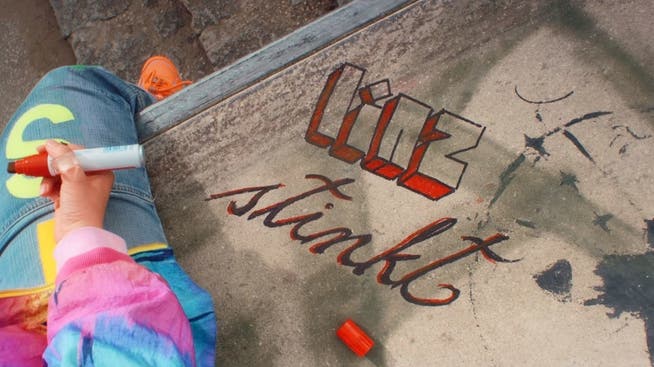
I was reminded of “Beautiful Bruchköbel” by the cinema ad from the tourist association of Linz to attract visitors to Austria’s third-biggest city: Linz ist Linz. Even if you don’t speak German, I’m sure you’ll get the drift. It's a bit warts and all. Linz is described as being “for old people”, “gruesome” and “a bit rascist”, amongst other things.


There have been complaints. From the mayor, from restauranteurs and hoteliers.

But don’t we keep hearing about authenticity in advertising? Isn’t this the big thing? I find it sad that the ad industry is so po-faced and serious these days. A bit of self-deprecating humour, a touch of irony ... it doesn’t seem to be recognised or appreciated any more.


Linzertorte made by me

I’ve never been to Linz myself (although I love Linzertorte), but after seeing this ad, I’m really quite tempted.

Better ironic than (yawn) iconic, I say. 


Tuesday, 2 February 2021

RETROWURST: Mixed Beers February 2004


A New Year, a new series on Extrawurst. Going back to my roots aka Wurzeln, if you like.

When I started freelancing, back in 2003, I decided to write an article each month on a market, brand or aspect of life in Germany. This was originally for my friends The Value Engineers.  Later, the collected articles found their way onto my (currently undergoing digital transformation) website. And in 2008, I started this here blog, and the articles grew sad and dusty on a long-forgotten external hard drive.

I reckon 15 years is long enough in the past to be retro, so, with a fanfare of red plastic trumpets, here comes Retrowurst. There'll be one of these a month, and I hope they will interest, intrigue and maybe give a nostalgic taste of the early days of this millennium, the days when I was still a relative stranger here.

From February 2004, here's a piece on 'Mixed Beers.'

Cheers!

--------------------------------------------------------------------

This month, I am going to consider a few developments in the German drinks market that would have Wilhelm IV, Herzog of Bayern, turning in his grave (and which would have probably turned his stomach too, had he still been alive)!


Wilhelm IV of Bayern was responsible for passing the world’s oldest law concerning foodstuffs, otherwise known as the Reinheitsgebot or Purity LawIt is not known whether the duke of Bavaria passed the law as a result of a terrible hangover or stomach upset, but he decreed, on 23rd April 1516, that beer produced and sold in the towns, markets and countryside of Bavaria should contain no ingredients other than barley, hops and water. For hundreds of years brewers in Bavaria and later in the rest of Germany obediently followed the Reinheitsgebot and Germans enjoyed the benefit of what is arguably the best beer in the world. The German beer market has not been so influenced by the fads and fashions seen in the UK, for example. Of course, the odd imported beer can be seen now and again in the more fashionable bars and clubs but, by and large, most Germans are happy with a glass of Pilsner or one of the more localised beer variants. Whether it’s a bottle at home in front of the TV for Sportsschau (no self-respecting German would dream of drinking a can of beer) or a half-litre sitting in the Biergarten in the shade of chestnut trees in summer, it tastes good every time and generally has no undesirable or anti-social after-effects.


However, one thing that Wilhelm IV did not forbid in his Reinheitsgebot was the mixing of beer with other drinks. And it is in this area that the worrying developments are now taking place. There is a fairly long tradition of beer-based mixed drinks in Germany. What we would term shandy – beer mixed with lemonade – is known here as RadlerRadlerliterally means ‘cyclist’ and this drink was traditionally offered as a thirst-quencher to cyclists in the summer as an alternative to drinking large quantities of potent beer. Jerome K. Jerome’s book, “Three men on the Bummel”, a sequel to “Three men in a boat” paints an evocative picture of a cycling tour through the Black Forest in the early years of the 20th Century where Radler is, naturally, consumed.


Another more recent beer-mix drink is Colabier, which is particularly popular amongst young people. Colabier is also known as Dreckigesbier or ‘dirty beer’ on account of its somewhat off-putting appearance. Despite being an odd concept and looking pretty revolting, Colabier is actually quite palatable in the right context. It is a good party drink, as the caffeine kick counterbalances the soporific effect of the beer.


As they stand, Radler and Colabier seem harmless and non-threatening enough to the mighty German beer industry, with their connotations of idyllic Edwardian summers and youth club barbeques. But the beer industry here is not as healthy as it was. Although the Germans are still high up there in the beer consumption league (second only to the Czechs), beer consumption per head is down. In 1995 consumption was 136l per head per year; by 1999, this was 127l per head. Although this is still equivalent to 0.33l per person per day, the trend is at best static and at worse, in decline.


Increasing concerns with fitness and health have resulted in less alcohol consumption generally and young people are beginning to look to other drinks.


Alcopops and ready-mixed drinks hit Germany a little later than the UK but have become very popular in the last couple of years. The focus is more on the ready-mixed drinks, such as Smirnoff Ice or Bacardi Breezer, or bottled versions of cocktails such as Mojitos rather than alcopops. The breweries have responded by producing commercial, ready-mixed versions of beer-mix drinks with a difference. While ready-mixed Radler has always been available, this was normally promoted at a very low level with nostalgic graphics and imagery, which could have come straight out of Jerome K. Jerome.


The new beer-mix drinks are aggressively promoted and clearly targeted at the young club and party crowd with funky or hi-tech names, graphics and ingredients. Most of the major breweries are getting in on the act, with an ‘if you can’t beat them then join them’ mentality. Licher, a medium-sized regional brewery from Hesse, which promotes its main beer brand on a very ‘nature-influenced’ platform, has introduced ‘Radler Limone’, ‘Cola 2’ and ‘Fresh Lemon’, with modern graphics and pack design. Diebels’ Cola Mix is called ‘Dimix’ with hi-tech graphics, while Köstritzer has a sub-brand called ‘bibop’ described as ‘dark beer with cola and guarana’. One of the biggest breweries, Krombacher, has a sub-brand called ‘Cab’ which is ‘Cola and beer flavoured with dragonfruit’. The pack design has a far-eastern touch, with no reference anywhere to the Krombacher or German heritage.


It will be interesting in the long run to see what effect these developments will have on the German beer industry. Will these commercially produced and over-marketed mixes pollute the good name of German beer? Or will they introduce young people to the world of good quality beer? Without being too pessimistic, these sub-brands have a distinctly ‘mutton dressed as lamb’ or ‘embarrassing Dad at school disco’ feel about them and one can’t help wondering if there are more appropriate and effective ways for the German brewing industry to revive its flagging fortunes, maybe by going back to its roots – all the all way to 1516 and Wilhelm IV, in fact.

-------------------------------------------------------------------------


Well, as always happens, the answer isn't either/or - it's both. And neither. Beer consumption has continued to decline in Germany (from 115.3l per head in 2005 down to 99.7l per head in 2019), while Germany now appears to have slipped down to the 4th in the world in terms of consumption - yes, the Czechs are still up at the top, but both the Namibians and Austrians have slunk in between, according to one data source.

The wild and wonderful flavours have continued to proliferate, including some unholy mixtures involving energy drinks. But - the trends to local and regional, sustainability and craft beer have meant that even though Germans are drinking a little less, there's more choice on offer than ever. 

Thursday, 9 November 2017

Are your roots showing?

A long time ago, when I was still in the UK and working on the British Airways account, they set up a fascinating piece of international 'Britishness' research which looked at impressions of Great Britain in a number of countries around the world. This was qualitative research, and people in each country were asked to imagine a typical British town and what the characters were like there: policeman, doctor, teenager, manual worker and so on. It was rather like that 'Heaven and Hell'  joke, one version of which you can see above. And - surprise, surprise - there was little consistency in the way Britain was seen around the world - sweet and quaint in the US, compared to pushy and arrogant in Australia.

I've just read a long article in The Guardian about the rise of nation and place branding, which appears to be a booming business. Not just from the point of view of attracting tourists, but for governments to attract investors, workers, students, or to allocate resources and increase esteem generally internally and externally, much as you would use a Brand Purpose or Position.

It's not an easy job. Apart from an uneven playing field to start with (as in the differing impressions of US and Australia in the example above),  just think how quickly the overall impression of a country can change due to a change in its leadership. Obama's USA and Trump's USA - worlds apart. Or how a personality associated with a country or place can make or break impressions. Or how a natural disaster can overshadow everything. The article quotes Naomi Klein: Diversity and debate are the enemies of branding. Is it folly to try and reduce something as complex and multi-faceted as a place to a mere brand?

As mentioned in the article, Institute for Identity are having a good try. Their work sounds like a dream job - travelling around, getting the feel of the place, talking with the people, everyone from historians to lace-makers to film-makers.

And even if it seems a step too far to attempt to distill an entire country with all its dynamism, history and diversity down to a slogan and a logo, in these days of globalisation it's increasingly important for brands to be unique and authentic. And part of that has to come from the provenance. How has where the brand came from, where it was founded, informed its purpose and values? Instid have some useful tools and techniques on their website for getting a clearer understanding of a place - through the intellect, emotions and senses.

For brands, as for people, it's important to never forget where you came from.

Friday, 8 September 2017

Local Beer-o

We live in Hessen, but not far at all from the border with Bavarian - a matter of about 10km, I think. But this is not deepest Bavaria as in absolutely everyone in lederhosen and hats with shaving brushes attached, but rather what is known as Franconia or Frankenland. It's that part of Germany which lies neatly on the beer/wine border on the above map, and it happens that our near neighbours are rather good at both. The map, incidentally, is one of 18 stereotypical maps of Europe from Spain-based Bulgarian Yanko Tsvetkov. Well worth a look, but please don't take them too seriously!

One brand that seems to have been omnipresent in our lives this summer is Schlappeseppel beer:


Maybe it's because my son is now also legally allowed to drink (is Germany the only country in the world where you're allowed to buy alcohol at 16?) so the house is full of crates of the stuff, or maybe because every village Fest we've attended seems to be sporting sunshades/umbrellas from the beer brand.

Schlappeseppel is a great name to pronounce even if you have had a few, and is another beer brand that features what appears to be a child on its logo, which all adds to the charm. It originated in the Lower Franconian capital of Aschaffenburg amidst a story involving the 30 Years' War, the King of Sweden and a lame soldier named Joseph, which is where the name hails from, if all the hokum can be  believed.

I believe that the brand's success has to do with its unashamed appeal to authenticity, roots and tradition while being promoted in a 21st century way. The slogan translates to 'on/in everyone's lips for hundreds of years' and the website offers all manner of amusing gifts from felt slippers to Skat cards.

Mine's a large one, please!


Monday, 13 March 2017

A bundle of good

One of the biggest problems in the modern age is getting rid of stuff - and I know I certainly feel the pressure to get rid of stuff in a responsible way, not just 'chuck it out.'

Mothercare have estimated that there are some 183 million items of outgrown baby clothing lurking in UK cupboards and drawers, and they've come up with an excellent promotional idea in time for Mothering Sunday/UK Mothers' Day. The thought is Gift a Bundle , with Mothercare partnering with environmental charity Hubbub - pick up one of the promotional bags from your local store, fill it with 6-10 items of baby clothing, and return it to be given to a local family in need.

This is a nice down-to-earth idea that combines lots of good stuff: topical, local, sharing, bringing people together, good for the environment - and all of this through a simple action, not preaching from on high with questionable statistics, expensive film directors and heartstring-pulling plinky piano music.

This is called driving the band waggon (for a short trip, at least) rather than leaping on it.

Tuesday, 1 October 2013

On yer bike!

... and here's another one of those ideas that feels good and feels right. Peddler's Creamery is an ice-cream business for the 21st century. Ben & Jerry's has long been part of Unilever so maybe there's room for a new kid on the block. This particular kid is Edward Belden, an Environmental Sciences graduate who launched his idea via Kickstarter.

And what an idea! Described on their website as providing "high quality artisan bicycle-churned organic ice cream and frozen desserts, Peddler's Creamery is one of those ideas that combines the best of contemporary and traditional thinking. The name is brilliant, and the idea fits so many current trends, from "living local" (local ingredients and supporting the local community) to "handmade" to "delicious indulgence" (Honey Lavender! Chile Mango! mmmmm!) to, of course "sustainability" - the ice-cream is churned via bike power.

That's not just a lucky co-incidence, I feel. Ice cream and bikes have had a long association, as portrayed in the brand logo, which adds a touch of nostalgia for long summer days when things were simpler to a very modern brand.

The Peddler's Creamery are striving for happy, satisfied customers with a smile on their face and a smaller footprint on earth.

They've certainly put a smile on my face.

Monday, 22 October 2012

Anywhere in the world

There's a lot of talk these days about the trend towards the local. Local produce - with many supermarket chains offering their own lines with certified provenance, or local (and for local read independent) coffee shops and restaurants - and all with the connection to social and mobile media, facilitating access in all senses of the word.

But it seems a shame that, for many people, these thoughts go out of the window and straight onto the local rubbish tip when it comes to holidays abroad. It's far easier to book something all-inclusive in an impeccably furnished but ultimately soulless hotel - which could be anywhere. Palaces of concrete like luxury cruise ships - and with about as much foundation, roots or local character.

The usual excuses justify this behaviour:

"It's great for the children with the Kid's Club"

"I don't want to risk a dodgy tummy or getting knifed in a backstreet on holiday"

"If you pay all-inclusive upfront, there aren't any hidden extras"

Well, no. There won't be any hidden extras. No nasty surprises, but no nice ones either.

Just endless stretches of sanitised, predictable, global-brand-for-discerning-guests.

Friday, 28 September 2012

Fairway Guerrillas


Hyperlocal, grass roots, SoLoMo ....you can choose whichever buzz word you like, but no-one can get away from the fact that mobile technology is opening up a whole load of new possibilities on a local level.

But the campaign that tickled me recently uses good old-fashioned guerrilla tactics - to tap into the local market. Going back to that phrase "grass roots", I'll confess to why I think this idea has grabbed me so much. I grew up in Camberley, which is not a million miles from Windlesham. It's all very stockbroker belt and pink gin and one of my joys as a child was collecting golf balls that had strayed off the fairway.

The challenge for the Windlesham Golf Club was to attract new members who may not live a short drive away by distance, but who do by time. As the club is very close to the M3, this is quite a wide catchment area.

The cunning plan devised by the agency was to "plant" golf balls with the club's web address and logo in drives and gardens of prospective new members, giving the impression that they'd simply flown in from a rather over-energetic swipe.

As anyone who lives in the area knows, stray golf balls in the garden are no uncommon occurrence  - but a golf ball as cleverly logo-ed up as this one is rarer than an albatross.

Best thing of all - you can use the ball for your first round!