Showing posts with label cliches. Show all posts

Friday, 22 December 2023

Time for altered images?


The last couple of times I’ve signed on to my internet banking with Commerzbank, I’ve had a lovely little seasonal surprise. The visual, above, drawing my attention to the bank’s Christmas charity drive. They have partnered with brotZeit e.V an organisation that provides free breakfasts for schoolchildren. And, sad as it is, there are plenty of children in Germany at the moment who could benefit from this charity.

Why am I commenting on this? Well, the visual itself is striking and eye-catching, with its healthy snacks in the guise of seasonal characters. Pictures do paint a thousand words and fun, hope, cheerfulness, children, health, colourfulness, yumminess, friendliness, cosiness, kindness, imagination and creativity are just a dozen to start with. This is so much richer than the type of visuals that usually confront me on opening the website.

Typically in the last year, these will either be the usual grinning plastic people looking thrilled and excited over their laptops. Or pairs of said plastic people smooching. I’ve written about these plastic people here, and I don’t think it needs repeating. 

What I wondering is - in the obsession with representation, diversity and “people who look like me”, have we forgotten the power of the abstract and the symbolic? Long, long ago, we handled the Commerzbank account at Saatchi. We created a striking look, and from what I remember, there were no visuals of human beings. Everything was symbolic, from squirrels to oak trees. And plenty of less expected, yet rich, evocative imagery, too. 

Why does everything have to be so literal? Surely communication works harder when the visual is not merely a reflection of the text? The problem with using the thrilled and excited plastic people is that everyone else is using them too. Within the banking category and without. 

Advertisements from the golden age of posters are now regarded as art

Isn’t it time to give the thrilled and excited plastic people and their laptops a rest?


Friday, 12 May 2023

Find the gap?


A recent campaign from Nurofen has alerted me to a whole rich seam of Home-Grown Problem: Solution advertising that brands can dig into. An appropriate metaphor, as this is all about digging your own gap, and presenting your brand as the superhero that’s going to come along and right all wrongs and injustices.

It all started, probably, with Equal Pay Day and the Gender Pay Gap, which I remember working on with IKEA back in the 2000s. Nothing wrong whatsoever with bringing this inequality to public attention. Equal Pay Day itself was set as how far into the year women must work for nothing to be on the same standing as men. It’s cheering that the date has moved forwards from 26th March in 2010 to 7th March this year. Still work to be done, but good progress.

Now, back to Nurofen. This brand has discovered a “Gender Pain Gap” and created a campaign called “See My Pain” to help to close it. According to Campaign, “Fifty per cent of women feel ignored or dismissed by their GP when it comes to their pain compared to 36% of men.”

Aha! A villain of the piece - UK GPs. A quick search and I found that in the UK, 55% of GPs are female and 45% are male. Hmmm. If I was a  GP and had studied for years to get there, I don’t think I’d take kindly to brand and advertising people giving me a lecture about being sexist and ignoring women’s pain.

It doesn’t help that the creative execution is painful in the extreme. All the usual suspects are there in the film: plinky piano music, tearful testimonials, “victims” telling their authentic stories. And on the website, there’s a ghastly line that looks as if it has escaped from a potboiler paperback in the bargain bookshop’s sale: 5 Women. 5 Stories. 1 Painful Truth.

It’s the sort of thing that feels like a parody and makes me ashamed to be in advertising.

Unfortunately, Campaign is behind a very expensive paywall (a topic for another time) but reading the list of credits for the campaign, my jaw dropped. I won’t name the agency as you can look it up, but it’s one that has a main bit and a specialist health bit. Credits used to mention the main people who created and produced a film. But just looking at my line of work, the following were named from the main agency: Head of Planning, Planning Partner, Planning Director, Planner. Then from the health agency: Planning Director, Senior Strategist - Social Sciences, Senior Expert Strategist. 

7 Planners. 7 Excessive Salaries. 1 Crap Commercial?

Going back to those gaps. Yes, seek and ye shall find. Gaps, seams, unlevel playing fields. All humans are vulnerable to injustices of one sort or another. 

But that doesn’t make us all victims.  

Friday, 10 June 2022

Here we go again


I’m always amused when clever young things at ad agencies rediscover topics and stories that are as old as the hills, with the bright-eyed and bushy-tailed conviction that they are the first to do so. One story that’s been going round and round and round and round like a broken record (showing my age here) is the one about the 50+ generation.

The latest study to cop onto the fact that over-50s hold 99.9% of the wealth but are only featured in 0.1% of the ads (or whatever the latest figures are) is The Invisible Powerhouse from MullenLowe Group UK. 

I know I’m as guilty as the next person when it comes to blabbing on about this stuff - and I can recommend this report in that it’s well put-together and thought through. There’s a useful segmentation based on approach to life which I can see having application.

But ...

Why do the old chestnuts still persist? “You’ll become invisible” “Older people are either portrayed as frail old dears or 90-year-old sky-diving super-heroes” “Old people don’t think of themselves as old” “It’s important because - gasp! - we’ll all be old one day” “Age does not define them”

There’s a certain lack of logic in it all, though. If Age is not Identity, if In our Minds, none of us is Old, if A 60-year-old Happy-Clappy-Activist has more in common with a 20-year-old Happy-Clappy-Activist than a 60-year-old Karen Brexit-Gammon, then ...

Why the heck should representation on the basis of age be so important?

I can identify with a 25-year-old man or quite honestly, an ageless, sexless cartoon character in an ad if it hits the nail on the head about a desire or need I have - and is presented in an entertaining way.

Maybe the real insight here is not “we’re all going to be old one day” but “all old people have been young, but no young people have been old” (not going to get into Buddhism here). I suspect that is where this is all going wrong.

By the way, if you’re an over-50 yourself, you might need your reading glasses for the Mullen Lowe report if you’re looking at it on the laptop. It’s a tiny typeface. 

Tuesday, 21 December 2021

From one Heile Welt to the next


When I first came to Germany and listened to people in group discussions talking about advertising (mostly TV advertising in those days), one phrase I heard again and again was Heile Welt. It’s a phrase that doesn’t translate exactly into English, but the idea is of an undamaged/unhurt/unbroken world. It’s a bit like a Utopia, but presented as if it just could be reality.

Advertising in those days in Germany was more influenced by US-style advertising typified by P&G than the more self-deprecating humour, or surreal flights of fantasy found in UK advertising at the time.

The Heile Welt had some typical tropes - flawless skin, happy nuclear families, white washing and sparkling homes, svelte and beautiful career women tossing manes of glossy hair around, endless summers in a countryside idyll, wise and knowing loving grannies in cosy rustic kitchens, square-jawed men driving impossibly shiny cars up picturesque mountain passes ... R.E.M’s Shiny Happy People wherever you looked.

I think, in those days, most people watching knew the rules of the game. It was only advertising, after all.

In the last few years, there has been a greater call for authenticity in brand communication. More reflection of “real people” (what other kind are there?) and “real life” as well as more representation of today’s diverse society

But have we exchanged one Heile Welt for another?

I suspect, looking at this year’s selection of Christmas ads, that we have.

Advertising has moved from material or appearance-related aspiration to what I’d call emotional aspiration. 

People in ads these days - from tiny tots to great-grandparents  - are caring and generous. Inclusive, tolerant and kind. Feisty and resilient. Empathetic and compassionate.

But I can bet you that these models of new EQ standards make some people feel as inadequate as the impossibly slender models of the last century’s beauty standards (by the way, I’ve always wondered if there's some ministry hidden away somewhere busily setting all these standards that the new advertising is so keen to disrupt and smash).

This kind of advertising is no more “authentic” than the stuff from the last Heile Welt. Real homes are messy, and so are real people, emotionally. On a good day, I can be a model of empathy and compassion, but on other days I can be downright spiteful and pig-headed. It’s called being human.

I don’t mind a bit of emotional depth in advertising, but I’d ask agencies to be more honest - or even authentic - about what they’re producing. 

Good story-telling that pulls at the heartstrings is nothing to be ashamed of - but just don’t pretend that it’s real life.   

Thursday, 24 December 2020

Comfort and Joy


A Christmas Story by Charles Rebel Stanton


Comfort and joy may have been in short supply this year, despite many of us forced back into our own comfort zones for rather too long. It's been clear that for brands, too, communications have been created with something of a "walking on eggshells" mentality, with concern over tone-deafness and misreading the mood of the nation. 

This somewhat restrictive approach, worrying about getting it wrong rather than determination to get it right, has led to a lot of bland, joyless and strangely soulless advertising and other communications.

Maybe it's time to stop thinking about advertising's role to reflect the world as it is, and start thinking about its role to entertain and present the world as it could be. Or another world completely.

Joy is a good start, but joy always feels a little bit sanitised and homogenised, like a choir of over-zealous evangelists. Especially when it pops up in a marketing plan which eulogises over making each touchpoint a "joyful connection".

I hope next year, advertising can dust down its entertainer's glad rags. Not merely joyful, but bringing us belly-laughs, mischief and mirth. Witty repartee, farce, a subversive smile. Whimsy, euphoria, glee and giggles. 

That's how to sell stuff, in the end.


Wednesday, 15 April 2020

Goodie-goodie brands

The current COVID-19 crisis has brought them all skipping out across the daisy-strewn meadow - the oh-so-virtuous po-faced brands with their interchangeable #inspiringhashtag films, beautifully parodied here.

The films aren't the end of it, either. All the goodie-goodie brands in class have their hands permanently raised to get the teacher's attention. Look what I've done, Miss, look-at-me, look-at-me, aren't I a good little boy/girl/whatever? Actions speak louder than words, but most of these actions aren't for their own sake, but to shout about on social media, or to get on "great things brands are doing" lists.

It's said that the current crisis will accelerate a few things that are happening anyway, like digital transformation. I suspect another is brands raiding the virtuous dressing-up box for values which they'll try (in a not particularly virtuous way) to "own". Interestingly, some of the classic virtues seem more in demand - humanity, kindness, empathy, compassion and charity being top of the pile - while others are relegated to the bottom of the said box - can't see many brands positioning themselves on diligence, patience or humility these days.

There's an interesting extract from an article here entitled From Gorilla to Generosity about the Cadbury brand. Back in 2007, everyone was raving about the Gorilla commercial, but it now seems that history is being rewritten - the ad "failed to reflect the brand", despite being hugely memorable and successful in its own way.

It seems to me that the Cadbury story was a classic case of planning post-rationalising an inspired piece of creative that in all probability just happened, with no rhyme or reason. Someone, somewhere worked out that maybe Gorilla was about "joy" so that became the positioning officially in 2012.

But by this time Cadbury had been taken over by Kraft/Mondelez, adding all the complications that a global owner brings. What's happened to our chocolate, came the cry as factories were closed. This may or may not have prompted the move from the generic, somewhat self-orientated and distinctly unownable "joy" to a "reconnection with the roots" and the current positioning, based on kindness and generosity flowing from the product truth of "a glass and a half."

There's been some nice work done for the brand, but part of me questions the credibility. Can you go back to your roots and be accepted there if you've turned your back on your origins for the global high-life?

And is something like "generosity" a bit too goodie-goodie for chocolate? I miss the silliness and humour of chocolate advertising that played, not with the virtues, but with the sins - envy, greed, gluttony - in a light-hearted and very human way.


Friday, 27 March 2020

Those less fortunate


About a week ago (I have lost track of time in this weird pandemic pandemonium), in the light of supermarket shortages, the photo above went viral on social media. Comments focus on how "heartbreaking" it was, with plenty of weeping emojis and self-righteous indignation about the lack of brain cells of the loo-roll hoarders and their like.

I can imagine that most of these comments saw a tragic scene of a "poor elderly (anonymous) gentleman", sadly bowing his head in silent submission of his fate. The reality, I read later, was a little different. Anthony Glynn, a retired merchant seaman aged 79, had gone out shopping on behalf of his elderly neighbours and had forgotten his reading glasses so was squinting at his shopping list.

This reminds me of my parents, who, in their retirement helped out with "the old people" - in fact, in her 90s, my mum was still doing voluntary work for Age Concern, visiting older people who were housebound. Some of these were a good few years younger than her, of course.

In real life and in marketing (which shouldn't actually be different, but they are), there is an increasing tendency to cast everyone as a victim, to describe huge swathes of the population as generally "vulnerable" - without really saying to what in particular. And yes, human beings are vulnerable - to the COVID-19 virus for example.

But you can be resilient, courageous, even, as well as vulnerable. Society is not simply divided into "heroes and the vulnerable" or (in pre-corona days) into "the toxic and the victims". I found this article by sociologist Frank Furedi particularly illuminating on the current crisis. He calls for a cultivation of courage, and its attendant qualities of altruism, responsibility and wisdom.

Courage is not the same as fearlessness. You can't have courage without fear.

I do hope that one (admittedly not terribly high on the world priority list) consequence of the current crisis is that we'll see all those ridiculous "empowerment" campaigns for the nonsense and home-grown problem:solution guff that they are.


Thursday, 12 March 2020

Th' milk of human kindness

I've got a little prediction. Brand managers will notice that the poster girls of 'Purpose' - female empowerment, body positivity and gender stereotyping - are getting a little long-in-the-tooth and been there/done that, and will start casting around for replacements. Maybe something that's a little less MeMeMe?

A few strands of thought will coalesce. Reports about the divisions and fault lines in society. The movements against online bullying and trolling - #BeKind - and the debate surrounding this. The trend to "uplit" in the publishing world. The call for more empathy, even though people that work in advertising and marketing aren't as good at that one as they think. And, of course, brands that have already taken the first step.

Coca Cola has recently announced its refreshed purpose as "unite and uplift". To me this sounds rather like the opposite of the old Playtex Cross Your Heart line which was about lifting and separating. Brushing that aside, though, as Graham Booth states in the blog post, Coca Cola kind of has uniting in its DNA, although there's been some dilly-dallying around with other ideas in the last few years.

The launch commercial, "Could I be wrong?" has been out for a couple of weeks. We've yet to see if it joins the realms of classic Coca Cola ads such as "Hilltop".


And another variant on the "be nice to each other" theme is Cadbury's, whose brand moved (in 2018) from catalysing moments of joy (which are a little MeMeMe) to moments of kindness to others, specifically generosity, with the idea that "there's a glass and half in everyone."

I'm not sure what the best translation is for "kind" in German - there's "freundlich", which also has connotations of friendliness and approachability. Or "nett" which is simply "nice" with the same sort of connotations. And the words "gütig/gutmütig" which are to do with Goodness.

And this is the thing with kindness. I do think it's a valid area for a brand purpose, but it really isn't a one-size-fits-all thing. I'd hate to see the advertising world awash with "th' milk of human kindness" in the way it's been over-run with increasingly cliched babble about female empowerment.

You can ask children to play nicely if you're a nanny or or primary school teacher. But you can't tell adults to be kind. Kindness comes from within, from your values, and isn't just about some stunt involving random acts, or forcing people with extreme opposing views to drink a beer together.

What unique role does your brand play in kindness? Is it about bringing people together, sharing, helping, caring, understanding ...?

I do hope that the idea of kindness will be a rich seam for marketers.

Yet, advertising industry, do I fear thy nature when it comes to band wagons.

Wednesday, 19 February 2020

Come together

Reading the stream of marketing newsletters and articles about younger people (or GenZ if you must), you'd think they are all utterly obsessed with social activism and eco-activism and think about precious little else.

I often wonder about the difference between my online reading (which is predominantly UK/US or other English language media) and what I observe around me here in Germany. So I was interested to come across the organisation More in Common who are dedicated to looking into the divisions in society, finding the source of these and working towards more social cohesion.

One report concentrates on Germany. The received wisdom in Germany is that society is divided politically (Right vs Left), geographically (former East vs West) and probably by age, although there isn't quite the obsession with Boomers, GenZ and the rest, which I find refreshing.

Instead of political views and demographics, More in Common groups people on the basis of values and beliefs - for example, authoritarian tendencies, perception of threat, personal responsibility and ability to take action and so on. Six groups emerge (I do question whether grouping people in this way and creating new "tribes" as well as talking about "fault lines" is possibly counter-productive, but I guess it's a means to an end). And what's interesting is that these 6 groups fall into three layers.

There are the Polarised, who are the loud and opinionated ones who dominate public debate and social media.

There are the Stabilisers, who are generally satisfied and optimistic, and could be called the backbone of society.

And then there are the Invisible Third - less integrated, less visible and less engaged.

There's little evidence of an East/West split, contrary to popular opinion.

How can marketers and brands use this? Well, instead of doing the easy and obvious thing, and getting embroiled in a debate with the polarised, through a "social experiment", for example, maybe brands can look to engaging and involving the Invisible Third, or harnessing the optimism and community spirit of the Involved and Established.

Going back to the young people, 45% of those aged 18 - 29 belong to the Invisible Third (Detached and Disillusioned).

Rather than listening to those that shout loudest, perhaps we should tune in to those on a different wavelength to see what they really care about.

Monday, 9 December 2019

The war against plastic (words)

Good advice, generally, doesn't go out of fashion. I make no excuses for posting this memo from David Ogilvy. Nearly 40 years on, it's as important as ever.

I particularly like points 2, 3 and 4, which always remind me that the best presentations are the ones that are to the point. They get into your mind and stay there. They do this through using everyday, natural language, not what Ogilvy calls jargon and others have called "plastic words."

Plastic words have that Humpty-Dumpty quality that they mean whatever the user wants them to mean in that context - or sometimes they mean diddly-squat because the user doesn't really know what they want to say, only that a particular word gets a head-nod and ticks a box somewhere.

As the authors of that article point out, our language is polluted with these words. I often wonder what on earth we said before we started started talking about engagement, or agility or diversity. Not to mention purpose, impact, sustainability ...

Time to battle with the verbal plastic, as well as all that junk in the sea?

Tuesday, 20 August 2019

Aufschnitt 3: The modern rules of advertising, 2005

It's off cut time again. This could well be Bierwurst, although I'm not entirely sure. If it is, it makes a nice link to the first point in an article from the BBC News on Friday, 2nd September 2005, all about advertising cliches. It's an interesting one, as I posted last week about the heavy-handed mission of the ASA to eliminate anything that could possibly be construed as a harmful stereotype from advertising.

So, here we go - 26 advertising cliches from 2005:


I'm not sure whether this is a cause for celebration (plus ca change) or whether it makes me mildly depressed about the state of this industry.

But one thing is clear - the more creative we can be, the less obsessed with "slices of life", and the more we can keep a perspective and a sense of humour about the work we're doing, the better the results. Both in the creative work and what it does for the brand.

Thursday, 15 August 2019

Tiptoe through the tulips

I'm afraid that this post may have me sounding like a rabid Daily Fail reader, but sometimes I wonder what I'm still doing in this business.

I read that the ASA have banned the first two TV ads under the new rules put in place to "reduce gender stereotyping." Complaints had come in from the public to say that these ads "perpetuated harmful stereotypes." I took a look at the ads, expecting to see something outrageous. Offensive, even.

But I don't think I've seen anything so harmless in my life.

According to the BBC, three people (no, that's not a typo) complained that the VW ad showed women in a passive/stereotypical care-giving role. I'd assume those three people were taking the piss. But the ASA, in their infinite wisdom, have concluded that "this ad presented gender stereotypes in a way that was likely to cause harm."

Cause harm? To whom? In whose view? What possible harm could be caused by seeing a woman on a park bench by a pram for a couple of seconds in a TV commercial? What kind of a world is it where depicting someone as care-giving is "likely to cause harm"?

Maybe the woman in the ad finally had a longed-for baby after several miscarriages. Maybe she's a lesbian. Maybe she used to be a man. Maybe she used to be a wombat for all I know and care.

What on earth happened to imagination? I've posted before about the way everything seems to be taken so literally these days, with demands here, there and everywhere for people of all sorts to "see themselves reflected in advertising".

Please, please, please:

Bring back creative ideas.

Bring back universal human truths.

Bring back advertising as entertainment not a dull bloody reflection of real life.

All that will happen if this policing continues will be the emergence of new stereotypes which will quickly become as irrelevant and yawn-inducing as the old ones.

Who remembers the "new man" of the 1990s?

Wednesday, 4 April 2018

(Home-grown) Problem:Solution Advertising

Advertising in the past (especially from the likes of Procter & Gamble) frequently featured a format known as Problem - Solution. The Problem would be dramatised in a way first to get heads nodding - oh-yes-I-have-those-stubborn-stains-too-but-never-dared-mention-them. Then, in a starburst of glory, the Solution would enter the screen in a heroic pose, possibly accompanied by a man in a white coat or a super-scientific nifty demo.

Once super-hero Solution had done its job, the end benefit would be celebrated with cheesy smiles all around (particularly if the Problem was unsightly yellow stains on teeth, or similar.)

However, after a while, 'Problem Fatigue' began to set into that style of advertising. Most of the world's household stain problems, washday woes and less-than-perfect skin, hair and teeth gripes had been tackled, if not completely eradicated by the various solutions on offer. Companies started inventing problems to which they'd already made the solution. Or dilemmas which no normal person in their right mind would ever entertain. It all got a bit ludicrous.

But a few years ago, advertisers started to strike a rich seam. Problems - less physical, more attitudinal - that the advertising and marketing industry had themselves created.

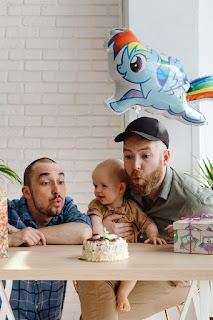
Take the picture above. Back in the 80s, 90s and even early noughties, clothes and toys for young children were fairly gender-neutral. With a few notable exceptions. But for the last couple of decades, more and more sparkly pink and girl/boy-designated books, toys, birthday cards, wrapping paper  and even cakes and sweets have crept in. So, all of a sudden, there's an issue - gender stereotyping - that brands can bravely fight against. While keeping quiet about who created the problem in the first place.

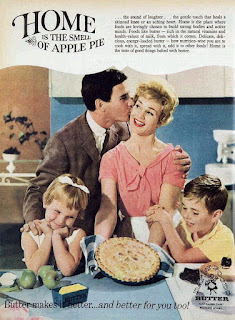
Ditto Objectified Women in Advertising. There are more than a few plucky brands taking a stand against this issue. Accompanying their efforts is a narrative that suggests that back in the dark ages of the last century, almost all women in advertising looked something like this, unless they were cast into the role of mother/housewife:


And, worst of all, women at the time meekly accepted their lot of how they were portrayed. Really? Maybe most of us had more important things than advertising to worry our pretty little heads about at the time.

While we're on the subject of women, there are those now well-known enemies: flawless beauty:


And stick-thin models:


Again, these 'issues' - which were manufactured by the advertising industry itself - are being used as societal problems which the new, virtuous, purpose-led brands can rush in and solve in a blaze of awards, social experiments and tear-jerking commercials.

What takes real bravery, though, is to admit to having created (or exacerbated) a real problem, like plastic waste,  or  unnecessary additives in foods and make a commitment to do something about it:


Sometimes the world of advertising, with its issues, problems and solutions, feels rather like the world of reality TV, where the winners of one ghastly show are recycled as contestants for the next.

And no-one outside the echo chamber really cares.


Friday, 22 December 2017

A wonder-full 2018

I know, I know. It's only adverts.

But next year I would love to see less of platforms, engagement, driving this or that, KPIs, journeys of various sorts, digital disruption, millennials, Thought Leadership, embracing and empowering, reaching out, roadmaps, workshops, Change Drivers, seamless experiences, content, algorithms ...

And more:

Wonder

From one of my favourite books, above:

"We have educated ourselves into a world from which wonder, and the fear and dread and splendour of wonder have been banished.. Wonder is marvellous but it is also cruel, cruel, cruel.  It is undemocratic, discriminatory, and pitiless."

A wonder-full 2018 to everyone!


Friday, 24 November 2017

The Gospel according to Powerpoint

I must make a confession. I am not a regular church-goer, either here in Germany or back in the UK. Having said that, I do have many memories of church from my childhood, and I have to say that most of those are related to what marketing people today would call the 'experience' rather than the 'communication.'

Church-related communication has always been charmingly amateur, in my experience. Amateur in a positive way: not slick, not 'professional', communication that looks hand-made. For all the 'hand-written' and 'hand-crafted' yet carefully designed communication that commercial brands and enterprises put out these days in an attempt to appear authentic, they could well take a leaf out of the local church's poster advertising the Summer Fete, or the parish magazine. It's amateur in the sense that the people producing these communications genuinely love what they are doing.

As for the 'experience' - well, that's quite different, and I'm not in any way alarmed by this inconsistency. My memories of the experience, certainly in retrospect, include feelings such as wonder at the mystery of it all and, yes, awe in its original sense. Whether it's stained glass windows, bells ringing, organ music, polished candlesticks and pews, ancient texts or stories from two thousand years ago, there is plenty to stimulate the mind, the senses and the spirit.

So imagine how I felt when I attended a church service on a recent trip to the UK (not to the beautiful church pictured above, I hasten to add) and heard the language of the boardroom and the management consultant. Now, admittedly, the management types pinched the idea of a 'vision' from the spiritual types to start with, but it was rather alarming to hear it played back in the context of a 'Vision Statement' for this particular church. Not just that, but talk of priorities and process, enablement and empowerment, roadmaps and workshops. I didn't actually hear mention of Change Drivers and KPIs but I suspect they may be part of the package.

My view of the beautiful stained glass windows was somewhat obscured by a series of posters depicting a number of 'pillars' relating to the 'Vision', which looked as if they had come from a Powerpoint design-your-own-strategy-presentation background format.

Maybe I'm over-sensitive and others less close to the world of business will welcome this more down-to-earth approach (is it?) - and maybe God moves in mysterious ways - but I would rather leave the bullshit bingo in the boardroom.

Wednesday, 12 July 2017

Blimey, did I really say that?

I'm reading a delightful novel at the moment: A Gentleman in Moscow by Amor Towles. The story is that of a Russian aristocrat who is placed under indefinite house arrest by the Communists in the 1920s for writing a subversive poem. And that house arrest is in one of the grandest hotels in Moscow. The story rambles around the hotel with the Count, the eccentric characters he meets and the absurd situations in which he finds himself.

One such is the Second Meeting of the First Congress of the Moscow Branch of the All-Russian Union of Railway Workers. The Union's Charter is under discussion, particularly the 7th sentence of the 2nd paragraph, which concludes with what we marketeers (shhhh!) might call a Mission:

"... to facilitate communication and trade across the provinces."

And, oh dear, does the word 'facilitate' ever come in for some stick! Far too tepid and prim to suggest pounding steel and rippling manly muscles and shovelling coal! Some alternatives are suggested, such as to spur, to propel and to empower, which all come into hot debate. Eventually:

"... a suggestion came from a shy-looking lad in the tenth row that perhaps 'to facilitate' could be replaced with 'to enable and ensure.' This pairing, the lad explained (while his cheeks grew red as a raspberry), might encompass not only the laying of rails and the manning of engines, but the ongoing maintenance of the system ..."

And so, after more hot debate, the alternative is adopted.

If that one amused you, you may also find that this tickles your fancy, too. Perfect for collecting a few meaningless phrases to throw into the next strategy meeting. And I don't think many of us can put our hands on our hearts and say we've never used this kind of lingo.

I'm convinced that when researchers from the future find some of our strategy documents, they'll be as bemused as if those documents were in Russian - or Ancient Greek.

Talking of which ...


Thursday, 27 April 2017

Mommy Me

Dove. The brand that kicked off a million 'Purpose Campaigns', some better conceived than others. Marketing people still cite Dove as the Grandmommy of all purpose campaigns, so it's not surprising that all eyes are on the brand when it makes its next move.

Well, Dove has had a baby. Called, unsurprisingly, Baby Dove. So far so good. And to extend the idea of empowering (women) and building self-confidence that the mother brand has, the brand communication is focussing around the idea Trust Your Way. There are no perfect moms. Only #RealMoms. At first glance, a logical extension of an idea that'll probably strike a chord. There can't be a mother alive who hasn't felt pressure from friends, relatives, society to do things in a certain way.

Here's the US launch ad:


This, apparently, sets out to 'shatter stereotypes about motherhood.' Hmm. I wouldn't go that far. Some would describe it as 'heart-warming'. I'm afraid I'd put it in the wallpaper category, with its patchwork of different moms, straight out of 21st Century Diversity Central Casting.

For the UK launch, Baby Dove went for something more controversial. A poster at Waterloo Station asking the question 'Is there a perfect mum' with the visual of a Stepford-Wife-style mother and baby.  The twist was that this image was revealed to be that of an AI-generated woman rather than a real (albeit retouched) photo - that is, a woman who does not really exist. This was all done to provoke debate. You can read about it here.

I'm not sure how much debate was provoked. I only know that if I'd caught sight of that image as a sleep-deprived mum in a hurry to get somewhere, I would probably have merely been irritated and later, felt rather stupid if I read that it was all a marketing trick. And, indeed, I question why Waterloo Station was used. Because of the large numbers of new mums who happen to be passing through, with or without their babies? I think not.

Then we get onto the next subject. Dads. There are one or two references to Dads on the Baby Dove website, but only one or two. Doesn't it make sense in the 21st Century to acknowledge that more and more young fathers take paternity leave?

And finally, isn't this all a bit 'me' focussed? What about the babies? Years ago, when I worked on Pampers and later on Hipp, we learned that mums aren't really interested in other mums. They are interested in babies, and their baby in particular. They're fascinated by their little miracle, how he or she grows and develops, and they're thirsty for information. While I worked on Pampers, the whole advertising direction changed from a focus on Expert Moms to Learning from Babies.

But maybe the new parents of the Millennial generation are different.