Showing posts with label intelligence. Show all posts

Wednesday, 18 September 2019

The Aviatrix, the Algorithm and the Roulette Wheel

Ever wondered what an algorithm would make of a photo of you? In the  Milan exhibition Training Humans, Trevor Paglen and Kate Crawford show an exhibit which looks at how machine learning classifies people, based on the ImageNet dataset. ImageNet was created in 2009 to "map out the entire world of objects."

There are 2833 sub-categories under "person", and some of these are described as "problematic, offensive or bizarre." If you are intrepid enough, you can upload your own photo here.

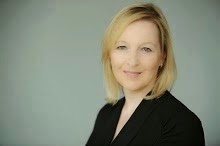
I had a shot with my author photo, and bizarrely enough, given the theme of the books, it came up with "aviatrix." Even more bizarrely, my husband's photo prompted the label "co-pilot."

In order to dispel my worry that it was all going to be aviation-themed, I uploaded my son's photo.

The one he used for his CV. And the label? "dissimulator, pretender, phoney."

Luckily, the CV (and the photo) got through and he has an apprenticeship. One assumes that the humans were still in control at his place of work (ironically, an aviation engineering company).

But it does all give you pause for thought on who - or what - is sifting through the CVs, and the basis for acceptance or rejection.

Would a roulette wheel perhaps be fairer?

Monday, 4 December 2017

We're only human

It is estimated (by Gartner) that by 2020, the average person will have more conversations with bots than with their spouse.

One of the things that interests me in the development of AI is just how closely we'll be able to replicate human - not just thought - but perception in all its forms.

I've recently (probably late to the game) come across some nifty resources about understanding our human quirks, from The School of Thought. The first is on the subject of Cognitive Bias and here you can find (and download a poster) 24 biases stuffing up your thinking.

These range from the 'Barnum Effect' beloved of astrologers, through to the ever more prevalent 'Group Think' and 'Just-World hypothesis', beloved of many a spat on Facebook. There are plenty of these that saw me nodding, from 'The Curse of Knowledge' to the 'Dunning-Kruger Effect.'

What can you do with this stuff? Well, of course, you can use it for your own self-knowledge - and it is always reassuring to know that you're not the only one that's fallible. Beyond that, it's vital for anyone involved in the planning and creation of brand communications. People do not behave rationally, as rational thought is only one mode of perception. By the way, I don't necessarily hold these biases to be 'bad' - they are short-cuts, which we need increasingly in an overloaded world. What is bad is not being aware of them, and being convinced we are driven only by rational thought.

And then there are Logical Fallacies, flaws in reasoning, which are also helpful to bear in mind for most of what passes for journalism today.

As The School of Thought says on its website: isn't it more important to teach children how to think rather than what to think?


Tuesday, 24 October 2017

The Artist-Scientist

In my mid-teens, I'd already come up against the rigidity of the British education system which force-fits young people at an early age into boxes labelled 'scientist', 'artist', 'linguist' - or whatever. I rebelled against this in my own quiet way by adding Art to my science A-Levels. I wrote a post earlier this year bemoaning one effect that this force-fitting seems to produce - the 'I'm crap at maths and not ashamed to say it' syndrome.

I'm asked, on occasion, what makes a good planner. I rarely look to academic qualifications, and in the past, have been as likely to choose someone with an obscure degree or even no degree at all as someone with a business degree. In fact, the business degree people I often give a harder time to as they may already have been taught to think in a certain way.

My ideal planner would fit the artist-scientist archetype. By this, I mean someone for whom thinking or intellect is not the only way of revealing 'truth', but who is equally at home with other modes of perception. The artist-scientist is a creator, inventor, dreamer and thinker simultaneously. Their focus is discovery, not prediction and pinning down 'facts.' They are people driven by wonder and curiosity. It may have killed the cat, but it's what keeps the artist-scientists going.

These people are the source of change, the people who question, the people who keep their minds open and don't always go with the flow. From Leonardo da Vinci, to Nikola Tesla, to C.G.Jung, these people feel uncomfortable with the narrow designation (which includes all those 21st century prefixes to the word planner.)

To finish, here's Joseph Campbell on the figure of Daedalus, the archetypal artist-scientist:

Most curiously, the very scientist who, in the service of the sinful king, was the brain behind the horror of the labyrinth, quite as readily can serve the purposes of freedom. But the hero-heart must be at hand. For centuries Daedalus has represented the type of the artist-scientist: that curiously disinterested, almost diabolic human phenomenon, beyond the normal bound of social judgement, dedicated to the morals not of his time but of his art. He is the hero of the way of thought – singlehearted, courageous and full of faith that the truth, as he finds it, shall make us free.

And, maybe I'd want that too - 'the hero-heart at hand' - as much as this person is beyond social judgement, they should have a feeling, connectedness, empathy with their fellow human-beings.

Not much to ask, eh?

Thursday, 20 April 2017

Useless, hopeless, rubbish and crap

I've commented before about this rather annoying tendency, and I'm going to comment again.

Why do so many people in the creative industries boast about not being good at maths? Or something like physics, come to that. It's not even - oh, I was better at English/History/Art and my maths was OK - oh, no! To do the true boast you have to say you were useless, hopeless, terrible, rubbish or totally crap at maths. And add a little grin or chuckle.

How many people in those professions would want to own up to being bloody dreadful at reading or writing? And, apart from slinging a few insults at the duller and more obscure aspects of grammar, who wants to boast about being a complete dud at English? Not many.

This tendency has long been commented on, for example in C.P.Snow's lecture The Two Cultures and the Scientific Revolution. In this passage, Snow remarks on the (literary) intellectuals who bemoan the illiteracy of scientists:

“A good many times I have been present at gatherings of people who, by the standards of the traditional culture, are thought highly educated and who have with considerable gusto been expressing their incredulity at the illiteracy of scientists. Once or twice I have been provoked and have asked the company how many of them could describe the Second Law of Thermodynamics. The response was cold: it was also negative. Yet I was asking something which is about the scientific equivalent of: Have you read a work of Shakespeare's?”

I would certainly never employ a planner who claimed to be crap at maths. Or an account manager, brand manager or even a creative. Except in a few rare cases, everyone can be OK at maths. It just requires a bit of work, like everything else. I wouldn't want anyone working for me who had no feel for numbers and statistics and what meaning one can find in them. Or who was deliberately clueless  about how much of our world today works - money and markets, algorithms, Google - you name it.

Quite apart from the fact that maths trains the mind in puzzle-solving, in a particular way of thinking.

Having said all that, there is hope. A lot of those 'useless at maths' people can be spotted solving Sudoko puzzles. And not being so bad at it at all.  

Sunday, 18 January 2015

Brand Bravery

Over the last ten years, one of my favourites amongst those email digest thingies that you sign up for is the newsletter from Contagious. It's so much more intelligent than those dreadful lists of lists that LinkedIn is convinced will appeal to me. Contagious is a magazine that's been going for 10 years now and moves from old-school marketing into the intersection between marketing, culture and technology.

The recent digest contained a link to an article from one of the co-founders, Paul Kemp-Roberston, entitled The Contagious Commandments: Ten Steps to Brand Bravery.

It's really rather good, so here are those 10 steps, with my comments:

1. Be useful, relevant and entertaining - or at least, as Meatloaf would say, two out of three ain't bad. This is what it's all about - value
2. Be generous: don't ask what's in it for you, ask what's in it for them - or better still these days, what's in it for us
3. Have a purpose - or go home
4. Join the 5% club - this is all about experimentation - but for me it's about testing in the market and "just doing it" rather than behind-the-scenes research
5. Ask heresy questions - this is an oldie but goodie - but these days, we should think about what exactly is heresy. To me, increasingly, it might be about being non-PC. Really going against the grain. Breaking some of these terribly right-on commandments, even
6. Align with behaviour - fine, just as long as you don't become a stalker
7. Good technology is not an excuse for a bad idea - Yes! I'm looking at all those pointless apps that exist "just because you can"
8. Prioritise experience over innovation - this is connected to the last one. It's all about real world, real people
9. With great data comes great responsibility - too true. Privacy is already a huge issue for brands. And, mirroring my comments on technology, don't collect data just because you can. If you're not going to use it, put your energies elsewhere.
10. Weaponize your audience - the author himself points out the irony of this one, having poured scorn on military metaphors earlier on in the article. The point is to make sure you are empowering your customers, not exploiting them, which brings us back to the bold fellows of the Light Brigade pictured.

In the end, brave brands need brave people behind them.

Tuesday, 3 September 2013

CQ


This is an important book. It’s one of those books that you may find on the business shelf, but it has implications for the individual, for business, for the economy and for society and humankind as a whole.

Bruce Nussbaum’s book is easy to read, but not simplistic. It covers and draws inspiration from a wide range of disciplines, from anthropology and psychology to education as well as design and business. The bulk of the book is devoted to what Nussbaum terms the “5 competencies of Creative Intelligence” which he defines as Knowledge Mining, Framing, Playing, Making and Pivoting. In discussing all of these, he brings a wealth of super examples as well as how-to tips. I like the inclusion of the “back end” competencies Making and Pivoting, as creativity doesn’t end with ideas!

I also found the section on the Economic Value of Creativity in which Nussbaum describes the new economic system of Indie Capitalism inspiring. I think I cheered aloud at least once! This system values chance and human unpredictability rather than reducing to what can be measured as in the efficiency of markets system.

I have a couple of very minor criticisms. Firstly, I found there were rather too many clichés of the “see them as challenges, not problems” type, as well as the repetition of the “we don’t think of ourselves as creative” line. Well, some of us do! The examples in the book have, inevitably, a US bias.

Overall, this is a book that is well worth reading, and I’ll be referring back to it. I particularly like the dispelling of the “lone genius” myth and the focus on the social conditions that lead to creativity. Nussbaum knits together a number of disparate trends, from gaming and crowd-funding, the renaissance of making and the return to local production in a readable and thought-provoking book.  

Tuesday, 20 August 2013

The Perfect Planner

In those bygone days when I was responsible for recruiting and managing a Planning department, I was often asked by management what I was looking for in my new recruits. My usual answer was that I couldn't spell it out, but I'd know it if I saw it.

I read a post recently by Richard Huntington where he outlines his three requirements. All good things come in threes, so here goes:
1. Safe-looking people with dangerous minds
2. Crafty with the craft skills
3. Forward-thinking mother f**ckers (my asterisks, not his, or Julian Cope's either who Richard attributes this one to)

It's pretty well there. I also found one of those exhaustive lists in my file, which may be from the last century, but I still think it's pretty good. Unfortunately I don't know who to attribute it to. I'm sure it came from Saatchi somewhere and I'm equally sure it didn't come from me. Here goes:


Hiring A Planner?

Most CEOs look for someone who is “smart”, “cerebral”. Someone who is “well read”.  Preferably someone with a “psychological or anthropological background”.  Who understands human behaviour.  And who speaks in a “convincing” manner.

What is often forgotten are the qualities it takes to acquire true understanding. The qualities that are required to not only sound convincing, but to be convincing.  The qualities that allow a planner to stimulate, nurture and protect great ideas.

The following outlines 10 characteristics often forgotten when hiring a planner.

1.    X-ray Vision: The most powerful communication between individuals and groups is non-verbal.  And if your potential planner talks more than they watch, chances are they will miss 90% of what is actually being communicated.

2.    Sonic Ears: What people say and what they mean are often two different things.  Many planners can get caught up in the words, when it’s the tone and the manner in which the words are delivered that is communicating the loudest.

3.    Explorer:  Many planners base their understanding of consumers on theory.  What they have learned in research or from books.  What they don’t do is get out of their office, away from their books, and submerge themselves in the real world.

4.    Imagination:  A planner’s job is not just to understand human behaviour, it is also to inspire creative solutions.  And all the understanding in the world is useless to our creative people …if it doesn’t inspire them.

5.    Instinct:  Human behaviour is not always predictable.  A good planner will rely as much on their gut as they will on the numbers.

6.    Curiosity:  People change all the time.  And a planner who assumes they know the answers is a planner who has lost their ability to accept change.

7.    A Player: The result of creativity is not always predictable … essentially because of the huge unknown called human emotions.  A good planner needs to be able to accept when an idea may be bigger than what the focus groups or the numbers have told them.

8.    Open Minded: Understanding people means that you can’t judge them.  A good planner will see things from multiple perspectives … not just their own. 

9.    Motherly:  Brilliant ideas need to be protected and nurtured, not judged.  A good planner will discover ways of improving ideas, not killing them.

10. A Hunter: Being a planner is not about gathering information.  It’s about hunting down insights.  It’s about getting to the kill quicker.  It’s an active role, not a passive one.

I'm with most of that, too. But interesting that people ask what you're looking for. And Richard H mentions "safe-looking". A lot of the planners I recruited did bear some resemblance to Brains from Thunderbirds. 

But there were others who looked like Lady Penelope.


Friday, 10 May 2013

Targetting by the kilo

For all the Doves of the world, who are on a mission to make women (and men?) feel good about themselves, whatever their shape or size, there are always those who buck the trend.

This week, the CEO of Abercrombie & Fitch, Mike Jeffries, has had quotes he made a few years ago regurgitated throughout the internet along with criticism of the company's sizing policy by retail analysts. Mr "Mutton-dressed-as-lamb" Jeffries states that "candidly, we go after the cool kids...a lot of people don't belong (in our clothes) and they can't belong..." Particularly galling for women is that the sizes for woman stop at L, while men's sizes include XL and XXL, presumably to accommodate all those muscly jocks.

Certainly around here, what Mr Jeffries thinks may already be irrelevant as Hollister seems to be the outfitter of choice for "cool teens." (sic)

But in another story this week, even those muscly rugby players will be penalised for their bulk. Samoa Air have decided to charge people on a sliding scale for flights, based on luggage plus body weight. Probably a sensible idea in theory, given the size of their planes, but not the most intelligent move for anyone with an ounce of emotional intelligence. It's not helped by the preponderance of chunky hunky guys on the website, none of whom look less than 80kg!

The really interesting thing will be to see how long it will take Ryan Air to catch onto this one and whether they'll have the guts to risk sabotage via an army of enraged Vicky Pollards.


Monday, 6 May 2013

5 reasons why checklists should be delisted

Checklists and rating cards seem to have crept into just about every aspect of modern life - no sooner have you bought something over the internet, or had a conversation with a service chappie or chappess on the phone, when you're sent some kind of rating card. Restaurants and hotels, even in the most far-flung of places, beg you to rate them on TripAdvisor or to "like" their Facebook page with such an intensity that you get the impression that this is more important than you having enjoyed the experience, or getting a good tip. But these ratings are more pointless than pointless as they can be bulk-bought these days.

There are also checklists to download from the internet for everything from picking a Eurovision Song Contest winner to buying a home to having a baby.

On the work front, checklists abound too. They are usually introduced under some pretext of "having everyone singing from the same song sheet" like some weirdo culty choir. And, although their perpetrators are usually keen to point out that this is just an aid to decision-making, the sad truth is that many people use checklists and scorecards to make the decision for them. And often, getting a good scorecard seems to be an end to itself.

Why should they be delisted? Well, where to start? Checklists are a lazy way of working that avoids intelligent thought. They generate extra pointless work - who hasn't been in a meeting where the "items on the checklist" are discussed at length? They - or their perpetrators - invariably make the mistake of thinking that what can be measured is what is important. They're held up as being a shortcut, but a shortcut to what? To making a good decision? Or to have ticked a number of boxes with arbitrary  headings?

And maybe the most important reason to delist checklists is that the mere process of pre-defining categories (usually based on past experience) is a classic case of rearview mirror thinking which excludes the possible.

If the questions remain in a fixed circle of ideas, then so do the answers.


Thursday, 22 November 2012

Fraudsters are human, too

I've mentioned the Black Horse money box before - one of my most enduring memories of the Lloyds (TSB) Bank brand. But yesterday, my loyalty of over 40 years was put to the test.

I needed to pay in a cheque made out to me in my maiden name. The cheque was written by someone who I don't know and who it would be a hassle to trace, especially given that the huge sum involved was £7.49. My first encounter with the call centre went as follows:

Steve (not changing his name cos he's not innocent and doesn't need protecting): No, we don't accept cheques unless they are made out to the account holder. You'll have to ask the person who wrote it to change it.

Me: But...I live in another country...and I don't know her...and it's only a small sum of money...look, it's the name my parents set the account up for me in, 40 years ago...I can send you a copy of my marriage certificate...

Steve: We only accept cheques that are made out to the account holder.

Me: But...that's totally absurd!

Steve: We have to do it to stop fraud. We only accept cheques that are made out to the account holder.

Me: That's utterly ridiculous!

Steve: Thank you (puts phone down on me)

To cut a long story short, the next Lloyds TSB employee I spoke to was a human being. She sussed out immediately that a fraudster was unlikely to concoct such a story for a possible gain of £7.49. She did the human, sensible thing and contacted my branch. Yes, of course you can send the cheque there, with the marriage certificate and a little note to say we've spoken...is there anything else I can do for you...

When will service brands learn that they'll catch more fraudsters if they start acting and thinking like human beings. It would help their reputations, too.

Monday, 6 April 2009

Idea Pioneer

I suppose it must be well over ten years ago now that Saatchi & Saatchi stopped being an advertising agency and became The Ideas Company. Looking back, I think it was all a symptom of those i-words that became terribly "in" some time in the 1990s. I've already had a go about Icons recently and I'm sure that I must dragged Insights out for a dust-down somewhere in this blog. I was Queen of Insights for a brief but glorious spell at Saatchis. And I suppose that I should look at Innovation in a future piece.


Going back to Ideas, the life of a freelancer can be a trifle lonely at times and you don't always get the strokes and feedback that you need on those days when you feel that your ideas are losing their sparkle. So, for anyone who is feeling that way, I would recommend a look at The Economist's Ideas People site. This is, of course, nothing more than a glorified media selling tool. In the old days, media owners used to produce glossy brochures telling us how stinking rich their readers were. This is a little more subtle. We find out that They (the Ideas People aka Economist Readers) don't live in our world; we live in Theirs. And Ours (rather a lot of possessive pronouns going on here...) is the age of Innovation...Ideas are the currency of the modern economy. Entire new industries and many existing ones have turned from creating products to producing ideas...


Hmm. You may think this a touch disrespectful to all those wonderful inventors and discoverers of bygone years and wonder if you really would rather be "producing" than "creating" but, letting that pass, you probably are really burning to know if you could, perhaps, actually be an Ideas Person.


There's a handy little quiz on the site for just that purpose. I am proud to announce that I am a Pioneer. The sort of person who is always seeking new and interesting ideas and is fascinated by the world. A Pioneer tends to be a big thinker and Ideas People are the stars of the 21st Century. Well, that's a relief. That person who spends too long reading trashy gossip news sites and doing mindless quizzes on Facebook obviously has absolutely no connection with the real me whatsoever.

Monday, 22 December 2008

Brightening Up

As from today, the days will be getting longer. So, to accompany this meteorological brightening up, I was cheered to read this article by John Parker in Intelligent Life to counteract all those doom-mongers with their "dumbing down."

It is argued that we are now in the "Age of Mass Intelligence" and that, in rich countries at least, there have never been so many educated people. There are more visitors to museums, literary festivals and the opera than ever before.

Now, the cynical and the cultural snobs and the doom-mongers will all argue back: Ah, but those museums themselves are "dumbed-down". "More educated" doesn't mean "better-educated". This is just about the popularisation of culture, surely, not about intelligence?

Do you know what? I don't want to split hairs, nor do I want to get into an intellectual debate about what constitutes high culture or intelligence these days. Along with the book "The Long Tail", this article has brought to my attention just how much choice is now accessible to all of us, in terms of film, reading, music, thought, entertainment, art and culture in the widest sense, if we choose to seek it out. And I believe that only the worst cultural snob in the world could begrudge a fellow human being discovering the wit of Jane Austen via Gwyneth Paltrow, the beauty of Chopin through Classic FM or the splendour of Puccini through Paul Potts.