Showing posts with label nostalgia. Show all posts

Tuesday, 23 June 2026

Fizz Buzz Pop!


This rebranding design for Mirinda is gob-smackingly good, in my view. Often global (as this is) means bland and lowest common denominator, but this pop-art pageant of funtime fruitiness hits the highest common factor in the unashamedly day-glo world of soda pop.

It's been a while since I've been in the market, I know (the price of a sweet tooth is catching up with me and I have to watch it). And, according to the marketing press, this new global platform ("Smile Please") is aimed at GenZ (sic) and their anemoia (nostalgia for a time you've never known) for the 80s, 90s and early 2000s before Smartphones took over everyone's lives. 

And yet, this speaks to me too. Even though I am as old as Mirinda itself:


Fizzy drinks have a proustian madeleine effect on me. The first one I remember drinking was this:


On the beach, from a glass bottle, with a straw. And, a couple of years later came Fanta. Another glass bottle, another straw. This time in a marvellous cafe in College Town (Sandhurst) with sausages and crinkle-cut chips. A treat indeed.


A childhood in 1960s and 70s England meant a rainbow-load of fizzy pop. The milkman used to deliver Corona, then there was Tizer and R. White's. I was quite fond of the cream soda - I can remember the taste like yesterday, but still don't know what on earth it was meant to taste like, apart from sweet. 


It's a wonder I have any of my own teeth left.

Holidays brought further fizzy delights. In Canada, root beer and Welch's Grape Soda. And the very sophisticated Canada Dry which my parents would drink with Canadian Whiskey. 

Mirinda, I expect, was something I came across on holiday at some point. It was launched in Spain, but bought up by PepsiCo and marketed worldwide, under various names, hence the focus in the re-design on visual rather than text elements.

The name Mirinda comes from Esperanto originally. But I think the rebrand has done something very clever.

Just as our 21st century Esperanto is Emojis, these design elements are surely the international visual language of fizzy pop.


Thursday, 28 August 2025

Lifetime brands


I’m on the (fingers still crossed) last lap of the house sale and I don’t think I’ve ever experienced a period of such intense physical and emotional exhaustion. OK, I’ve brought it on myself in some ways: of course I could have thrown money at it and simply paid someone to do it. Sift through over 60 years’ worth of stuff. Find new homes for some and dispose of the rest as responsibly as possible. Maybe even make a little money in the process. But I simply didn’t have time. 

So if my posts here are lacking in depth, please forgive me. My brain is scrambled - I wake up at unearthly hours wondering what to do with that, what order to do x, y and z, fretting about the logistics of the whole thing, hoping to God that people turn up at the right time.

When I’ve gone to the local dump, aka tip, aka recycling centre, I’ve tried not to dwell on things. But my mind flashes back to when we’d go to the dump to find things, not chuck them. Some pram wheels, a baby billiard board - and, hey presto! - a go-cart. Fat chance of anyone finding anything I’ve chucked, though - they’d have to abseil down into the skips and then risk being crushed by the infernal machines, lurching over the containers like mechanical birds of prey.

It’s been a dusty parade of brand names, mostly long forgotten, that have tumbled into those skips. Occasionally, I’ll find myself humming a jingle and seriously not know whether it was real, or something I made up when I was a small child. Pax-i-mat elect-ric!

But amongst these mid-century relics, there are a few brands that - I think - are in it for life. Like Thermos - in the same way as Hoover, is this a brand name or an item? I was slightly surprised to read that Thermos was founded in Germany (it now has its HQ in the US and is under Japanese ownership) - maybe that is significant, somehow.

My first memories of Thermos flasks were on Tarshyne Beach, Aden. All the families had them, to keep orange squash cold and coffee hot. Back then, they came in garish stripes like deckchairs, or a wicker design like the furniture in the Officers’ Club. Later, back in cold and gloomy Britain, they were lugged round caravan sites, lochs and glens, mountains and castles.

On the website today, the copy says that Thermos flasks are for “adventurers, explorers and everyday folks like us”...

... so I have a new-ish Thermos. It became my Covid companion on long drives from home to home. And the habit stuck. Here’s to the next adventure!


Friday, 22 March 2024

A drink in the Black Forest


I first travelled to the Black Forest around the time of this musical masterpiece (or at least, the Herb Alpert version). My parents bought me a little plastic cuckoo-clock-style house, which you could peer into and click a button for changing colourful landscapes - dark pine forests, snow and sky, sweeping lush pastures with perfectly positioned cows.

I didn’t return for more than two decades, which is when I most likely first encountered the wonderful Pils from Rothaus brewery - Tannenzäpfle. The pine-cone beer. The beer has been around longer than I have, and originally featured an illustration of a the typical Schwarzwaldmädel beloved in the wholesome Heimat films from the 1950s. These were a kind of escape into a world that never really was, an attempt to console the German population and blot out some of the stains of Nazism from the national psyche:


The label was redesigned in 1972, with a graphic version of the young lady - nicknamed “Biergit Kraft” by brand fans. I recall that this characteristic bottle was the beer available at the primary school’s “garden” at our local Hof und Gassenfest, along with Baden wines and Schwarzwald sausages, further imprinting the idyllic imagery in my mind. It’s a brand that’s a long way from edgy, gritty, urban pubs or laddish humour. In the past, sponsorships and a bit of outdoor aside, Tannenzäpfle hasn’t been a huge advertiser. But who needs to be, with a label like that?


But that’s all changed. The first big brand campaign for Tannenzäpfle has been developed by Kreuzbergkind (you can’t get less Schwarzwald, or more Berlin than that agency’s name!)

It’s all based around the idea of “Always calm.”


It’s a nice campaign - I like the calm pace, the slowing down, the serenity.

But I wonder: is it a little bit too goody-goody? Substitute other methods of crafting, and it could be for mineral water, or outdoor clothing or something like Bionade. It’s missing the quirkiness of “Biergit Kraft” and her pine cones. 

Pass me a another slice of Schwarzwälderkirschtorte while I consider.

Tuesday, 21 March 2023

“Ist der neu?” Recycling ads

When you’ve had a top-notch ad campaign back in the past that still unlocks positive brand associations, you can do a lot worse than resurrecting it.

Nostalgia is frequently mentioned in this year’s trend reports as a way to escape to a simpler time, when the world appeared to have a little more stability. At least when viewed through rose-tinted spectacles.

Perwoll, the fabric softener, has done just that. This ad, from Heinat TBWA, is brilliant in so many ways:

    - it’s just right for the target audience - people who remember a glorious pre-internet childhood

    - it’s not simply a recreation - the ad shuffles, twists and turns the original idea and elements in a playful way

    - it’s the perfect blend of the familiar and the surprising

    - it affectionately evokes both the style and the positive bubblegum mood of the 80s in its execution

    - the idea of the whole spot reflects that of the long-running campaign: “is it new?”

I do wonder how much of today’s brand communication might be resurrected in 35 years’ time.

Monday, 4 April 2022

RETROWURST: Alcopops April 2004


 Eighteen years ago in Germany, you couldn’t switch on the radio or TV without hearing Alcopops and Komasaufen discussed in hysterical, frenzied terms. This would be the ruin of an entire generation! Remember, this was back in the pre-smart phone and social media days, not to mention a certain pandemic, when young people went clubbing and dancing and raving and generally having a wild and crazy time. Retrowurst this month is from April 2004 and chronicles the market at that time.

-------------------------------------------------------------------------------

There’s a bit of a Sturm brewing in a cocktail glass here in Germany at the moment with lots of talk in high places of dangerous drugs and teenage addiction. It’s probably a bit of a yawn to you in the UK, but the subject is ‘Alcopops’. While the UK and other European countries went through this in the 90s, the subject is only just becoming a matter of hot debate here. The question that is being mooted in the government is whether or not a Strafsteuer (penalty tax) should be applied to Alcopops. The consequence of this would be to double the price and (hope the government) collapse the market, which is exactly what happened in France in 1997. The reasoning behind this is that Alcopops are seen as a dangerous, seemingly innocuous but potent introduction to the slippery slope of alcohol addiction for young people. In an internet survey conducted via www.tageschau.de (one of the main news magazine programmes), 60.3% of the respondents agreed that Alcopops should be subject to a higher tax level.


I thought it might be interesting to trace the history of Alcopops’ development here in Germany and to take a look at the range of products currently available (maybe before they disappear for ever!). I think that one of the reasons that Alcopops took rather longer to take off in Germany is that there was never the same tradition of mixed drinks in this heavily beer/wine/schnapps dominated market. While the UK was in a Happy Hour frenzy of cocktails in the 80s, the German fad for ‘long drinks’ in clubs and discos and at Fests was rather more modest. Instead of the exotic concoctions served up in Rumours and the like in London, German ‘long drinks’ were restricted to Asbach Cola (German brandy), Bacardi Kirsch (Bacardi with Cherry) and Wodka Orange


However, two very interesting developments took place on the back of this, in the late 80s and early 90s. The first of these was Red Bull and its push as a mixer, typically with Vodka. Red Bull Vodka could be said to be the first German Alcopop, with its lurid colour and taste of melted Gummibärchen. The second development is even more interesting and does not show signs of slowing – and this was the development of individual sweet Schnapps bottles.


Small (0.02l) bottles of traditional Schnapps, such as Obstler or Korn had long been available, often worryingly (to UK eyes) placed with the sweets at the checkout of the supermarket or (even more worryingly) petrol station – a sort of impulse purchase, one assumes. However, in the late 80s, a trend started at Fests and parties for the social consumption of these little bottles, often accompanied by strange rituals, such as unison banging of the bottles on the beer table before opening, putting the cap on the end of your nose or making a spectacular domino display from the empty bottles. The new Schnapps leading this trend were sweeter in taste and slightly (but only slightly) less alcoholic (around 20% proof) than traditional Schnapps. The brands who led this trend with quirky advertising and very visible marketing campaigns were Kümmerling, Jägermeister and Kleine Feige. Other notable brands are Kober’s Pfläumchen and Berentzen Minis. The latter brand comes in a variety of flavours such as Sour Apple, Plum, Wild Cherry and Apple and are packed just like sweets in a plastic bag of ten little bottles for €4.99. Pfläumchen is packed in boxes of 25x 0.02l which sells at €8.99.


These little bottles of Schnapps were the forerunners to Alcopops, which really only arrived on the scene about 3 years ago. The big boys in the market, who seem to set most of the rules, are Bacardi Breezer (4x 0.275l for €6.29; available in full range of strange flavours) and Smirnoff Ice (6x 0.275l for €7.99). Bacardi Rigo (lime mix) is also available at €1.59 for a 0.35l bottle. These are, of course, off prices. Other players include Puschkin Vibe, 5.6% proof at €1.49 for 0.275l. This is a vodka mix and available in flavours called ‘Green’, ‘Black’ and ‘Red’. Caipi is a Cachaca mixed drink with lime and soda and is also €1.49 per bottle. Caipi is 5.4%, produced in the UK and imported by Borco-Marken Import, Hamburg. Another interesting product, which describes itself as a ‘wine cocktail’, with Lemon-Lime and Lemon-Ginger variants, is Viala Carma. This is also 5.4% proof and costs €1.49 for 0.275l.


The small, sweet Schnapps brands also offer Alcopops; for example, ‘Feigling Eyes’, a vodka mix drink from Kleine Feigling. This is 5% proof and only €0.99 a bottle. There is a website under www.feigling-eyes.com


Aldi are also never slow to recognise a profitable idea when they see one and offer a range of Alcopops at very reasonable prices. Interestingly, most of these are produced in the UK. There’s Czerwi Fresh, which is Vodka and Lemon, 5.6% proof, 6x0.275l for €4.99 and Czerwi Sunseeker, a vodka mix in more exotic flavours such as Blue Orange, Red Berry and Mango. This sells at only €0.75 for a 0.275l bottle. Aldi also have a rum variant, ‘Old Hopking Whitey’ which is 5.4% proof and sells at €4.59 for 6x0.275l.


There’s a whole website dedicated to these drinks if you are interested, under www.szene-drinks.com


Whether the government legislation will go through or not remains to be seen but, despite all the talk, the problem of drunken teenagers doesn’t seem quite so visible here as in other countries, such as the UK or certain Scandinavian countries. It may be simply because alcohol is not so ‘prohibited’ at the moment, being available for next-to-nothing at every local Fest or fair, and all hours of the day and night at petrol stations, that there isn’t so much ‘bravado’ attached to drinking by young people here – it’s simply part of life.

-----------------------------------------------------------------------------

The bubble burst not long after - on 1st July 2004, the Sondersteuer on Alcopops was introduced, putting around an extra €1 on each bottle, and naturally, sales went down as the government’s coffers were filled. I tend to think that Alcopops were never destined to make it quite so big in Germany, as you’re allowed to drink beer and wine here at 16 anyway, and the age limit for Alcopops is 18.

On top of that, Germany, like many other European markets, has seen a decline in alcohol consumption amongst the young. There are many factors at play here, some of which are highlighted in this report from 2018.  

Mixed drink marketing has concentrated more on the slightly older, more sophisticated drinker, with the Aperol revival and both gin and rum taking Germany by storm.

But that’s the official, commercial side. I do notice that those strange little sweet Schnapps bottles still seem to be widely available - and at remarkable prices that wouldn’t have been out of place in 2004: €8.49 for a 25 x 0.2l pack of Pfläumchen. 

And walk into any local yokel Fest and you’ll likely see buckets and watering-cans of Jacky-Cola and various Jägermeister mixes being swilled back as if it’s 2004. Only the age of the drinkers has changed: Alcopops are now officially nostalgia.


Thursday, 2 December 2021

Grotto or grotty?

RETROWURST is taking a break this month because lazy little me didn’t write any articles in December back in the 2000s as I was probably too busy dashing and blitzing around doing Christmas shopping. But the series will be back in 2022.

Yes, Christmas shopping. There are reminders on the radio - have we bought all our presents yet? I have bought one, and was quite proud of having already done so in November before I heard all those smug so-and-sos with only one still left to buy. 

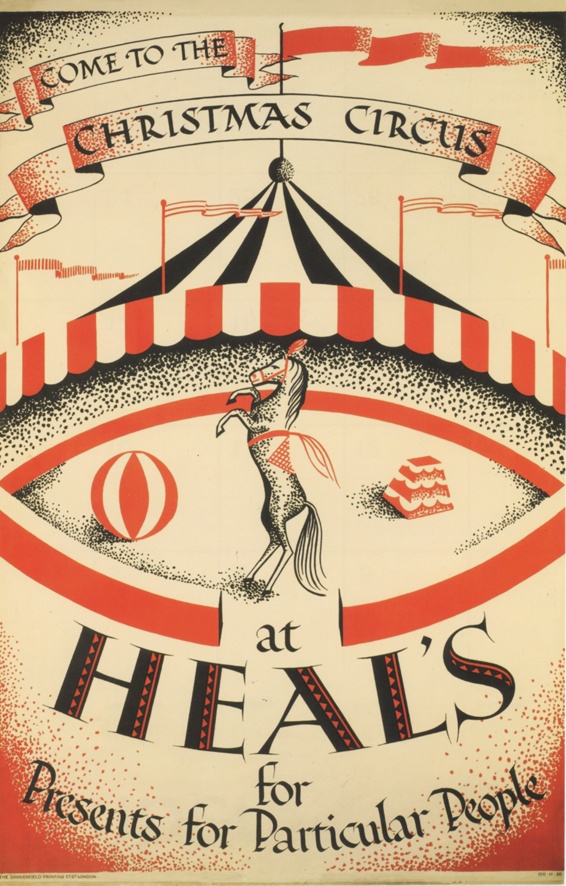
I am not relishing the thought. Somehow the magic of Christmas past and the twinkling welcome of Santa’s grotto is lost in a mire of masks, pandemics and it’s-all-easier-online-but-bad-conscience-haunting-me.

I’m not sure if the experience was ever that magical, anyway. My only memory of Santa’s grotto in Harvey’s department store in Camberley was being given an empty box. I think amends were made, but still.

But we can dream, and take a shopping trip through the streets, windows, lights and paper catalogues of the past:

There’s shopping in style, even when you’re on public transport. Just don’t spill mulled wine on those collars or cuffs:


Christmas didn’t have to be gaudy. Post-war shortages aside, this was a world where black and white was the norm, certainly as far as brand communications and broadcast media/entertainment went:


Hamleys was the mecca of tinsel and toytown. The 1926 ad offers a number of most suitable gifts for children including “The Crown Tavern”, a pup named “Looney” and what looks like an interrogation device. 60 years later, the store tried a "Teddy Bears’ Picnic meets 333 Men in a Boat” approach:


Does anyone have time or inclination in these pandemic days to linger looking at shop windows? Even war didn’t stop Selfridges in 1916:


This picture, of 1960s Regent Street, seems to sum up my earliest memories. A quick blast of Nina & Frederik, and I’m back there.


Thursday, 7 May 2020

Home Comforts


Looking back over the last six or seven weeks, the main thing that's struck me is the rediscovery of  the comforts of your own home. I'm talking about a particular group of people here, who may well have pooh-poohed their home in healthier days, or even denied that their home consisted of something as solid as four walls. The younger amongst this group like to think of themselves as Global Nomads, the older as International Business People or Liberal Elite Citizens of the World. Many of the Marketing and Advertising community belong (although belonging isn't really their thing) to this group of "Anywheres". It's a group who can, on occasion, have a slightly sneery and condescending view of those who are - let's say - more rooted.

A fascinating report came out last week from discover.ai, who have been chronicling the passage of lockdown and beyond more-or-less in real time. Last week's issue looked at enjoyment - how people are talking about pleasure, treats, joy and fun. And so much of what they found related back to home comforts, from TV binges to Burgeoning Booziness.

What discover.ai have termed Age of Nostalgia is only too apparent in a Facebook news stream cluttered with photos of dog-eared albums as yet another friend takes up the challenge (I would personally find running up Ben Nevis a challenge, or jumping into the North Sea on New Years Day, but there you go).

I listened to a webinar where Steve Challouma, the General Manager of Birds Eye talked about growth of 60% for Fish Fingers, and 120% for Chicken Nuggets - comfort food has leapt out from under the duvet to reclaim its place in our stomachs, and therefore hearts.

The booze story with all those Quadrantinis and Furlough Merlots is well-documented.

And, in a Society of Authors (virtual) Tea With ... event, author Joanne Harris admitted to reading Georgette Heyer in the bath.

In the UK at least, all of this cosy, nostalgic, naughty-but-nice, keep the home fires burning stuff will cumulate tomorrow in an outbreak of Stay at Home VE Day Street Parties.

And there will be no excuse from the (former) Global Nomads and Elite World Citizens not to join in with the jollity.

Because now we're all grounded.

Thursday, 21 February 2019

Happy Hybrid


In the autumn of 2018, I celebrated becoming the owner of two passports – and thus two citizenships – German in addition to my native British. I’ve always enjoyed being something of a mongrel, and I believe that in the future, having experience of both cultures, languages, and ways of doing things will stand me in good stead for whatever life throws my way.

Designer dogs
At around the same time, I signed a publishing contract for the third in a series of retro-style adventure stories for 9 -12s. And this signature would also lead me towards a new status, this time as an author – what I believe is called a hybrid. Nothing to do with roses, or vehicles, or designer dogs with funny names, but rather an author who is both traditionally and self-published. But before you start imagining the story of an author bravely “going it alone” after enjoying the dizzy heights of publication by one of the Big 5, let me gently remind you of what you already know: every path to publication is different.

My “traditional” publisher couldn’t be less conventional. And my “self-publisher” has often been described as a Rolls-Royce.

Boy’s Own adventures for the 21stcentury boy – or girl
Although I’ve written fiction on and off throughout my life, it wasn’t until I’d completed a fourth novel that I decided to take this publication business seriously. This particular story was inspired by my father, who’d been an RAF pilot during the Cold War years. When my young son started asking questions about the granddad he’d never known, a delightful question whizzed its way into my head:  what if a 21stcentury boy, born into the digital age of smart phones, Google and virtual reality could meet a hero of the analogue age, and experience all the adventures of those days?

Cue a reimagining of the Boy’s Own-style adventure story for the 21stcentury boy – or girl. I did have interest from one or two agents, but in the end, it was a competition run by a small press (Earlyworks Press) that was my stepping stone to publication. The Bother in Burmeon was published in 2012 by Circaidy Gregory, an Earlyworks Press imprint. Two years later, a sequel – or is it a prequel? – saw my young hero whisked back in time for another adventure with his Grandpop, this time in Trouble in Teutonia. For both of these titles, I’d enjoyed the creative freedom an author has with a small publisher – I had considerable personal input into the cover design and the look and feel of the book (carefully produced to reflect the retro-style) as well as writing the story. A drawback of a smaller publisher is that marketing budgets don’t stretch further than a few posters and flyers, but the advantage is that the author has licence to do their own thing. I had great fun contacting my old chums in advertising and design for the websites and the YouTube trailer.

Going it alone
The next book was rather a long time coming, as work and family life gobbled up much of my spare (writing) time. My publisher gave an enthusiastic but non-committal response to the story in theory as I crossed my fingers and got on with polishing. But after a few months, the woes that can beset a small press became more and more apparent. Lack of time and resources. Other priorities necessary simply to keep afloat. Promises made to other authors way in front of me in the pecking order. A decision deadline came, and I was advised it would be better for me to find another publisher or go it alone.

I have to admit this flung me down in the dumps. 2018 wasn’t my greatest year.

For the rest of the story, please continue here 

Thursday, 11 October 2018

Five build an awfully tough-as-old-boots brand

Nothing says childhood summer to me stronger than the works of Enid Blyton, and specifically, The Famous Five. Even if they didn't start off being famous, over 75 years ago, they certainly are now. I'm not a huge fan of calling fictional characters (or authors for that matter) a "brand" - I don't know why, but the reduction of a human being (albeit a fictional one) to the level of a packet of washing powder seems demeaning. But bear with me - this is more about what brands can learn from this frightfully long-lived five-some.

The original book, Five on a Treasure Island, was published in 1942, and others in the series soon followed, accompanied by games, birthday cards, stationary and, of course, jigsaws.

(c/o www.enidblytonsociety.co.uk)

The books remain in print, and are still extremely popular, although the cover designs and illustrations have changed over the years. From the print medium, it was inevitable that the Famous 5's exploits would soon transfer onto film, and so it was, with the first feature film appearing in the 1950s, and TV series running in the 1970s and 1990s, complete with the associated annuals:


In marketing, we often talk about a brand becoming part of the culture, and a sure sign of this happening is when the jokes, parodies and T-shirts become part of the social fabric. Who, that was young in the 80s, will ever forget the Comic Strip's Five Go Mad in Dorset?

As brands get long-in-the-tooth, their managers begin to fret: are we keeping up to date? Are we still appealing to today's young generation? Is it enough to change the shorts and long socks of the original illustrations to hoodies and sweat-pants? The text of the books has been subject to a little bit of correction, some of it practical (decimal coinage) and some of it political (tweaking attitudes that are not acceptable today). 

As the Famous Five moved into the digital age, a new spin-off cartoon series was created, featuring the 5's offspring, right up-to-date with all the latest technology:


The parodies continue, and anyone that has been in a UK bookshop in the last year or so can't have failed to notice this and the others in the series:

Some brands get terribly huffy about parody and spoof. I don't know if there were any legal battles surrounding Brexit Island and Co. but as an outsider, it's easy to see how this bit of affectionate fun hardly damages the "brand" - rather, it reinforces it. I wouldn't be at all surprised if sales of the original books have taken off again since these take-offs hit the shelves.

Which all brings us nearly up to date. Where are the Famous 5 off for their next adventure? Well, in marketing terms they're doing a bit of a co-operation. Or is it a celebrity endorsement?

Mine's a meat paste sandwich with lashings of ginger beer.

Friday, 3 August 2018

Age fluidity

When I was a lass, our corner shop was always well-stocked with sweet cigarettes. As well as packs that mimicked grown-up brands, all the TV stars of the day, human, animal and robot, had their own offering, complete with cards to collect - just like Grandpa.

And, if you got bored of getting your pretend-smoking kicks in this form, there was always Spanish Gold:

Mmmm: can still taste the coconut!

Fast-forward a few decades, and my husband recently tried to get some e-cigarette refill in the UK with a vague taste of tobacco and failed, miserably. Instead, he was offered a vast array of flavours that wouldn't be out of place at a 6-year-old's birthday party:

Caramel, Cola Pop, Juicy Blueberry, Liquorice Torpedo, Bubble gum, Marshmallow, Blue slush - need I go on?

It was all rather reminiscent of those over-priced milkshakes in Starbucks that masquerade as coffee - vanillacaramelbutterscotchcheesecakefrothochinos - or whatever they call themselves.

Or the alluring colourful bottles of homogenised baby food dressed up as trendy hipster smoothies.

Not to mention alcopops, alcoholic ginger beer and beer with banana flavour.

I've blogged about Kidults before, but maybe, as all these items seem to be liquids, perhaps the correct term for this trend is Age Fluidity.

Saturday, 10 March 2018

Logoski

Kitzbühel, St Moritz, Davos - the names of famous ski resorts are so evocative, you can almost feel the tickle of snowflakes against your skin, and taste that first sip of Glühwein. When asked for my favourite examples of advertising from the past, I have to say that 20th century poster art, particularly in the area of travel and tourism, comes generally high on my list.

Maybe it is this pedigree (and quite possibly a budget as high as the Matterhorn) that leads to some of these mountain resorts being so clever with logo design. Back in the old days, there may have been consistency from year to year in the way the resort presented its signature, but often that wasn't the case:


What to do when you want to present your uniqueness beyond sun, snow and mountains, and when you need to do this throughout all online and offline media available these days - including merchandising.

Enter the cleverly designed logo - maybe accompanied by a slogan. It adds a visual dimension to the name, something that is understood intuitively, and stamped on the memory instantly.

Take Davos, for example. Very simple, very clear, very classy. Sunshine and mountain - unmistakeable.

The tourist logo may take its cue from the town's original coat of arms, for example, here are the town and tourist logos for Kitzbühel.


And of course, the practice is spreading to towns who may not have quite the budget or pull for tourists, but nevertheless see the advantages a logo can bring.

Not quite Davos, but it's home:


Tuesday, 2 January 2018

Magnificent Men (... and women)

One major anniversary in 2018 will be 100 years of the Royal Air Force. Those who're aware of my author-ego will know I have something of a soft spot for the RAF and I thought I'd kick off the New Year with a look at how the recruitment advertising for the RAF has reflected cultural changes across the last century. Well, actually, it's an excuse to go rummaging through some wonderful old ads.


When the RAF, born out of the Royal Flying Corps, started, it was all about honour and glory. The beautiful poster above looks and feels every bit of its hundred years old, from the typeface to the sentiments expressed. The 'See the World' poster is probably a little younger, and introduces a perennial theme for the RAF - the exciting possibilities and adventure that such a career opens up.


By 1941, in the middle of the 2nd World War, things were getting grittier and direct on target. There was no doubt here about what was required and what was the task that lay ahead. This image is courtesy of the very magnificent Aviation Ancestry - but I will issue a warning straight away - you are likely to be some time if you visit the site!

Moving into the 1970s and 80s, the promise of excitement and adventure was still writ large. The advert featuring a Tornado is also care of Aviation Ancestry. And changes in society were reflected too in the RAF - or maybe the services actually influenced some societal changes? The advert below is courtesy of the Advertising Archives:


As the century due to a close, the recruitment advertising went into full James Bond action mode, as seen here in a 1997 TV ad:


And now, almost up-to-date, one of the ads from the 'No Ordinary Job' campaign:


Being the youngest of the services, and being born into the golden age of poster advertising, the RAF does sometimes feel more like a brand than the other services. I feel that the RAF Roundel has a lot to do with that - one small symbol that says so much, so powerfully.

Chocks away, 2018!


Wednesday, 11 October 2017

I'm retro, fly me!

Retro and nostalgic packaging for anything from washing powder to chocolate to fizzy drinks has become commonplace in the supermarket aisles, along with the increasing number of retro weekends and experiences to be had. I even had my old iPhone described as 'retro' by some young chap with an ironic beard last year. In the travel industry, ocean liners and steam trains (and even motor busses, I've seen) can take us back to more elegant and maybe simpler times.

But there are some areas where one might want to be a little careful when playing the retro card. Areas that stand for speed and being at the forefront and the latest technology. Despite that, a big smile came to my face at Frankfurt airport the other day when I spied one of Lufthansa's retro-liveried planes. They had several done to celebrate their 60th anniversary, and the design evokes the 70s beautifully.

I was even more envious when I discovered that the airline TAP have been going the whole hog and offering one-off retro-themed flights from Lisbon to destinations like Miami or Toronto. Just look at these funky uniforms!

But what of my reservations? (If you'll excuse the pun.) Well, maybe I am just showing my retro status myself. Airlines, in many cases, are positively ancient in branding terms, dating from the early to mid 20th century in most cases. The times that are celebrated in these retro packages are those when flying was a pleasure, when the skies were not quite so crowded and the pilots were some of the best, having probably been trained in the RAF or equivalent.

Times that evoke both trust and luxury, personal attention and quality as well as glamour and excitement.

However, I doubt they will be bringing back the smoking section.

Saturday, 1 July 2017

O Canada

I make no apologies for today's post being low on words and high on visuals and nostalgia. I've commented before that the Canadian flag is one of the best logos going, and what better way to celebrate Canada's 150 years today than with a parade of Canadian brands.

I visited Canada as a young girl in 1967, the year of the Centennial. It wasn't my first visit - that was as a toddler - but this was the visit where I think Canadian brands first made an impression on me. In these days of globalisation, it's very easy to forget that there were days when almost all brands were unfamiliar when you travelled abroad, and they were crucial in building up your picture of that country overall. The roadside signs, the posters, the packaging - they all seemed exotic and wonderful, even if they were commonplace for those that lived there.

I've subsequently found out that some of my original 'Canadian Brands' were more correctly 'American'. Those things that interest young children like popcorn - with a surprise toy:

Or sweets - sorry, candy:

Or diners serving Snoopy's favourite - Root Beer:


But there was another side to Canadian Brands - a sophisticated, grown-up dreamland of shiny locomotives and aeroplanes, with elegantly-dressed passengers clinking glasses, gliding over, or through, acres of breathtaking landscape:


And here are more wonderful Canadian images on the I.Am:Canadian Pinterest board.

Happy Birthday, Canada!