Showing posts with label Instagram. Show all posts

Monday, 16 June 2025

Potemkin Perfection


I don’t often read recently-published novels. Probably due to my weird penchant for living in the past, and I often think the old stuff is going to be more enduring. But now and then I have a go at something new, and, in the case of Perfection by Vincenzo Latronico, I was pleasantly surprised.

Here’s what I made of this tale of two digital nomads set in the first two decades of the 21st century:

-------------------------------------

This is a brilliantly observed novel, describing in detail the life on- and offline of a young couple, from the early 2000s to 2019. I say “the life” in singular, as Anna and Tom, digital creatives, are written mainly as one entity. The pair are originally from Italy, but find their way to buzzy Berlin at the time of the digital boom and the rise of social media.

Reading the first few pages, you wonder if you’ve stumbled into a talking IKEA catalogue or similar. The style is unemotional, descriptive, rather flat. This is curious initially, but soon mesmerising as you drift into a curated, algorithmically determined world where the public persona rules supreme and reality is “stuffed away into huge, clear storage boxes.”

Of the couple, the author writes: “Anna and Tom had grown up with the notion that individuality manifested itself as a set of visual differences, immediately decodable and in constant need of updating”. Their Instagram world of curated ephemera includes vintage clothes, cupcakes, crystalline coastlines, airy apartments, flowers and book covers. And “they would find themselves utterly mesmerised by the apartment, kale salad or kitten of someone living two blocks or two continents away. They would get worked up about silly fights between strangers.”

Offline, Anna and Tom live in a similar bubble, together with kindred ex-pat creatives. They frequent trendy clubs, Instagrammable restaurants and edgy art exhibitions. This bubble is like a 21st century global digital version of a Potemkin village - curiously flat and lacking in substance.

Gradually, the pair recognise a lack of purpose or fulfillment and attempt to rectify this via volunteer work in a refugee camp. But their digital creative skills cannot be usefully deployed here.

As the years pass, the couple sense the pain of a generational change and leave Berlin, returning to Southern Europe. Although the ending hints at a new stability, one cannot ignore the date - 2019. My mind continued to tick over when I’d finished the book, wondering what happened to Anna & Tom (and their ilk) in the pandemic.

Insightful, thought-provoking, well-written and translated, “Perfection” evokes the spirit of the early 21st century in Europe (almost) perfectly.

-------------------------------------

And even though I’m a little older than the protagonists, I had several ouch-been-there-done-that-moments.

Needless to say. I read Perfection on my Kindle, as is my wont these days. I still hanker after real books, to be honest, yet this was the perfect book to read on Kindle, which enhances that flat, Potemkin village feeling. 

Just as I’d finished the book, though, I saw a wonderful sight just down the road which could just be the start of the way back to real books. It’s kind of the opposite of a Potemkin village - an inside-out bookshop - Bruchköbel’s very own bricks and mortar brand.

Our relocated local bookshop, the Rathaus Buchhandlung, designed by the Artbau Gruppe. Congratulations to all concerned, and much success with the new shop. 


Monday, 4 November 2024

RETROWURST: Baking November 2006


Advent is fast-approaching so it’s time to whisk yourself into the Home Bakery. 

I wonder if I’d have taken up baking if I hadn’t moved over here?

----------

If you were to wander around the shops in Germany at the moment, one thing that you wouldn’t fail to notice – apart from the explosion of Christmas decorations – is that the baking season is well and truly upon us. Every supermarket has displays of enticing baking ingredients and every Tchibo, Lidl or Aldi that does weekly products has a brochure with a picture of mother and cute daughter in red aprons, surrounded by an overwhelming collection of ingredients and gadgets from electrical cookie cutters to non-fat donut makers. This time of year, the just-before-advent season in middle to end-November is the absolute peak season for baking in Germany. It is expected that, by the first Sunday of Advent, that one should have baked enough Plätzchen – biscuits to you and me – to last you well until the New Year.


Although the pre-advent season is the peak of the baking-frenzy, Germany does have a strong culture of baking at most other times of year. Baking is one of those activities that combine a number of typically German values and obsessions. First and foremost, baking is an activity that has to do with family and togetherness: the idea of a gemütlich afternoon with advent candles, coffee and home-baked goodies in the close family circle is bound to get most Germans a little teary. Of course, most of the baking is done by women and this re-affirms many of the attitudes that the likes of Eva Hermann are trying to push back onto German women: that being a good Hausfrau should be the sole goal in life.


Another German value that baking reflects is that of tradition. Recipes are handed down through the generations and generations may come together to bake. The grandmother may be the expert on Stollen while the granddaughter may be a dab hand at the Zimtsternen. Most families will have very set traditions of where and when they enjoy their Adventskaffee. At other times of year, too, certain types of cakes and pastries come into their own:  Apfelkuchen and Pflaumenkuchen in the autumn, for example, or Berliner (doughnuts) at Carnival time.


Finally, baking gives wonderful expression to the German love of gadgets. It is quite amazing to see what even the average German household has in the way of baking gadgets. Several cake tins in different sizes, formats and materials are just the start of it. A waffle maker is standard, and cupboards and drawers will be full of everything from a plastic doily-like thing to make pretty icing sugar patterns with to a special “click shut and carry” plastic case for your Gugelhupf. German ingenuity really comes to the fore in the world of candied peel and chocolate hundred and thousands.


While baking seems to be something that has undergone a revival in the UK, in Germany, it never went away. There does not seem to be the cult of the celebrity chef here, although there are a couple of me-too German versions of Nigella or Jamie Oliver knocking around here, if that is not too unpalatable a thought. Perhaps this is because the real celebrities here are those millions of ordinary women who bake regularly for the Landfrauen stand at the town Fest, or the open day at the Kindergarten or simply for Sunday Kaffee und Kuchen, advent or not. Cakes and other baked goods are simply a part of life in Germany that “belongs to it” as they say here. At flea markets or craft fairs, the price to have a stand is usually a couple of Euros and a home-made cake. At every town or club celebration, there will be a cake stand. And any time that you invite someone around for coffee, no matter how informal the occasion, there will be at least some expectancy that you’ll have gone to a bit of trouble to bake something.


All this is not to say, however, that bought cakes have no place in Germany. Of course they do, but the homemade cakes are seen as the norm. In the supermarket, the range of pre-packed cakes is fairly narrow compared to the UK and is typified by the sort of cakes made by Bahlsen (www.bahlsen.de): relatively simple “slab” cakes. These are normally bought when you have a good excuse for not having baked yourself or for when people pop round spontaneously (not a very common occurrence in Germany, where everything is planned and double-planned). The cake is then produced with a rather apologetic face and comments will go along the lines of “well, of course these shop-bought cakes are adequate but it’s not nearly as good as your Aunt Waltraud’s.”


On the other hand, fresh “bought” cakes have a different status. Bäckereis and Konditoreis are sprinkled liberally all over Germany rather like flaked almonds or chopped pistachios. Cakes and Torten can be bought to be consumed on the premises or carefully packed for the Gemütlichkeit of one’s own home. The selection of cakes in these places tends to be extravagant to say the least but even here, there is often the feeling that, although the Torte may look like a work of art, Aunt Waltraud has probably still got the edge when it comes to the taste.


To get back to the business of home-baking, one brand really does rule the roost. While Maggi is the queen of the savoury kitchen in Germany, then Dr. Oetker is the king of baking. Dr. Oetker (www.droetker.de ) is an iconic, sprawling institution of a brand and seems to have dictated what goes on in German kitchens for over a hundred years. As well as providing all of the baking ingredients from baking powder to gelatine to flavourings to vanilla sugar – all carefully dosed-out and pre-portioned – Dr. Oetker also does a range of cake and pastry mixes and, importantly, for the role of the brand as bakery oracle, cookery and baking books. More than merely recipe books, these books have become indispensable classics in the “how to” art of baking. With increased mobility, these books can become a mother-substitute for young women wondering exactly how you do remove a sponge base from a 28cm Springform tin.


While Dr. Oetker is without doubt the leading player on the home baking stage, there is also a large cast of specialist supporting brands. When it comes to decorating your cake and specific ingredients, Schwartau (www.schwartau.de ), whose main strength as a brand is actually in fruit and jam, have everything you need from pre-zested lemon to poppy-seed filling. Toppits (www.toppits.de ) are specialists in baking paper products. And in the area of gadgetry, you cannot escape the presence of Fackelmann (www.fackelmann.de ) with their ingenious devices for the kitchen.


Finally, it is not all deep-rooted tradition in the world of home-baking, contrary to expectations. New trends and movements in other food and drink areas are seized upon enthusiastically in the baking world. In fact, Dr. Oetker publishes a book called Modetorten in which you’ll find – in addition to the expected Cappuccino and Latte in cake versions – cake recipes with Coca Cola and Fanta and even cakes in the shape of car tyres and snowboards.

----------

Of course, since 2006, Insta, Pinterest and TikTok have all become mini baking shows. Even I’ve joined in with my #sicklycakes 

Dr. Oetker’s Modetorten look as scrumptious and preposterous as ever online these days - anyone fancy an Aperol-Spritz Cake?


Monday, 24 April 2023

Artificial Politics?


There’s a certain knack to getting "cultural relevance” (my jury’s out on that term at the moment ...) just right, but today I’ve got an ad that does it 100%.

I am sure I’m not the only one whose Instagram feed is swamped with AI-generated art. Some of it fascinating, clever, thought-provoking. Some, less so.

This ad from Fridays for Future (by Fred & Faris, Los Angeles) was released for Earth Day and timing doesn’t get much better than that. I reckon that even within a month, we’ll be sick to the back teeth of AI-generated artwork in advertising. But this is the first campaign I’ve seen where it’s been used to really good effect.

“Earth is no toy”  is a clever idea, well-executed. It’s topical, arresting and fits the “brand” (I expect Greta would smack me round the chops for using that expression) perfectly. OK, I didn’t get that the politikids were meant to be holding the earth like a ball until I read the background, but does that matter?

I would love to see a version shpwing what the G20 leaders really looked like as children. 

Monday, 13 December 2021

LOAT-al Hero?


 One of my very first posts about new brands on Extrawurst had a look at the (then) phenomenon that was mymuesli . This was back in 2008 when Facebook was a novelty and personalisation meant getting your name engraved on a pen, or something. The idea of mass customisation seemed a brave new world indeed, and for quite a few years afterwards I held this up as a favourite when it came to new, start-up brands, maybe because it wasn’t, productwise, in the tech field.

mymuesli is no longer a start-up, more part of the establishment, although a quick flit around the website revealed a rather sad notice that they no longer deliver to the UK “due to Brexit.” And once you’re establishment, there are always young pretenders yapping around in the hope of seizing your crown.

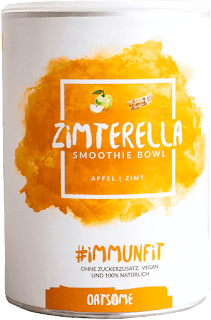
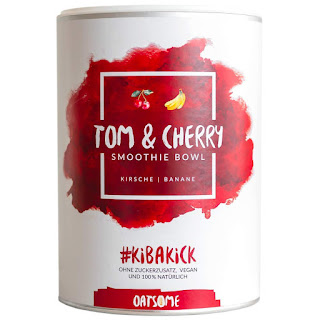
Enter another duo of young German chaps with a good idea. Philipp Reif and Tim Horn have backgrounds as IT specialists (at Deutsche Bank and Telekom) and sportsmen, who saw a gap in the market for quick-to-prepare healthy breakfasts. They introduced Oatsome Smoothie Bowls in 2017 -  an idea that’s part mymuesli, part Huel, part Ben & Jerry’s (note the quirky flavour names). With their background, it’s no surprise that Philipp, Tim and their colleagues develop recipes as one would develop software - testing and learning, failing fast, and all that stuff. Proof that this can work for the traditional food industry?

The company seems to be doing well so far. Sales are in the 10s of millions of €s, the company is profitable, and they have hundreds of thousands of Instagram followers. According to this article, they are learning from mymuesli’s mistakes of rushing offline and expanding too quickly. And I’m proud to say they come from just down the road, on the Hanauer Landstrasse.

It’ll be very interesting to see - in another 13 years - what has become of both of these brands. But maybe I’m now showing my age in that longevity may not be the aspiration these days.

Thursday, 11 February 2021

World sanitiser


                                                            The author in Paros, October 2005


Nine months ago, I was maybe foolishly optimistic about the return of travel and the re-emergence of a revived travel industry. With all the talk of building back better and big resets, the industry that is still suffering from the pandemic fallout is travel. The hoped-for recovery just isn't happening, whether it's airlines, hotels or tour operators. Not surprising, as we have just had lockdown extended for the umpteenth time.

There's an article here from Springwise that tries to take a positive tone, about clever innovations within the travel industry to adapt to people's changed behaviour and need expectations as a result of the pandemic.

But can I be the only one that finds this dreary, and rather missing the point?

Whether it's art exhibitions or travelling exotic lands, there is a limit to how much virtuality you can take. Like those virtual shoes and outfits that some people apparently pay astonishing sums of real money for, the novelty wears off at some point. 

Virtual reality Japanese Onsen bathhouse experience? I'd prefer to wait for the real thing. One day.

Guest rooms in bubbles? Haven't we had enough of bubbles, from the filter sort to the friends and family sort?

Robots doing all the stuff that, in years gone by, came with a twinkling smile, a drink on the house that stretched into six, and stories about the days and nights they shot that famous Hollywood film in the bay round the coast ...

Contactless hotels, facial recognition technology ... yes, good. But the photos are cold and perfect and devoid of any human touch. Contactless, indeed.

All this stuff may be about "needs" and "changed behaviours", but what about desire?

I've got a yearning for dirt. Greasy spoon cafes and restaurants without a menu at all (and I don't mean it's all online). Heat and dust, colourful chaos, mess, adventure, surprises - the bad ones, too, that you can laugh about afterwards. Places so windy wearing a mask is laughable. Laughing about everything and anything.

A pre-pandemic, pre-Instagram, unsanitised world.

Friday, 15 May 2020

Is there a template for authenticity? Or novelty?


Lockdown cliche that I am, I'm been listening in to a few seminars recently. To do with work and to do with my rather bedraggled attempt at being an author. This week's seminar from The Society of Authors promised to combine both - the topic was Marketing your Books.

I did pick up a few tips and once I'd got my head round the idea that the speaker was talking more about what I'd call sales, I was happy to listen in to learn what I should really be doing to sell my books - getting an email newsletter together.

I won't be doing that, though, for a simple reason. Sales is not the prime objective of my marketing. And it's for this reason that I found the tenor of the talk slightly depressing:

There are no new ideas in marketing

All marketing is a numbers game

Just copy from those who are doing it well/properly

This flavour of marketing is something I've touched on before, in relation to creativity. Here, and here. The idea that with a mix of templates, frameworks, tools and algorithms, you can create by formula. And I've discovered a myriad of websites that can churn out content to promote your book, from Canva to BookBrush. And yes, I probably will give them a go, and stick it on Instagram to see what happens. Although I'm not sales-driven, I'm never going to say no if someone wants to buy my books. Of course not.

I am sure I could find a antique-looking map background and possibly some representation of a scorpion and create a nice little promo for my book. But I fear it would get lost amongst all the samey coffee cups, socks, flowers in vases and shabby-chic backgrounds that one sees in book promotion.

The map would not be the genuine article of the place that inspired the book, from the early 1960s, still encrusted with a hint of desert sand.

And the scorpion wouldn't be a fluffy one.

The thing is, there's more to marketing than numbers.

There is magic, mystery, creativity, novelty, authenticity, surprise.

And none of these things are available via a template.