Showing posts with label seasonality. Show all posts

Friday, 2 May 2025

RETROWURST: Apples May 2007


It’s the merry month of May and apple blossom time - and 18 years ago, my Extrawurst article was all about apples. The varieties, the orchards, the cakes, the juice and that Hessian speciality, Apfelwein.

--------------------------------------------------------

Around about this time of year, on the gentle hills around Frankfurt, the orchards are in full bloom, which brings me on to the subject of the German – or more specifically, Hessian, love-affair with the humble apple. Although the Germans are only fourth in the European league of apple-growers, behind Poland, France and Italy, they are passionate about their apples, particularly in the Bundesland in the middle of Germany, Hessen, where I live.


Some 1,500 apple varieties are grown in Germany, but only 30-40 of these are widely available or commercially important. The number of varieties in general is declining with fewer and fewer home-grown varieties available in the supermarkets. The traditional way of growing apples, the Streuobstwiese, where a mix of different fruit trees of different ages co-exist in an orchard, together with typical fauna and flora, is also on the decline, being taken over by more formal – and efficient, from a commercial view – plantations. The decline of the Streuobstwiese is of concern, not only to environmentalists, but also to honey producers and many average Germans. Especially in the area around Frankfurt, it is not uncommon for people to own a few trees in such an orchard and to sell the fruit off in the autumn to one of the local producers of Apfelwein, of which more later! In almost every village there will be an active Apple or Fruit Tree Club, whose members vigorously undertake such projects as reviving old apple varieties or giving technical demonstrations of tree pruning to local schools!


Apples are a mainstay of German cooking and baking. The average German recipe book will give you more recipes for Apfelkuchen than you could have dreamed possible. There are apple crumble cakes, apple sponge cakes, apple strudels and even cakes made with Apfelwein! In addition, Germans munch through litres of Apfelmus, which is like apple sauce, or baby food, depending on how you look at it, every year. Apfelmus is available in huge jars in every Supermarket and, instead of a couple of spoonfuls with the Sunday roast pork; Germans ladle it over yoghurt, pancakes, quark and specially made potato fritters, or Kartoffelpuffer.


Moving on to the subject of juice, the Germans are a pretty thirsty nation when it comes to fruit juice, slurping through 41litres per head per year. Of this, 11.7l is apple juice, followed by orange juice at 9.8l. Apple juice mixed with mineral water (Apfelschorle) is the acceptable non-alcoholic drink for adults and the standard for children whose parents don’t want to fill their little ones with additives and nasties. The apple juice available ranges from the “industrial” fizzy drink end to the “artisan” organic end of the market.


At the “industrial” end is the Coca-Cola brand, “Lift”, which is a sparkling apple/water mix and sold in 1.5l Coca-Cola bottles. On the website, www.lift-schorle.de, you can see the rather alarming TV ad for Lift: it gave me bad dreams, anyway! At the gentler end of the market are a lot of more “authentic” products, often produced by smaller, local producers. Visiting the websites of these, you can easily overdose on total fruity wholesomeness! One example of a fruit juice producer local to me is www.rapps.de, another is www.beckers-bester.de.


Rapps also produce Apfelwein, the “national drink” of the Frankfurt region. Apfelwein is a very tart form of cider with 5.5-7% alcohol. It’s said, even by locals, that it takes at least two or three glasses before it begins to taste OK! Apfelwein is the official name, but there are almost as many different names in dialect for this drink as there are producers, centred on Franfurt in mid- and south-Hessen. Apfelwein was first recorded in Frankfurt in 1600, but there was already a Reinhaltsbestimmung (Purity Charter, similar to that for beer) in 1638, which producers still have to follow. And although too much Apfelwein can be a disaster for stomach and guts, it rarely gives you a headache!


Apfelwein is available at most pubs and restaurants but there are also Apfelweinlokale, marked by a green wreath over the doors, which specialise in the drink and traditional hearty Hessian food to accompany it (N.B: not recommended for vegetarians or the faint-hearted!). The rituals surrounding Apfelwein are many and strictly adhered to, even after a number of glasses! The wine is brought to the table in a large blue and grey earthenware jug, called a Bembel, which keeps it cool, and is drunk out of diamond-patterned glasses called Gerippte. It is said that these glasses come from the time before cutlery, when fingers greasy with boiled pig fat would be more likely to be able to hang onto a glass with a texture to it, especially after the second Bembel!


The famous Apfelwein producers in and around Frankfurt include www.possmann.de, who also run the Ebbelwei Express, a brightly-coloured tram that tours Frankfurt while the guests enjoy a glass or two of Possmann’s best. The largest producer is www.hoehl-hochstadt.de . There are many smaller producers around and many of the juice producers also make Apfelwein. One such is www.kelterei-heil.de, where the website reflects the image of the apple to the Germans: a kitschy country idyll. You will be disappointed to see that you have missed the Apfelblütenwanderung(“Apple Blossom Hike”) on the 1st May, but you can still enjoy the photos of hearty and wholesome German folk yomping through pretty orchards on the site.


However, hidden within this website are signs that the humble German apple may be getting subversive in its old-age. Kelterei Heil has launched a new product called Fichtekranz. Actually, on closer inspection, it is clear that it is not a new product at all but some sort of sheep in wolf’s clothing. Fichtekranz is none other than good old Apfelwein mixed with water or with lemonade but bottled with a minimalist, trendy label. The strap line actually translates as “from happy apples” (meaning, hopefully, that it is organic, rather than injected with any dubious substances!). There is a chance for hip young things to participate in the brand, by designing their own label for it, in return for a bit of word-of-mouth promotion. Fichtekranz is available in Frankfurt’s hipper clubs which would never have dreamed of serving anything as rustic as Apfelwein.


So, maybe this is the way forward for a traditional drink: to use the tactics of Bionade and move Apfelwein away from the boiled pig legs and into the “see and be seen” clubs of the big city.

--------------------------------------------------------

As I expected, the Apfelwein producers have been busy getting a bit of modern marketing in the whole mix. The Walther family live in our street and they, for example, are constantly launching new variants based on Apfelwein to increase its appeal. There’s a rosé variety and an Apfel Secco, reflecting trends in (mainly female) wine consumption. And there are special editions, too - for example made from Braeburn apples. The design and idea has a bit of a single malt vibe.

But its not just about hip and trendy. The interest in regional, local and authenticity has given Apfelwein a boost, I suspect. Provenance and history are now something to be celebrated, not disguised in the latest cool outfit. Apfelwein culture was added to the UNESCO Intangible Cultural Heritage list in 2022. A former colleague of mine has opened the Apfelwein Galerie in Frankfurt, offering tastings as well as art and photography. And just down the road, in Hanau, we now have an Apfelwein Museum.

I’m hoping that in eighteen years, our harvest from Carlos (our very own apple tree) will be more impressive than last year’s ;)

Tuesday, 12 November 2024

Condiments of the season


The clocks have gone back, the feather duvets retrieved from the cellar and the beergarden afternoons definitely a memory of sunnier days. At the weekend, I experienced a last stand in miniature from a Bavarian speciality that I associate firmly with the dog days of summer through to the autumn jollity of the Oktoberfest.

At a birthday party, we were served canapés of Weißwurst, Salzpretzel and a dollop of Süßsenf. Rather like this:


Weißwurst is a delicacy that doesn’t have the immediate appeal to Brits of a Bratwurst. I remember meeting a UK colleague in Munich at around 11am and his stomach definitely turned when I ordered this particular snack and started tucking in. The sausage itself is made from veal (I’m not over-keen to find out which particular bits), pork fat, parsley and spices. The discarded sausage skin does look particularly unappealing. Traditionally, these sausages were made in the morning and butchers and restaurants were keen to get rid of them by mid-day. Again, I’d rather not ask too many questions as to why.

They are, however, delicious and there’s a certain charm in the way they are served, floating around in a terrine-type bowl with lion’s head handles and maybe a Bavarian flag pattern:


Now, you may have noticed that mini-terrine of brown stuff to the right. Once again, I’ll refrain from saying what this resembles, but it is Süßsenf - sweet mustard. The mustard seeds are roasted and the mustard is sweetened with sugar, apple purée or honey. The first commercial producer was Develey, who are still going strong today. But the market leader is the one pictured above - Händlmaier

Karl and Johanna Händlmaier opened their first butchers shop in Regensburg in 1910, and Johanna created the Süße Hausmachersenf  in 1914, to go with the sausages they sold to eat on the premises.  Son Joseph and his wife Luise took over the butchers shops after the 2nd WW, and it is Luise who turned these into a thriving mustard and condiments business after her husbands death in 1955. Shes the lady depicted on the label, of course.

The website is full of Weißwurst wisdom, including the etiquette for eating the sausages. In typical German fashion, it’s less about “how do you eat yours?” and more about orderly steps and correct procedures. 

Whichever way, it’s fun to be writing about sausages again on Extrawurst. It’s been a while!


Friday, 16 August 2024

Those lazy, hazy, crazy days of summer


A short and sweet post today as the weekend and the high summer outdoors are calling. For those living in Hessen, that will inevitably involve apple-based drinks, with or without that alcohol stuff.

Aren’t the designs for Possmann’s apple juice just perfect? There are so many sludgy, dreary colours around attempting to convey naturalness, making this burst of bright primaries shine even more brightly in comparison. 

Possmann have been making Äpfelwein and juice since 1881, under the slogan “the best thing that can happen to an apple.” The 5th generation of the family is now in charge, and they’re not only the largest apple processing company in Hessen, but the most award-winning cider company in Germany, too. They’re responsible for one of my favourite sights around Frankfurt, too - the colourful tram known as the Ebbelwei-Express.

An apple or five a day (in liquid form) really does keep the summertime blues away. 

Wednesday, 3 May 2023

RETROWURST: Public Holidays May 2005


Here we go on another trip back in time, to my reflections on the merry month of May in Germany, with its glut of public holidays. Off I went, following the tipsy processions through the fields and woods, slurping down Maibowle on the way.

I must have got bored of that topic as the article then lurched into the subject of greeting cards in Germany. If my memory serves me correctly, I had a project on the go on this theme.

--------------------------------------------------------------------------

It’s May and that annoying time of year again, if you work in the UK, when every time you call your colleagues in Germany or other continental countries, they seem to be having yet another public holiday or, worse still, they had a public holiday yesterday, which was Thursday, and are having the Friday off for good measure.


Public holidays come thick and fast after Easter here in Germany; there’s the first of May, of course (although we don’t move this around if it inconveniently falls on a weekend as it did this year; it would be most un-German to call the third the first, or whatever) and then we’ve just had Father’s Day and Mother’s Day in quick succession. Mother’s Day is understandable enough; this is the same as in the UK (on a Sunday) except that it’s in May instead of March, possibly to provide a better fresh seasonal flower selection. Father’s Day is a little more difficult to understand- it is actually Himmelfahrt or Ascension Day in the Christian Calendar but has been hi-jacked somewhere along the way to celebrate all that is manly and fatherly. Typically, it is a good excuse for men to go out for a long walk through the woods and fields, pulling a little cart heavily stocked with beer and Schnapps. These expeditions start fairly early in the morning and the progressively drunken procession lurches from one beer garden to the next, occasionally topping up in-between from the little cart. Sons are often included from a relatively early age, usually as an insurance measure to pull the cart or find the way home once the fathers become incapable. All this is rather different from the genteel coffee, cake and flower arrangements that constitute the typical Mother’s Day. So much so, that, recently, in the spirit of equality, groups of women can now also be observed on Father’s Day, crashing through the foliage to enjoy the odd glass of Prosecco.


No sooner are Father’s and Mother’s Days over than is Pfingsten or Whitsun and another long weekend (elongated even further in Frankfurt with the celebration of Waldchestag, or Woods Day on the Tuesday- yes, you guessed it- more drunken lurching and frolicking in the woods!) upon us. Sometime in late May or early June is Fronleichnam (or Happy Cadaver as I once heard it charmingly referred to; actually Corpus Christi) then that’s the lot in most of Germany except a few extreme Catholic strongholds until the frightening-sounding Tag der Deutschen Einheit in October.


You would think, what with Christmas and Easter and birthdays to add to all this, that the greetings card industry in Germany would be huge, but there you’d be wrong. Whereas, in the UK, Hallmark and their ilk have capitalised on the North American willingness to celebrate or commiserate every possible event or non-event of human life’s rich tapestry in card format, the greetings card market in Germany is under-developed which may be a good or bad thing depending on your perspective. 


Starting with Christmas, the card selection is rather sparse. Maybe the Germans think that they are being damaging enough to the environment by insisting on real Christmas trees for all without then wasting the paper that’s involved in Christmas cards to every distant relative and acquaintance, including the dustmen. There are certainly no “bumper boxes” of 50 cards with the only nod to bulk-buying being packets of six postcards of snow scenes or candles. What cards there are have a very traditional flavour- you won’t find anything with “cool yule”, smutty poems about drunken reindeer or retro photos with 21st century captions here. And these cards are mostly sold singly.


When it comes to birthdays, there is a market but it’s somewhat limited. Your choice tends to be amongst “funny cards”, which resemble those “funny cards” you used to get in the UK in the 1970s- tall and thin with very thin sub-Carry-On humour, cards that even most grannies would find too twee or the pre-teen girl selection featuring either Diddl (a mouse with oversized feet who I think hails from Austria) or those grey patchwork teddies who look like baby seals waiting to be clubbed. For younger children, there is little sign of the whole character merchandising industry anyway and especially not on birthday cards. Whereas you’re confronted by Bob, Postman Pat, the Tweenies, the old Disney favourites and the latest Disney/animation heroes from the first birthday onwards in the UK, you would be very lucky to find a birthday card that even has an age on it in Germany (unless it’s an age over 60 - as I’ve said before, Germany is a very old-friendly country where seniority is a badge to be proud of!). 


For other occasions (with the notable exception of condolence cards), the choice is very narrow indeed: even those “no text all purpose” cards are rather hard to come-by. In addition, what there is tends to be very bland and generally inoffensive, verging on twee. Cards for new babies, for example, are almost never funny but show, instead, rose- or baby blue- tinted symbols and images of unrealistic infant perfection. No jokes about stinks or embarrassing noises here!


Perhaps the reason for this under-development stems back to the German dislike of superficiality. Many of the card-giving occasions themselves (those that are not traditional German celebrations) are regarded as another ugly and blatant attempt for the US capitalist machine to squeeze more money out of us. Halloween and Valentine’s Day are two examples of occasions that have been “pushed” in recent years and are treated with increasing cynicism. Furthermore, the thought process in Germany tends to go- if you really care about the person who is celebrating, then put some time, money and effort into doing something personal and relevant to them- giving flowers, picking up the phone, making a card yourself and so on, otherwise, don’t bother. Card-giving tends to send out signals here of a “halfway house”; you’re doing the simplest, cheapest thing out of duty more than anything else.


In a way, they do have a point. Anyone who has suffered a deluge of those corporate Christmas cards signed in a rush by people who neither know nor care about you or has wondered how many two-year-olds really appreciate the full cast of the Teletubbies, Tweenies and Balamory in cardboard form may well wonder if we wouldn’t all be better off forgetting the card and enjoying the celebration instead, even if it does involve trees, rain and some very dubious Schnapps.

--------------------------------------------------------------------------

Greetings cards are still pretty low-key in Germany, although there are loads around at the moment for Konfirmation. I wonder if the generation being confirmed at the moment (born around 2010) are a little bemused by these analogue relics. A popular alternative to cards for birthdays and the like seem to be those rather gaudy helium balloons. 

Fests are, thankfully, back on the calendar following Covid. Out here in the country, it’s not just Public Holidays, but almost any form of local produce, flora or fauna, from asparagus to apple blossom to potatoes that gets its own Fest.

I think I’ll give the Grillfest at the rabbit breeders’club a miss, though.

Sunday, 27 November 2022

Sharing and caring


A couple of weeks ago, St Martin’s Day was celebrated in Germany. I’ve always thought that the traditions surrounding this Saint’s day were rather more charming and heart-warming than the gaudy, ghoulish and horribly commercialised Halloween. 

St Martin was a Roman soldier most famous for an act of sharing and generosity. It is said that he came across a beggarman dressed in rags in the depths of winter. Martin took his red cloak, cut it in half with his sword and gave half to the poor man to keep him warm. This act is celebrated by children in processions with (often home-made) lanterns, songs and a reenactment of the noble act. This may all take place round a bonfire and a real horse may appear if you live in a rural area. 


St Martin’s Day is all tied up with the end of harvest and the beginning of the “winter revelling season” - with roast goose and the first wine of the season. 

I was new to all this when I came to Germany, and learned about the customs when my son was at Kindergarten - many hours were spent making lanterns (more hours on the part of the parents than the children, usually). The story of St Martin is a universal one, which teaches children the value of sharing.

Sharing” is one of those words whose meaning has shifted quite dramatically in the last twenty years. Going back to St Martin, the verb used regarding the cloak is teilen - which bears the sense of “parting”. St Martin divides his cloak into two parts, and he has to part with one of them to provide the beggarman with warmth. He makes a sacrifice -  sharing involves giving something to someone else that you don’t get back. This is sometimes a hard lesson to learn - I remember when my brother was in hospital as a child. All sweets that were brought in by parents were put in a communal tin, then divided out equally so every child got a fair share. My brother wasn’t happy at some other child getting his favourite sweets!

Sharing, when it comes to non-material things, has always had connotations of “having something in common”. But the word seems to be shifting from a meaning that’s about apportion, giving and generosity to one that’s about passing on, informing, making public. In this digital world, the sharer keeps whatever it is - photos, stories -unlike St Martin and his cloak.

“Sharing” sounds kind and generous - but is it really? Sometimes sharing feels like passing on a burden, or covering your backside.

I wonder, sometimes, when someone wants to “share some thoughts with me” whether they might be better keeping them to themself.


Friday, 23 September 2022

Local Yokel?


September is a time when I’m intensely aware of the local region I’ve landed up in here in Germany. Maybe it’s because we’re a bit out in the country, surrounded by orchards and Apfelwein presses, where mountains of local apples are delivered every morning, growers paid by the kg for their wares. There’s a Kurbisfest one Sunday in our town, with pumpkins of all shapes and sizes lined up ancient steps and round the well in the town square.

Germany has always been more intent on regional and seasonal produce than the UK. It could be that showing regional pride and loyalty is slightly more palatable for many Germans than nationalistic flag-waving. Or perhaps it’s simply because Germany is a far bigger, federal land, less centred than the UK on its capital.

The main supermarkets here have generally got their act together about regional produce. Given that the roots of these supermarkets were in local co-operatives, maybe it's no surprise. Incidentally, the word Kolonialwaren had always puzzled me - you can still see the word on old shop signs - it was used to describe imported goods such as coffee, tea and sugar as well as spices. 

Of the two biggest supermarkets, I’m more familiar with the No. 2, REWE, founded in 1927 and based in Köln. (No. 1 is Edeka - where the “k” comes from Kolonial - which was founded in 1907 and is now based in Hamburg.) REWE offers a wide regional selection of products, labelled up as so:


These products are mainly fruit and vegetables, eggs, dairy and meat products, but also honey, flour and wine. Local brands of, for example, jam or pickles may also be offered under the regional banner. 

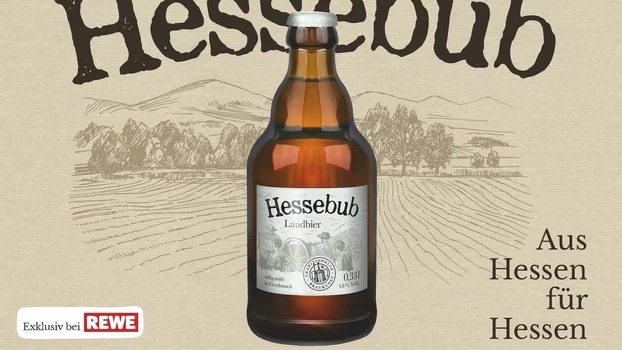
But this summer, I noticed a new development for REWE - a beer named Hessebub, which is roughly translated as “Hessen Lad”. The packaging looks very much as this could be a small local brewer who has been crafting beer for centuries that REWE have picked out of obscurity and given a helping hand.

But the reality is different: this is an Own Label masquerading as a brand. It’s an interesting one, a kind of manufactured authenticity. The beer is brewed in Darmstadt, so the product is as authentic as could be. But the name and label design were brewed up in a 21st century office. 

A genuine local brand, or the equivalent of a flashy advertising executive pulling on hired Lederhosen once a year for the Oktoberfest? 

Wednesday, 8 September 2021

RETROWURST: Seasonal Products September 2003


 The first visit to a supermarket on our recent return from holiday brought the inevitable groans of ‘No! Lebkuchen already?’ This makes this Retrowurst particularly topical in that it marvels over the German September delicacies of Federweißer, Zwiebelkuchen, Süßer and Pfifferlinge. It goes on as a culinary calendar and guide to German food and drink throughout the year.

---------------------------------------------------------------------

September may well have been the ‘season of mists and mellow fruitfulness’ for Keats, but it is definitely the season of Federweißer und Zwiebelkuchen here in middle-Hessen. The subject of Extrawurst this month is seasonality, especially in relation to food and drink and how brands can use this notion to connect closer with people.


Since I have lived in Germany, it has always been apparent to me that nature’s cycle of months and seasons is somehow closer to Germans’ hearts and especially stomachs than for us Brits. At certain times of year, there are special products that one just can’t avoid; in fact, the whole year is punctuated with delicacies and if one were to throw away all calendars, you would have a pretty good idea of what month you were in by a glance at the restaurants’ blackboards and the supermarket shelves (given that the weather doesn’t seem to be such a reliable guide any more!)


As I said in the opening, in September we are in the midst of the Federweißer und Zwiebelkuchen season. Federweißer is a mildly alcoholic, cloudy grape juice from the first fermentation in winemaking. It is usually available direct from the vineyards and in wine bars but also from the supermarket where it is sold in (potentially messy for the unwary) bottles without a cork! It is usually served with Zwiebelkuchen, a very oniony flan which provides a nice contrast in taste to the rather sweet Federweißer. For those who prefer something non-alcoholic, another speciality of Hessen in September is Süßer, a strong, cloudy, sweet-tasting apple juice which is the first pressing that will eventually be made into Apfelwein. The beginning of Autumn is also mushroom time, especially Pfifferlinge or Chanterelles. Many families go mushroom picking in the forests and Apothekes provide a free ‘mushroom identification service’ to make sure that you’re not about to serve up a poisonous Ragout!


As the Autumn moves on through October and November, the Wild or game season gets underway, with fresh venison and wild boar available in the butcher’s (and deep frozen in Aldi!). Many restaurants have a special game menu. Goose is also widely available from November onwards, as this is traditionally eaten not just at Christmas but also around St Martin’s Day which is in mid-November.


By December, the Christmas goodies will have been in the supermarkets since September but now the Christmas baking season really intensifies with displays of the spices needed in Supermarkets and Apothekes. Competition for home-baking comes inevitably from the various Weihnachtsmärkte or Christmas markets that start around late November.


With February comes Karneval, with its own specialities, mainly Kreppeln or doughnuts and then, around the end of March, the first fresh Grüne Soß is available in restaurants or to make yourself from the pre-bundled fresh herb mixtures available from market stalls. This is a cold sauce made from seven different herbs and sour cream, which is eaten with potatoes, meat or hard-boiled eggs.


April sees the beginning of Spargelzeit where you just can’t escape from asparagus (the German asparagus is white as it grows underground). There are little roadside stalls selling the stuff in various sizes and qualities and a lot of restaurants serve only asparagus at this time. In May, a special woodland herb is available to make a delicious punch called Maibowle with schnapps, white wine and Sekt. In May, the first strawberries are available and many of the roadside asparagus stalls sell these too, along with the many ‘pick your own’ fields. Needless to say, you can make a very nice Bowle from strawberries, too.


There are numerous examples of food brands in Germany who introduce seasonal variants and flavours. Mövenpick Ice Cream, for example have featured ‘Our Ice of the year’ for many years- a flavour that is available for one year only. More recently, Mövenpick have started introducing two such flavours, one for the summer (usually lighter and fruity) and one for the winter (usually more nutty/chocolatey). This idea has been picked up on by many other brands, including Schwartau jams who have a ‘jam of the year’. Other examples of seasonal flavours and variants can be seen in the chocolate confectionery market, where Ritter Sport and Milka are both very active with this kind of thing- summer flavours are usually yoghurt and fruit-orientated while in the winter, flavours based on some of the traditional German Christmas goodies, such as Lebkuchen and Stollen can be seen.


Hochland cheese is another brand who has introduced seasonal varieties into its Almette cream cheese range- this Spring they introduced Almette with asparagus and we will not be surprised to see Almette with mushrooms this Autumn!


There are various important advantages that seasonal variants and flavours can imbue on a brand: firstly, in these days of so many new product flops, there is a certain amount of honesty admitting that a new flavour will only be available for a limited time and, of course, it makes an excellent testing platform. It can make a brand seem less ‘processed’, impersonal and distant especially if the variants are in tune with local tastes or recent trends. It provides a good antidote to the fear of globalisation and faceless, distant corporations. People are given a reason to look at the brand again and it gives the impression of a brand that is ‘fresh’ and always on the pulse. Finally, at a deeper level, in these days of short time cycles and cheating time with technology, ideas that are based on the yearly cycle of nature give people a feeling of being ‘rooted’ again and in touch with nature.

------------------------------------------------------------------------------

Well, all I can say is that in the eighteen years since I wrote that, there has been a proliferation from food and drink brands in terms of both seasonal and regional - the human need to be in tune with nature has been emphasised through greater awareness of sustainability. And of course brands are keen to present themselves as human, in touch with local needs and desires rather than faceless global corporates. It’s push and pull, as new technology enables speedier development and distribution of variants with a mayfly lifespan.

In other news, I’m pleased to say I’ve addressed the proliferation of exclamation marks in my writing.

Monday, 17 June 2019

Big idea from a tiny brand

It's the season of Fests on every corner here that cracks off on the 1st May and sees us supplied with outdoor food, music, drink and fun until the early Autumn. I'm not usually on the lookout for great examples of branding during these events, but it's always an added plus to see a clever piece of marketing.

The Apfelweindeckel above is from Kanne Ebbelwoi (for the uninitiated, that's how those round here pronounce the word Apfelwein). The slogan is nice, but (I expect) pinched from somewhere. What's really clever here is the slogan in conjunction with the logo illustration, which is at first sight a traditional Apfelwein Bembel.

But look at the design more carefully (possibly difficult if too much Apfelwein has gone down the hatch) and you'll see that it's a map of the world. Neat, neat, neat.

I couldn't find out much about Kanne Ebbelwoi from the internet, apart from the possibility that they are what is called a Besenwirtschaft or Straußwirtschaft, a peculiarly German phenomenon which is a seasonally-open little pub or drinking place, usually on the premises of a vineyard or cider-press, that sells its own wine, along with small snacks.

I'll leave you with a couple of pictures of such places - can you imagine anything more delightful on a sunny afternoon?


Sunday, 16 December 2018

A(n) ice experience

The first snow has fallen overnight, there's winter sports on the TV and my thoughts are turning to ski lifts and pistes.

Shopping for winter clothing is something I've always associated with struggling into padded jackets in over-heated changing rooms, with the faint smell of ski-wax in the air. As far as Customer Experience goes, it's not brilliant.

I've recently seen an excellent idea from Woolrich, famous for their Artic Parkas (originally developed for Alaskan pipeline workers). In their flagship store in Milan, there's an "Extreme weather condition" room - a 14 sqm freezer at -20°C where you can try on a new parka and see if it's up to the job.

When it comes to the coolest ideas for Customer Experience, this one has to be up there.

Thursday, 28 May 2015

Anyone for Pimm's?

I've blogged about seasonality before, and it's now that wonderful strawberries and asparagus (and yes, you can eat them together) season here in Germany. And back in Blighty, it's time for a Pimm's. Pimm's have been quite smart with their marketing in the last few years, making a choice to throw all their media budget into a seaside bucket and associate the brand with the Great British Summer in all its unpredictability.

Their latest clever trick is a nifty use of digital technology in the form of posters that activate when the temperature goes above 21°C. Now, that's what I call working with audience receptivity!

Pimm's have always been pretty good at marketing, it seems. This article looks at the phenomenon of the Pimm's Party in the 1950s/1960s, when the Pimm's bottle looked like this:
21st century marketers can learn plenty from this 360° Participative Co-Created Big Brand Idea, as I guess we'd call it today. Pimm's provided invitations for the party, suggestions for Jolly Party Games, such as passing the matchbox by nose, or flipping kippers (not entirely sure about either of those after a few Pimm's), snack recipes (fancy Nut Balls, Prune Surprises or Shrimp Thrills?) and some excellent tips (providing plenty of ashtrays, locking up the kids & neighbours, keeping cats away from the drinks, that sort of thing).

Potential party-givers are also reassured that there's "no need to bother about other drinks", in a blatant steam-rollering of any competition.

But there's a warning issued from the brand. It's not something about responsible drinking or being over 18 or any of that business, though.

No, it's the warning to be prepared for "lots of fun and maybe a bit of flattery."

Bottoms up!

Monday, 14 November 2011

The Box of Delights

Shopping these days has, for me, evolved into a somewhat functional, even utilitarian process. The DHL van turns up sometime in the early afternoon, bearing its cargo of brown packages from dot coms and dot de's with names entirely written in lower case.

Sometimes the packages are for me, but usually they are for neighbours. But they all look alike, distinguished only by the inscription on the address label. There's nothing unexpected, nothing inspired, just a sense of mild annoyance when you've been out and will have to make the trek to the Post Office with its strange idea of opening hours, which you can never remember.

Now contrast that with dusk on a late afternoon in mid-November and a stroll along Piccadilly and up Regent Street. The Christmas lights are still freshly turned on and there are long-legged elves outside Fortnum and Mason, causing a hold-up to the pedestrian traffic. From the childhood memories of Hamleys to the 21st century hi-tech of Uniglo it's a world of glitter and magic, enchantment and surprise.

In the same way that rumours of the death of TV have been exaggerated, so too has the need for wonder, for sensory participation been played down in the progress of retailing. In the end, media are not replaced - we simply add more layers of experience. It's not either:or. We still watch TV, albeit with a laptop to add extra texture and layers of meaning.

And as Christmas approaches, we still need the allure of Santa's grotto and the sensory carnival of Aladdin's cave.

Wednesday, 28 April 2010

Spring cleaning

It's that yellow time of year. The daffodils may be on their way out but the fields and roadsides are aglow with rape and dandelions. And on patios all over Germany and, indeed, the world, the Kärcher is out, high-pressure cleaning as only it can.

Kärcher ("makes a difference") is one of those great brands that could only be German. With a core area of expertise in pressure cleaning outdoors, now extended to indoors, this is engineering ingenuity at its best. The company was founded back in 1935 and continues to go from strength to strength, even getting involved in huge public cleaning projects such as the Brandenburg Gate or Mount Rushmore - the ultimate "expert endorsement", I suppose.

Kärcher, in a way, is Germany's Hoover. Herr Alfred Kärcher's name has not just become a household one - in every sense of the word - along with his fellow Württembergers Bosch, Daimler and Count Zeppelin, but he's also had the honour of becoming a verb. Even if some, such as the current French president, have been known to use the verb a little unwisely.

Thursday, 9 July 2009

The Biergarten of Eden


Seasonality and regionality are always the big themes when it comes to German food and drink and what could represent Bavaria better in the summer than a typical Biergarten?
A Biergarten combines everything that is dear to the Germans, particularly the Bavarians. Beautiful old chestnut trees, conviviality, warm summer evenings that go on forever, hearty food, and the best beer in the world, in large (but not indecent) quantities.
A Biergarten is a multi-sensory experience. The sight of all those blue and white Bavarian coats-of-arms, the sound of heavy glasses clinking and maybe a brass band, the feel of the cool beer trickling down your throat and the heaviness of the Maß as you lift it, the smell of Schweinshaxe and the taste of salty Pretzels or sweet mustard with your Weißwurst.
No wonder that there are beer brands, for whom the Biergarten is their spiritual home. If all this is making you thirst for more, take a look at Paulaner's virtual Biergarten here.

Friday, 23 May 2008

Oh, to be in Germany now that June's nearly there


Much has been written about the trend back to regional produce and the revival of Farmer's Markets in the UK. And, at this time of year in Germany, you don't even have to go to a Hofladen or Wochenmarkt. As you drive through the beautiful lush green countryside, you cannot avoid the countless little booths and stands at the side of the road selling the two main delicacies of the season: strawberries and (white) asparagus.
Of course you can buy both at other times of year, but most people tend to concentrate their consumption of these two (sometimes, surprisingly, eaten together in a rather interesting salad!) into the months of May and June when supplies are plentiful and freshness and tastiness are guaranteed.
I've often thought that seasonality is an interesting marketing approach for products outside of the food and drink arena, too. After all, we still have an internal clock that governs much of our behaviour and desire, even in these days of 24:7 365 day availability.