Showing posts with label Edeka. Show all posts

Monday, 4 August 2025

RETROWURST: Edeka August 2007


The subject of this month’s Retrowurst is Edeka - the German Coop. Back in 2007, it was already over 100 years old and thriving. The supermarket had recently introduced a new corporate identity with “blackboard visuals” - focussing on the handmade/local element of their freshness and food strength.

---------


Whenever retail successes are discussed, in Germany as elsewhere, most of the talk centres on the discounters, such as Aldi or Kik, or on the new kids on the block (or stores in the mall, or sites on the Web.) But, just as the centenarian Marks & Spencer continues to be one of the UK’s retail success stories, Germany’s “old lady” of the grocery world, Edeka, has likewise enjoyed similar success here over the last few years.


Edeka’s story is an interesting exercise in making a very old concept relevant for today, not by throwing everything away and replacing with a hip new idea, but by looking at the original concept and seeing what, within this, is both relevant to today’s customers and offers a point of difference to the competition.


Edeka, which is either 100 or 109 years old this year, depending on how you look at it, is the German “Co-Op”. Edeka can trace its roots back to 1898 when Fritz Borrmann founded the “Einkaufsgenossenschaft der Kolonialwarenhändler in Halleschen Torberzirk zu Berlin”, of which “E.d.K” or Edeka” as you would speak it is the abbreviation. As an aside, I have noticed quite a few brand names in German are actually abbreviations of this type. As everyone knows, German is a language full of words that go on for sentences if not paragraphs, so it is useful to talk about a KiTa rather than a Kindertagesstätte (Kindergarten), about KiBa, which is a mixture of cherry (Kirsch) and banana juice, or to address someone as HaPe, who is normally saddled with the name Hans-Peter.


In 1907, Borrmann and his co-op partners formed the “Verband deutscher Kaufmännischer Genossenschaftler” or German Co-operative Society under the motto “Gemeinsam sind wir stark (Together we are strong).”


One hundred years later, Edeka is the number one grocery/food retailer in Germany, ahead of Aldi and Lidl. Edeka has a 26% share, ahead of next competitors Rewe at 18% and Aldi at 17%. There are over 10,000 stores in Germany and turnover is €37.2 bn. The growth and success of Edeka in recent years coincided with the appointment of Alfons Frenk as CEO of Edeka AG in 2003. Herr Frenk is an ambitious man with a tough background behind him. As one of six children growing up in a poor family in post-war Germany, Frenk knew shortages and hardship from an early age, resulting in an obsessive drive never to squander resources and to watch every pfennig. Herr Frenk is not content with Edeka’s number 1 position: he wants to reach a market share of 30% and to expand at a rate of opening 200 new Edeka stores per year. Part of his strategy is acquisition: Edeka has recently bought Spar and the discounter chain Netto.


While other retailers see diversification into non-food areas and expansion outside Germany as the way forward, Frenk’s strategy is exactly the opposite. Edeka has set its focus on fresh food and on Germany, withdrawing Edeka’s interests outside of the home market. This focus, combined with very keen attention to costs has meant an increase in profits of +60% since Frenk was appointed. Although it is tempting to make comparisons with a figure like Ingvar Kamprad, one must remember that Alfons Frenk is the head of a very different organisation to an IKEA or an Aldi. Edeka is a co-operative and its CEO does not have ultimate power.


Edeka has an extremely complicated organisational structure with regional co-operatives and societies. The store managers are mostly self-employed and the whole system has something rather mediaeval about it, akin to the feudal system with its regional barons. It was something of a revolution that Frenk managed to centralise Edeka’s computer system and his main challenge is to get the various factions working together to combine their strength and to improve overall efficiency.


Edeka’s heterogeneity is reflected in the different names it uses for its outlets, dependent on type, size and region. Under the “E” Edeka branding are “nah & gut”, “active markt”, “neukauf”, “center” and “C&C Großmarkt” (the Cash & Carry). In addition, a number of other retail chains such as Spar and Netto now belong to Edeka.


For the last two years, Edeka has been running an image campaign focusing on the main consumer benefit or point of difference for a heterogeneous, co-operative with local focus: “Freshness”, particularly in the areas of fruit, vegetables, meat and dairy produce. The staff and their specialist knowledge are key differentiating factors for Edeka and, although fresh food only represents 25% of the turnover, the margins are highest in this area. The tagline “Wir lieben Lebensmittel”, (“We love food groceries”) and the key visual of the blackboard stand for the specialist knowledge and passion of the staff and for the “handmade” and “local” feel that Edeka has:


But, while Edeka are single-minded in their brand communication, in retail one cannot ignore the competition. To compete with Aldi, Edeka have their own shop-in-shop “Gut und Günstig” where basic packaged groceries are offered at Aldi-like prices. The trick here, say Edeka, is to offer exactly the same deal where the public know the price to the nearest cent, such as milk, but to allow a few cents more on products that are not daily basics, such as mustard

.----------

Edeka goes from strength to strength. In 2024, it was the 6th biggest supermarket in Europe, and turnover has more than doubled since the €37.2 bn quoted in the article to €75.3 bn.

The brand has a clever balance in its communication - advertising that gets noticed - sometimes cheeky, even provocative. A good example here is the brand throwing its political weight around in its anti-AfD advertising and action. I’m generally not a huge fan of brands and politics, but somehow Edeka gets away with it, in my view. 

Maybe that’s because of the solid consistency of the blackboard/Wir lieben Lebensmittel approach - definitely still going strong. And still looking fresh.


Monday, 27 November 2023

Penny for your thoughts?


I’ve been writing an article for one of my clients about Christmas advertising. Because it’s for an international audience, most of the focus is on ads from the UK and other English-speaking markets. In Germany, Christmas advertising is a thing, but not such a colossal humongous thing (literally, in the case of this year’s John Lewis ad) as it is in the UK. 

You can see what I mean if you scroll down this article about German supermarkets’ Christmassy commercials. Apart from Edeka’s slightly weird meaty mumblings, there’s nothing really unexpected and many of the ads are a little lacklustre and conventional. 

There’s cuteness, kids,  magic and animals with Lidl and REWE. Some “get the tissues” from Co-op. And a bit of fun and nostalgia from Aldi with grown-ups behaving like big kids.

But that’s me with my London ad person hat on (also looking a bit lacklustre these days, to be honest). Time and time again, we hear that the ads that do well at Christmas are those that do all the cuteness, tears, smiles, entertainment and general warm fuzziness. And do it well.

So what the heck were Penny thinking? Over 3 minutes, entitled “The Kids” with the message “It’s our future, please listen to us.” Four youngsters, discontented, sad and angry about the grown-ups in their immediate family, or society in general. A girl forced into ballet when she’d rather dance freestyle. A little chap who can’t bear his mum’s social media obsession. A young lad upset by all the “six-pack” bodies he sees on his phone. A junior environmentalist striding around the house switching lights and appliances off.  

Then a montage of sulky glum faces, school protests, “Fridays for Future”-style activism clichés accompanied by a children’s choir rendition of a song from P!nk (I think).

Maybe it seemed like a good idea when the agency made this back in the Spring or Summer. But at this time of year, and given the news of the last few weeks, it feels completely tone deaf. As I said last year, no-one wants to be reminded of misery, hate and division. Especially not now. 

A long time ago, when I worked on P&G, I’d often have to steer the clients away from anything that felt like finger-pointing. I’d remind them that new mums often felt inadequate and hopeless enough without ads suggesting that if they didn’t use the new-improved super-ultra-Pampers (or whatever), they were a crap mother. Especially if they couldn’t afford better than Aldi.

That attitude from advertisers and their agencies is sneaking back into commercials, and this is a prime example. Finger-pointing, parent-shaming (if you like) manipulative stuff to make people feel lousy about themselves. Backed up by some sort of agency bullshit that they’ve “got out there” (where is “there”, anyway?) and listened to “real” children’s wishes. Well, I have my own experience of that.

I quoted an article from Richard Huntington in my last post and this was one of the stand-out sentences for me:

Everyone is trying in their own way to be a good person living a good life.

In the end, it shouldn’t be more complicated than that.

Friday, 23 September 2022

Local Yokel?

n 


September is a time when I’m intensely aware of the local region I’ve landed up in here in Germany. Maybe it’s because we’re a bit out in the country, surrounded by orchards and Apfelwein presses, where mountains of local apples are delivered every morning, growers paid by the kg for their wares. There’s a Kurbisfest one Sunday in our town, with pumpkins of all shapes and sizes lined up ancient steps and round the well in the town square.

Germany has always been more intent on regional and seasonal produce than the UK. It could be that showing regional pride and loyalty is slightly more palatable for many Germans than nationalistic flag-waving. Or perhaps it’s simply because Germany is a far bigger, federal land, less centred than the UK on its capital.

The main supermarkets here have generally got their act together about regional produce. Given that the roots of these supermarkets were in local co-operatives, maybe it's no surprise. Incidentally, the word Kolonialwaren had always puzzled me - you can still see the word on old shop signs - it was used to describe imported goods such as coffee, tea and sugar as well as spices. 

Of the two biggest supermarkets, I’m more familiar with the No. 2, REWE, founded in 1927 and based in Köln. (No. 1 is Edeka - where the “k” comes from Kolonial - which was founded in 1907 and is now based in Hamburg.) REWE offers a wide regional selection of products, labelled up as so:


These products are mainly fruit and vegetables, eggs, dairy and meat products, but also honey, flour and wine. Local brands of, for example, jam or pickles may also be offered under the regional banner. 

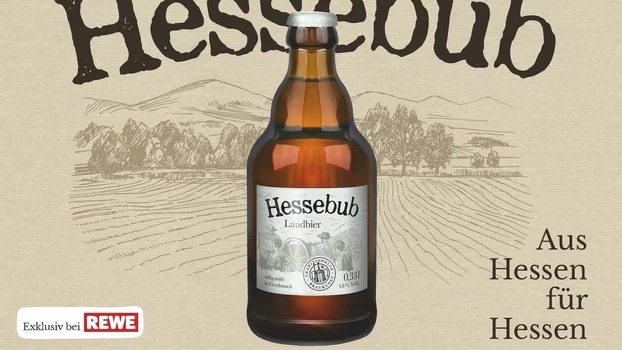
But this summer, I noticed a new development for REWE - a beer named Hessebub, which is roughly translated as “Hessen Lad”. The packaging looks very much as this could be a small local brewer who has been crafting beer for centuries that REWE have picked out of obscurity and given a helping hand.

But the reality is different: this is an Own Label masquerading as a brand. It’s an interesting one, a kind of manufactured authenticity. The beer is brewed in Darmstadt, so the product is as authentic as could be. But the name and label design were brewed up in a 21st century office. 

A genuine local brand, or the equivalent of a flashy advertising executive pulling on hired Lederhosen once a year for the Oktoberfest? 

Wednesday, 25 August 2021

Tutti Frutti Tonality


In this post from five years ago, I bemoaned the homogenisation of logos, films, language, pretty much everything, in an increasingly formulaic “smoothie society”. So it’s a little ironic that a brand that's ruffling a few feathers at the moment with its tone of voice just happens to be the original German smoothie brand and market leader - True Fruits. 

The current hoohah is between True Fruits and supermarket Edeka. True Fruits had the bright idea, with the election coming up, of a topical brand campaign entitled Die Qual der Wahl (“The agony of choice” or thereabouts). Smoothie bottles are decorated with the names of the six biggest parties in the Bundestag with nine points from the party manifesto printed on the bottles - but two of these aren’t genuine. Can you guess which?

This alone would probably not have caused too mainly raised eyebrows had the company not decided to actually produce the bottles and deliver them to supermarkets. Edeka, for one, were unamused at the idea of displaying an AfD bottle on their shelves, so sent these back. A lively discussion has ensued between the two brands: what is democracy? Is information more important than virtue signalling?


True Fruits was Germany’s first smoothie brand, founded in 2006 by three student friends from Bonn. From the outset, they never wanted to ape Innocent with its goody-goody image and rather twee brand voice, or try and push out-and-out healthiness. So instead they have always emphasised their quality credentials, combined with a provocative tonality in their communication, more reminiscent of Oatly or BrewDog.

In the last few years, brand communication has sailed fairly close to the wind, with smutty humour eliciting complaints of sexism as well as making light of racism (“Our token Black”). Much of this is below the radar (as is the current debate) of those outside the ad/marketing community, and the brand continues to enjoy moderate growth.

What’s interesting is that True Fruit’s brand communication is done in-house - they don’t have an ad or PR agency. This is similar to the Oatly model. In-house communication and agencies used to be rather sneered at by creative agencies - typically it would be something like a Korean car brand who’d take this approach.

But these days the tables are turned. Now it’s the in-house communication that’s often more edgy, more provocative, braver - and more distinctive. The big agencies have had their wings clipped in the interests of diversity, inclusivity and equality - or someone’s interpretation of what those values imply. It’s unlikely that we’ll be seeing the likes of this again: 


Poster for Club 18-30, Saatchi & Saatchi London

Wednesday, 2 December 2015

Sunday Drivers

The great Christmas-Ads-Who's-Going-To-Boost-Kleenex-Sales-The-Most race has revved up a gear or two with a recent entry from Germany. Like the John Lewis ad, the heartstrings being pulled in the Edeka ad are those guilty ones associated with elderly relatives and neighbours. Is there anything much more heartbreaking than thinking about an old person alone with their turkey leg and tinsel?

But much as these ads may play on our guilt and tickle our tear ducts, I wonder how many viewers will actually do anything to warm up Christmastime for a senior citizen. I always love to see promotions that are 'actions rather than ads' and I've found a great one, called 'Sunday Rides: Together for a brighter winter.' It's a co-operation between Avis and The Norwegian Organisation of Volunteers.

The idea comes from putting two problems together - a business problem (Avis don't have many car rentals at weekends) - and a societal problem (elderly people are lonely because they are housebound, and in the dark Norwegian winter, this is particularly so. So the PR company Good Morning came up with the nifty idea of free car rentals on Sunday (with one of the better models on offer, no less) to anyone who comes along with an elderly passenger. The renter gets to drive a great car for free, the passenger gets to see somewhere they'd never see under their own steam and Avis gets great publicity. And that's just for starters.

I particularly like the quote from Good Morning's Markus Lind about this promotion:
In a time where everyone talks (too much) about retargeting, programmatic and algorithms, it is liberating to create a concept that speaks to the hearts of people and is shareable enough by itself. We have still not used a penny on ad buys.