Wednesday, 3 August 2022

RETROWURST: Grillen August 2004


It’s going up to 36°C today and 39°C tomorrow, and I am rather wondering if our garden BBQ will fire up on its own accord. It was no surprise to me, shuffling back in the Extrawurst archives to find that I wrote about BBQs and Grillen from the German perspective back in August 2004. For more on this meat-and-mayo-fest, read on ...

----------------------------------------------

Now that summer has finally taken hold of Germany in a big way, after a couple of false starts, the season of barbequing or Grillen and general al fresco eating is officially open.


While we are used to a BBQ being a rather special event (and, out of necessity, often a moveable feast, with the moveable element often consisting of moving rickety old garden chairs, burnt sausages and a lukewarm box of white wine back into the kitchen to escape the unexpected downpour) the average German family will probably eat outside in summer four or five times a week. Given the frequency of this event, there is much bigger business to be had in Germany than in the UK with the food and accessories associated with Grillen. Just a cursory look at Heinz’ website dedicated to the joys of Grillen,the Heinz Mitgrillzentrale (www.unverzichtbar-zum-grillen.de ) will give you just a little taste of just how seriously BBQ-ing is taken here.


Let’s start with meat. In the UK, we’ll typically throw a few sausages, hamburgers and chicken legs on the BBQ to get nicely black outside and raw inside, accompanied by a few ‘grilled veggies’ as a concession to the trendy and vegetarian amongst us. However, steaks seem to be regarded as ‘a bit of a waste’ to BBQ by a lot of in the UK. Maybe it’s because our barbeques themselves are not quite up to the technical standards of the Germans (and any self-respecting German has at least two BBQs – from a rustic briquette burning device built into the garden to a sophisticated gas grill to cater for parties of fifty hungry people) or maybe it’s because we don’t get quite so much practice on this rainy little island at the art of barbequing, but somehow we don’t quite trust ourselves to throw anything costing a reasonable amount of money onto the barbeque.


In Germany, however, steaks are staple barbeque fare. Either pork or beef, they are bought in huge catering packs of at least six large steaks, even for a family of three. The steaks themselves are bought ready-marinated in a range of different flavours from herby-garlicky to spicy-peppery. In summer, butchers offer a wide range of ready-prepared steaks, including steaks stuffed or filled with mozzarella or bacon for example. In fact, apart from a few Bratwurst, usually just provided for the children or for adults as a sort of appetizer for the real feast to come, you won’t see much on a German barbeque other than steaks, more steaks and even more steaks.


If steaks have the starring role at a German barbeque, then the role of the best supporting player must always go to the salads. There is a whole strange culture relating to salads in Germany, with its own idiosyncrasies, rules and regulations. While ready-made salads are available in vast variety at the butcher’s, in the deli counter at the supermarket and pre-packed in the chill counter, it’s really not the done thing to turn up at a barbeque with a salad that someone else has made. In fact, there are some very close parallels with baking - just as every mother in the UK is expected to bake some creation for the school fair or nativity play, mothers in Germany are expected to produce a salad as well as a perfect Schwarzwälderkirschtorte for the Kindergartenfest. And there are many other occasions on which one is simply expected to appear mit Salat - at the local street party, for example, or at a Polterabend, which is a sort of informal pre-Wedding party where everyone smashes plates (don’t ask!) or even for someone’s birthday do – in the UK we have PBAB whereas in Germany it’s more likely to be ESMB (eine Salat mitbringen, bitte). I have even recently invested in an interesting device called a Salatkurier- a salad bowl with a lid and carrying handles which allows one to transport salads from one Fest to the next in complete safety.


Part of the salad culture involves a strange pecking-order which you are only likely to find out about if you contravene its unwritten rules. For example, you may make the mistake of providing a salad involving something quite acceptable to our tastes - a potato salad with new potatoes, skins on and a bit of mint - only to find that, in your circle, Frau Schmidt and Frau Schmidt alone is allowed to make her potato salad - a calorific concoction involving buckets of mayonnaise garnished with hard-boiled eggs - and that anything in the food and drink category other than tea involving mint is viewed by most Germans with deepest suspicion.


In typical fashion, while Germans are very proud of their homemade salads, they are also a little rigid when it comes to experimentation. It is often quite fun to slip in a slightly unexpected creation just to see how they react. It’s probably true to say that there is a fairly standard repertoire of salads to be had in Germany. There’s Frau Schmidt’s potato concoction as mentioned above plus its Bavarian cousin (no mayo but stock, oil and vinegar, bacon bits and a few radishes and certainly no potato skins), a Nudelsalat which I normally avoid - noodles with more mayo plus chopped ham and cold tinned peas, Wurstsalat, of course, which normally involves slivers of sausage drowning in more mayo (although there is a slightly healthier Swiss cousin with cheese slivers, sliced gherkin , onion and vinegar/oil dressing) or a plain Mix- or Bunte-Salat which is normally a mixture of leaves, carrot and tomatoes smothered in yoghurt dressing.


You’ll have noticed that few of these salads would win many prizes at Weightwatchers. Although you’ll occasionally see a green salad, or perhaps a Bauern- or Hirtensalat (which is rather like what we’d call a Greek salad, with peppers and feta), generally German salads are a bit of a mayonnaise fest, filled with danger for unsuspecting vegetarians (it’s difficult to find a German salad without some meat content). While there has been a bit of interest in flavours and ingredients from, say, Italy, the staple calorific salads still have pride of place.


Overall, taking the barbeque/outdoor eating category, it is big business in Germany. Aside from all the ‘hardware’ of barbeques, utensils, salad bowls, briquettes and so on, there is a huge market in sauces, dressings and ingredients, flavourings and other accompaniments. The big players in this area are partly the multi-nationals we know, such as Heinz, Knorr and Kraft, with the omnipresent Miracle Whip (see www.miraclewhip.de ) but there are also some local players who are onto a fairly sizeable portion of the cake (or steak!). These include Kühne (see www.kuehne.de )  Develey (see www.develey.de ) and Feinkost Dittmann (see www.feinkost-dittmann.de ). There seems to be an opportunity to help Germans to expand their ‘outside eating’ repertoire by taking them by the hand via countries and themes. For example, a huge range of Italian-influenced anti-pasti and ingredients from Deluna (Switzerland) has appeared in Supermarkets this year and the Greek flavour of this summer’s sporting events has clearly had an influence on the nation’s palate with supermarkets putting together their own displays of feta for grilling, tzatziki and stuffed vine-leaves.


While Frau Schmidt’s potato salad is unlikely to be completely usurped by Moroccan Couscous and Coriander salad in the near future, there certainly does seem to be an opportunity for food manufacturers to take advantage of the German love of eating al fresco for as long as the sun shines.

----------------------------------------------

Eighteen years on and there’s been something of a shift - but as with all these things, it’s been a shift to more variety and choice rather than a “From-To” thingy as beloved of strategy powerpoint charts, where stuff gets swept aside into obsolecence and replaced with new shiny stuff.

Turkish, North African and Mediterranean influence has grown, with the inevitable Halloumi and other cheeses for grilling, as well as Merguez and a wider choice of sausages that don’t involve pork. Plenty more lamb, poultry and beef cuts to grill are available.  And yes, couscous has made an appearance on the German grill accompaniments scene. 

Ditto vegan/plant-based alternatives to meat, for example from The Vegetarian Butcher  . But those marinated pork steaks are here to stay - you’re just going to need a bigger table for the greater selection of grilled goodies.

In 2004, it seems, I hadn’t discovered the mayonnaisy horror that is Schichtsalat, (or maybe I just blocked it from my consciousness) but that’s alive (probably with listeria) and kicking, too.

Wednesday, 27 July 2022

Good Pop Bad Pop Good Book


I’m back in the UK, in the old house, busying myself with sifting through junk. Well, not really junk, rather my past, which makes the task simultaneously more fascinating and more tricky.

I’m being accompanied by Jarvis Cocker. Not musically, but in a literary sense. I’m part way through Good Pop Bad Pop which is described as “An Inventory”. Another way that Jarvis puts it is “self excavation” - a sort of archeology of the self via artefacts rediscovered in the loft.

In Chapter 9 of the book, those rediscovered artefacts are FMCG brands, starting with a sliver of soap, worn down to the “distinctive brand asset” and not much more:


Jarvis kept this soapy remnant because the Imperial Leather design changed. Other examples he cites are Marmite, which used to have a metal lid and Rose’s Lime Juice, which had a glass bottle with tiny limes in relief. All of these packs and designs were tied up with memories.

And while I’m not a famous musician, so my Castrol and Rover tins will never end up in an art gallery or hard-backed book, I’ve got a few branded memories of my own.

Most people of my age are nostalgic for the crinkly orange cellophane of the old Lucozade bottle. And what about the Strepsils tin? The empty tin was repurposed by resourceful children for all sorts of things - I kept dried shredded sunflower leaves in one - maybe it’s best not to ask.


Jarvis Cocker’s analysis of why he would have kept a useless scrap of soap is about the aspect of his personality that resists change. He concludes (in one of my favourite passages of the book so far):

I am “over” my problem with change. I embrace change. (Maybe “embrace” is too strong a word: more like “I awkwardly shake hands with change.”) I can move on.

I’ll awkwardly shake hands to that. 

Thursday, 14 July 2022

Take out your earpods and listen!


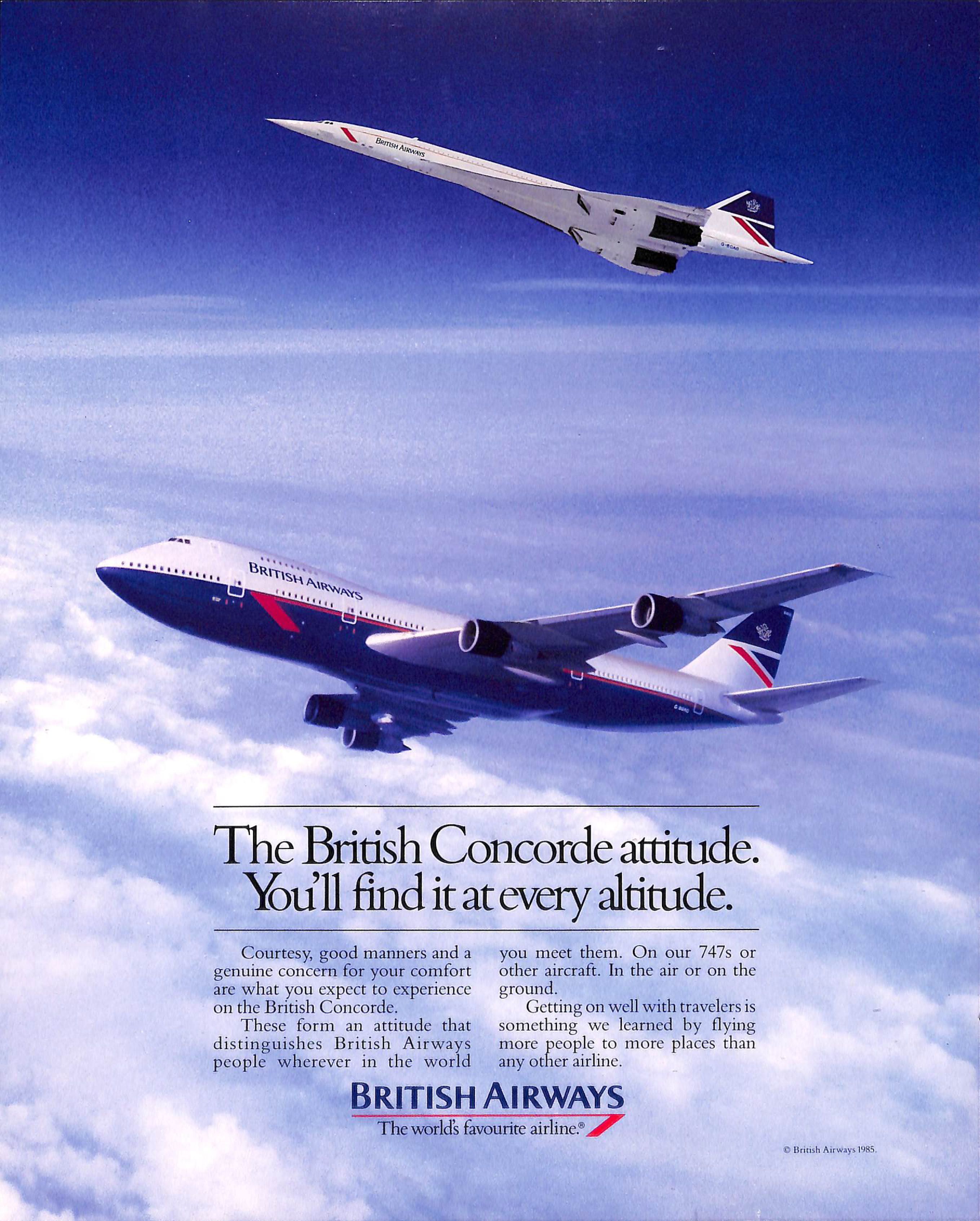
Back in the last century, when such things were aspirational and fashionable, I was a high-flying young advertising executive. I have undoubtably been in the British Airways Executive Club more years than those runningit have been alive, and made it to the dizzy heights of Gold Card Level.

Things have changed, to state the obvious, but I still hang on in there in the club, clutching my meagre points in the hope of having a “free” glass of fizz next time I fly to the U.K. However, given the grim news on cancellations and airport chaos, I’m not sure I risk booking a flight, let alone one with BA.

What are my Executive Club friends doing, meanwhile? Sending out cheery newsletters. OK, we all need cheering up, and they must have enough data collected on me by now to be able to make some reasonable guesses about what kind of content might be the most cheering. 

A recent newsletter offered me “inspirational stories from LGBTQ+ writers and explorers” as well as “luxurious and remote desert hotels.” I was invited to “take a peek at family-friendly pads” and to do the “which cabin bag is right for you” quiz and fill it with “this season’s must-have travel essentials.”

The ghastly, cliche-ridden trash journalism style is bad enough (written by AI?) but as for an attempt at empathy or customer-centricity or whatever marketers are meant to be good at? It sounds as if they are writing for a not-so-bright 12-year-old with stinking rich parents. Which I’m not.

Equally dreadful is a recent email from P&O Ferries who say: “We’d love to still be your preferred ferry operator for your next trip, and are truly passionate about showing you all that travelling by sea has to offer on board our ships.” Like heck you are. Why would I be enanmoured of a ferry operator that sacks hundreds of its staff without consultation, then replaces them with desperate people paid peanuts?

I don’t want to take transparency to extremes and know every last little detail of corporate comings and goings, but surely people can be treated like adults? 

I breathed a sigh of relief when I got this from Lufthansa’s Executive Board. By no means perfect (these things never can be) but at least they are talking the right language:


Monday, 4 July 2022

RETROWURST: New Optimism


Travelling 18 years back in time, I’ve dug out an article written in July 2004, about the state of the nation - Germany, that is. It was based on the (at that time) German tendency to self-flagellate, dwelling on the woes of the current and crimes of the past. Contrasted with the chirpy British attitude of having a laugh and pint and “Always look on the Bright Side.”

I sensed a turning in a Stern article, a kind of Reasons-to-be-Cheerful (at least as far as business went) with Germany coming 3rd in a Best Location for Companies survey, along with being world leader in export, centre of Europe, King of Patents, thriving Mittelstand and so on and so forth.

-----------------------------------------------------------------------

I am often asked which characteristics of the Germans I find the most frustrating and, occasionally, which characteristics are at all attractive or endearing. Perhaps top of the list for annoying characteristics is the Germans’ tendency to beat themselves up, which has become particularly to the fore over the last couple of years against the background of the less-than-booming economy and political incompetence of one sort or another. While we Brits are also happy to have a good whinge and moan, we don’t spin it out too long and eventually we capitulate to some black humour about the situation and/or a quick pint. But for the Germans, whether it’s the football, unemployment, the woes of the economy, collective guilt for the crimes of grandparents and great-grandparents or whatever, there seems no end to the whingeing and wailing and the German media love to stir it all up again should the misery chorus show any signs of abating.


Against this background, I was quite pleased to see that the German media are now focussing on some rather more positive events. This week, with the 60th anniversary of the attempt on Hitler’s life by a group of officers led by Claus Schenk Graf von Stauffenberg , the TV is full of dramas and documentaries about this incident and about other resistance fighters against the Nazi regime. And, a couple of weeks ago, the Stern magazine’s title page showed a thumbs-up sign painted in the colours of the German flag with the headline ‘We’re better than we think’. The accompanying article was, for once, a positive look at Germany’s place on the world stage and I thought you might be interested to read some of the main points from this article


In Spring this year, Ernst & Young conducted a survey in which 500 international companies were asked what the current best location, from an economics viewpoint was for a company .This year, Germany came third behind the US and China, whereas the year previously, both France and GB were voted ahead of Germany. In a similar survey, locations were rated on a number of criteria and Germany emerged ahead of its European neighbours on factors judged vital to economic success such as transport and logistics, telecommunication, quality of R&D, potential for increased productivity and skills/education of the workforce. The main drawbacks to business in Germany were seen as the cost of labour and inflexible working law.


A number of CEOs of German companies cited Germany’s geographical position at the centre of Europe as being key for worldwide communication and the closeness to the rapidly-growing Eastern European economies as a factor of great importance. In addition, the article points out that Germany is once more world leader in terms of export.


Perhaps the most interesting point made in the article is that it’s not just the big names that are contributing to Germany’s renaissance on the world stage. Of course, Mercedes, Porsche, Bayer, Siemens and their like are playing a key role. But what is interesting to see is the sheer number and scope of the ‘hidden champions’ - the middle-sized companies, often operating in very specialist areas, who are world leaders in their fields but whose name nobody knows. Did anyone really know, for example, that there are more machine tools produced in the region of Baden-Württemberg than in the whole of the USA?


So, Germans can be proud once more that they are world leaders in such diverse fields as artificial limbs, car-locking systems (every fourth car in the world has a system from Huf Hülsbeck and Fürst), printing machines, fish food, corn chaffer machines and children’s bubbles! And, it seems that the inventiveness of the Germans for new and obscure items is not due to halt, either. Germany registered 22,700 patents in 2003; behind the US with 31,860 but well ahead of Japan with 18,500.


Maybe this is a huge opportunity for us in marketing; to help these ‘hidden champions’ join the big world players with effective and appropriate brand strategies. The trick is surely to combine their know-how with a dose of creativity and entrepreneurial spirit, but not in a flippant and superficial way. Germany, especially the typical CEOs of these middle-sized, often technical, companies, have a great mistrust of marketing and advertising, seeing it all, quite frankly, as fluffy. A friend of mine, who is a freelance copywriter, even uses his ‘Dr’ title on his business card to lend him the right sort of gravitas. Funky logos and tricksy websites just don’t cut it with these people. But it would be great to help some of these smaller brands to break away from the whingeing and small-minded politicians and media who are currently dragging the country down and to achieve real presence on the world stage. 60 years on, it might be a revolution against the undesirable status quo that actually succeeds.

-----------------------------------------------------------------------

Blimey, how times have changed! No comment, really, except that there appears to have been a complete about turn. It seems to me now that the Brits are the ones that have lost their sense of humour and dived down into the dumps of the glums. Maybe it’s just the impression from the media - I do hope so, and I’ll see for myself when I venture over in a couple of weeks.

Meanwhile I’m pleased to say that Germany, and specifically Frankfurt, isn’t just a top location for business, it’s desirable as a place to live, too.

Thursday, 23 June 2022

Games of Life


It’s often been observed that we learn how to live through play, starting with playing shops or house as toddlers. My childhood included games that involved a historic or sci-fi fantasy world, such as Escape from Colditz or Thunderbirds, but also games that later found direct application in the grown-up world: Monopoly or Go-The International Travel Game.

But these days, do children really aspire to be a jet-setter or propery tycoon? I was interested to hear this week about a new game, developed by a group of young entrepreneurs, whose theme is a little closer to today’s aspirations - tackling climate change.

The group in question is Carducation from a school in Kelkheim, just down the road from here. They quote the inventor of the Kindergarten concept, Friedrich Fröbel - The source of all that is good lies in play (or thereabouts) and their business idea is to educate about important issues via card games. It’s a sort of “Cards for Humanity."

The first card game is called Ecucation - a strategy game in which businesses must balance profit with environmental responsibility, and, as in real life, catastrophes such as flooding or forest fires can turn up unexpectedy to scupper the best-laid plans.

The young start-up has been declared the best school firm in Germany by the Junior-Projekt, which encourages and fosters entrepreneurial business in schools. And the cards have already been seen in the hands of Chancellor Scholz and Vice-Chancellor Habeck.

All-in-all, a neat idea, and one that a few brands could learn from in their ESG communication. All the best to Carducation for the European final in July! 


Friday, 10 June 2022

Here we go again


I’m always amused when clever young things at ad agencies rediscover topics and stories that are as old as the hills, with the bright-eyed and bushy-tailed conviction that they are the first to do so. One story that’s been going round and round and round and round like a broken record (showing my age here) is the one about the 50+ generation.

The latest study to cop onto the fact that over-50s hold 99.9% of the wealth but are only featured in 0.1% of the ads (or whatever the latest figures are) is The Invisible Powerhouse from MullenLowe Group UK. 

I know I’m as guilty as the next person when it comes to blabbing on about this stuff - and I can recommend this report in that it’s well put-together and thought through. There’s a useful segmentation based on approach to life which I can see having application.

But ...

Why do the old chestnuts still persist? “You’ll become invisible” “Older people are either portrayed as frail old dears or 90-year-old sky-diving super-heroes” “Old people don’t think of themselves as old” “It’s important because - gasp! - we’ll all be old one day” “Age does not define them”

There’s a certain lack of logic in it all, though. If Age is not Identity, if In our Minds, none of us is Old, if A 60-year-old Happy-Clappy-Activist has more in common with a 20-year-old Happy-Clappy-Activist than a 60-year-old Karen Brexit-Gammon, then ...

Why the heck should representation on the basis of age be so important?

I can identify with a 25-year-old man or quite honestly, an ageless, sexless cartoon character in an ad if it hits the nail on the head about a desire or need I have - and is presented in an entertaining way.

Maybe the real insight here is not “we’re all going to be old one day” but “all old people have been young, but no young people have been old” (not going to get into Buddhism here). I suspect that is where this is all going wrong.

By the way, if you’re an over-50 yourself, you might need your reading glasses for the Mullen Lowe report if you’re looking at it on the laptop. It’s a tiny typeface. 

Thursday, 2 June 2022

RETROWURST: National Pride June 2004


With the British Isles bursting out into a mass attack of Jubilee Jollity and Jubilee Jadedness, it seems particularly apt to drag this item out of the Retrowurst archives. The subject is about marketing on the basis of German-ness (I don’t really want to repeat the title as some algorithm might misconstrue it and have me kicked off Blogger as some hate-spewing, trolling Karen Boomer-Gammon or however such creatures are referred to these days).

Re-reading it, I winced a little at some of the choices of words, but was amused to see that I mentioned Boris Becker and his broom cupboard exploits which the press even today seem reluctant to forget. So, here we go, in a flourish of black, red and gold ...

-----------------------------------------------------------

I was interested to read recently that, 20 years after Audi introduced their Vorsprung durch Technik claim to the unsuspecting British public, that Volkswagen plan to introduce their German slogan ‘Aus Liebe zum Automobil’ or ‘For the love of cars’ in the UK. It will be interesting to see how this claim fares for VW; will it be understood? Will it generate the same sort of positive brand associations and image improvement as Audi built with their German claim? Or will it fall flat on its face in the light of the current overdose of Love, Lovin’ it, AmourLiebe and whatever other manifestations of lovey-doveyness are flooding the world of marketing and advertising at the moment. Because, when it comes to it, Boris Becker and his broom cupboard exploits aside, Germans are not really known for their prowess in matters love and romance. Audi really hit on one of the key German strengths with Vorsprung durch Technik (‘progress through Technology’). A lot of the British public were not too sure what it meant but it certainly sounded impressive. 


Of course, the Germans always have to be a little careful when playing on their national strengths abroad. I remember reading a rather alarming piece during the 1996 European Football Championship (I am sure no England supporter needs reminding of how that ended for the England team) of how the pharmaceutical and chemicals giant Bayer had advertised a fly spray product in Latin America with a line that translated as ‘Sudden death is a German speciality’. A somewhat unfortunate choice of headline, I feel. And that is a big problem for German marketers – because of the past, marketing any product, event or service on the basis of nationalism or national strengths inevitably lands one in rather deep water.


The problem is, of course, that the Nazis may not have been the master race, but they were certainly masters of propaganda or marketing, as it would be called today. Almost every time one looks for values, myths, archetypes or even fairy stories to support a German brand, we see that someone else got there first, probably in the 1930s. Want to use a stirring piece of Wagner as background for your brand’s TV spot? Forget it. How about a nice dynamic logo in red, black and white? No chance. What about an advertising campaign that associates the brand with mythical or historical characters, in the same way we might use the Knights of the Round Table in the UK? Err…not today, Siegfried. How about a spectacular TV spot for Lufthansa (as in British Airways) with lots of people waving flags and forming patterns? A bit too reminiscent of Nürnberg, I’m afraid. Is it any wonder that much German advertising shies away from the symbolic and emotional and concerns itself only with fact and product performance? Not only does the devil get the best tunes – in Germany, he has certainly spoilt a lot of good advertising and marketing ideas for anyone else.


The wariness of the German people in showing any kind of national pride is particularly apparent at the moment, during Euro 2004. While it may well all be over for the German football team tonight, the lead-up to Euro 2004 has been very low-key here- extraordinary when you think that, through luck, skill, or sheer determination, they were the runners up in the World Cup. From a marketing and sponsoring viewpoint you would hardly know that it is on. Apart from a few TV spots from an alcohol-free beer sponsoring the team, a few footballs and children’s football kit (choice of Portugal, Turkey, Italy or Germany) on special offer in Aldi and Burger King offering something called a King Kahn Burger , there is precious little going on. Contrast that with the St George flag hysteria in England where you can’t move for flags, shirts, tie-ins, sponsorships, promotions, events and all the rest.


One way that German brands, particularly in the food and drink categories, can capitalise on their authenticity and history without getting too bogged down in undesirable associations is by using their regional, rather than national provenance, which makes a lot of sense, given that Germany has only really existed for less than 150 years. Many products such as beers, sausages or cheese position themselves on the town or region from which they come. To some extent this can provide differentiation and positive association but there is also the danger of losing oneself in the standard, nostalgic-but-not-too-specific-as-to-when-it-was, rural idealised village worlds that many of these products employ in their advertising.


For technical and financial brands, such as Audi, Siemens, Lufthansa or Deutsche Bank, it is more difficult. Not only does it make sense for such brands to want a positioning for today and the future rather than harking back to the past but many of these brands really do have associations from the past that they would rather not dwell on – just think of the beginnings of Volkswagen, for example. Thus the most fruitful area is to take an accepted German strength such as technical expertise, engineering competence or financial acumen and exploit that. 


One area where going back to the past is not fraught with difficulty is the more recent past. There is a real wave of nostalgia here for former DDR brands and whole websites where these brands are discussed, bought and sold, such as www.ossiladen.de . Many brands from this time are being successfully revived and marketed with the sort of fervour of 70s revived brands in the UK.


We will have to see how the Volkswagen line ‘Aus Liebe zum Automobil’ will work. Perhaps it will be a step to adding some emotion to the cold, robotic image of German companies. After all, at least Germans do love their cars and Volkswagen has produced some of the most ‘lovable’ character cars of all time. Perhaps, if the Czechs really want to let Germany through tonight rather than Holland then we might even see a few German flags hanging out of Volkswagens as football fans drive over to Burger King to grab their King Kahn burgers.


Sue Imgrund 23rd June 2004 


-------------------------------------------------------


Well, some of that was quite extraordinary. I had forgotten how little flag-waving there was here pre-2006 and the “Sommermärchen” that was the hosting of the World Cup. Everything seems to have come full circle again, though in recent years, within Germany and without, with more and more pressure on brands and companies to show some sensitivity to the less desirable (through today’s lens) aspects of their history. But I’ll leave a discussion of decolonisation for another time. Ot maybe not.

What is certainly true is that the local/regional positioning has boomed. This is helped immensely by the part that local plays in sustainability generally, and there have been some great examples of communication, and even new brands based on clever mash-ups of local/nostalgic plus global/hip, in a sort of LaBrassBanda style.

The Ossiladen is still going strong, but I’m not sure that Soviet-era nostalgia is quite the thing these days. Oh, and Aus Liebe zum Automobil disappeared in a puff of emissions scandal somewhere along the way.

And what happened on the evening of 23rd June 2004, a few hours after I wrote this piece? Well, Germany lost to Czech Republic and were kicked out of Euro 2004, so it was goodbye to all that.