Tuesday, 21 December 2021

From one Heile Welt to the next


When I first came to Germany and listened to people in group discussions talking about advertising (mostly TV advertising in those days), one phrase I heard again and again was Heile Welt. It’s a phrase that doesn’t translate exactly into English, but the idea is of an undamaged/unhurt/unbroken world. It’s a bit like a Utopia, but presented as if it just could be reality.

Advertising in those days in Germany was more influenced by US-style advertising typified by P&G than the more self-deprecating humour, or surreal flights of fantasy found in UK advertising at the time.

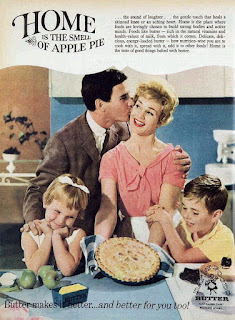
The Heile Welt had some typical tropes - flawless skin, happy nuclear families, white washing and sparkling homes, svelte and beautiful career women tossing manes of glossy hair around, endless summers in a countryside idyll, wise and knowing loving grannies in cosy rustic kitchens, square-jawed men driving impossibly shiny cars up picturesque mountain passes ... R.E.M’s Shiny Happy People wherever you looked.

I think, in those days, most people watching knew the rules of the game. It was only advertising, after all.

In the last few years, there has been a greater call for authenticity in brand communication. More reflection of “real people” (what other kind are there?) and “real life” as well as more representation of today’s diverse society

But have we exchanged one Heile Welt for another?

I suspect, looking at this year’s selection of Christmas ads, that we have.

Advertising has moved from material or appearance-related aspiration to what I’d call emotional aspiration. 

People in ads these days - from tiny tots to great-grandparents  - are caring and generous. Inclusive, tolerant and kind. Feisty and resilient. Empathetic and compassionate.

But I can bet you that these models of new EQ standards make some people feel as inadequate as the impossibly slender models of the last century’s beauty standards (by the way, I’ve always wondered if there's some ministry hidden away somewhere busily setting all these standards that the new advertising is so keen to disrupt and smash).

This kind of advertising is no more “authentic” than the stuff from the last Heile Welt. Real homes are messy, and so are real people, emotionally. On a good day, I can be a model of empathy and compassion, but on other days I can be downright spiteful and pig-headed. It’s called being human.

I don’t mind a bit of emotional depth in advertising, but I’d ask agencies to be more honest - or even authentic - about what they’re producing. 

Good story-telling that pulls at the heartstrings is nothing to be ashamed of - but just don’t pretend that it’s real life.   

Monday, 13 December 2021

LOAT-al Hero?


 One of my very first posts about new brands on Extrawurst had a look at the (then) phenomenon that was mymuesli . This was back in 2008 when Facebook was a novelty and personalisation meant getting your name engraved on a pen, or something. The idea of mass customisation seemed a brave new world indeed, and for quite a few years afterwards I held this up as a favourite when it came to new, start-up brands, maybe because it wasn’t, productwise, in the tech field.

mymuesli is no longer a start-up, more part of the establishment, although a quick flit around the website revealed a rather sad notice that they no longer deliver to the UK “due to Brexit.” And once you’re establishment, there are always young pretenders yapping around in the hope of seizing your crown.

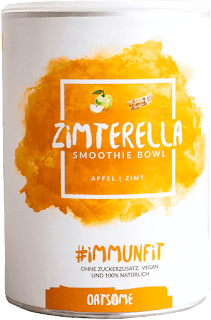
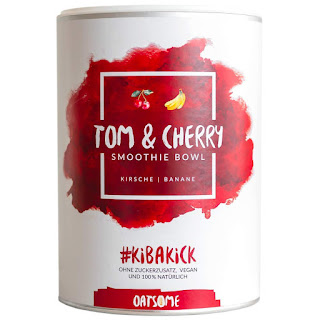
Enter another duo of young German chaps with a good idea. Philipp Reif and Tim Horn have backgrounds as IT specialists (at Deutsche Bank and Telekom) and sportsmen, who saw a gap in the market for quick-to-prepare healthy breakfasts. They introduced Oatsome Smoothie Bowls in 2017 -  an idea that’s part mymuesli, part Huel, part Ben & Jerry’s (note the quirky flavour names). With their background, it’s no surprise that Philipp, Tim and their colleagues develop recipes as one would develop software - testing and learning, failing fast, and all that stuff. Proof that this can work for the traditional food industry?

The company seems to be doing well so far. Sales are in the 10s of millions of €s, the company is profitable, and they have hundreds of thousands of Instagram followers. According to this article, they are learning from mymuesli’s mistakes of rushing offline and expanding too quickly. And I’m proud to say they come from just down the road, on the Hanauer Landstrasse.

It’ll be very interesting to see - in another 13 years - what has become of both of these brands. But maybe I’m now showing my age in that longevity may not be the aspiration these days.

Thursday, 2 December 2021

Grotto or grotty?

RETROWURST is taking a break this month because lazy little me didn’t write any articles in December back in the 2000s as I was probably too busy dashing and blitzing around doing Christmas shopping. But the series will be back in 2022.

Yes, Christmas shopping. There are reminders on the radio - have we bought all our presents yet? I have bought one, and was quite proud of having already done so in November before I heard all those smug so-and-sos with only one still left to buy. 

I am not relishing the thought. Somehow the magic of Christmas past and the twinkling welcome of Santa’s grotto is lost in a mire of masks, pandemics and it’s-all-easier-online-but-bad-conscience-haunting-me.

I’m not sure if the experience was ever that magical, anyway. My only memory of Santa’s grotto in Harvey’s department store in Camberley was being given an empty box. I think amends were made, but still.

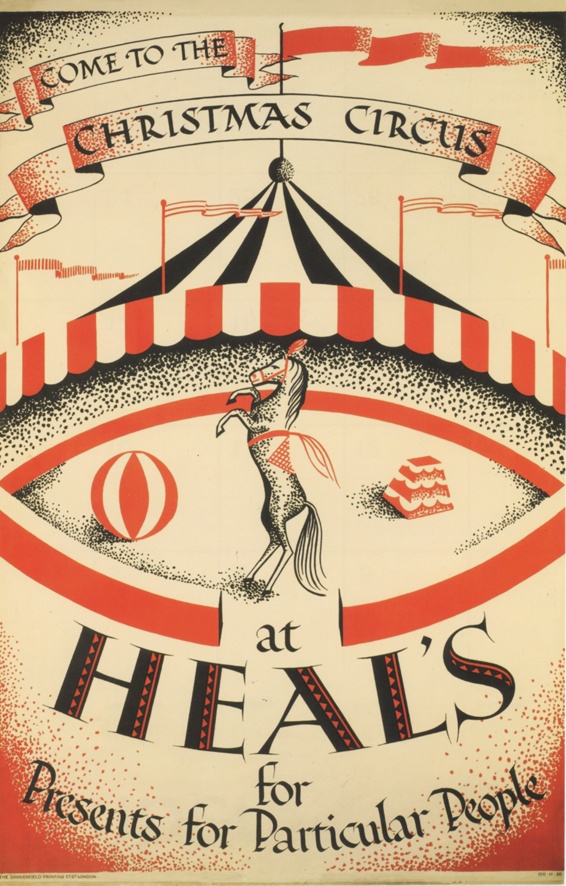
But we can dream, and take a shopping trip through the streets, windows, lights and paper catalogues of the past:

There’s shopping in style, even when you’re on public transport. Just don’t spill mulled wine on those collars or cuffs:


Christmas didn’t have to be gaudy. Post-war shortages aside, this was a world where black and white was the norm, certainly as far as brand communications and broadcast media/entertainment went:


Hamleys was the mecca of tinsel and toytown. The 1926 ad offers a number of most suitable gifts for children including “The Crown Tavern”, a pup named “Looney” and what looks like an interrogation device. 60 years later, the store tried a "Teddy Bears’ Picnic meets 333 Men in a Boat” approach:


Does anyone have time or inclination in these pandemic days to linger looking at shop windows? Even war didn’t stop Selfridges in 1916:


This picture, of 1960s Regent Street, seems to sum up my earliest memories. A quick blast of Nina & Frederik, and I’m back there.


Monday, 29 November 2021

Tschüss, Mutti!


 I don’t know if there has, or will be, one of those Barbie collectors’ dolls of Angela Merkel, but somehow the commemorative teddy bears seem more apt. Not made by Steiff, but by another German family firm that’s been around for over a hundered years, the teddy bears are of the typical mohair variety with added Merkel touches - the distinctive hairsytle, the red jacket, the necklace in red, black and gold.

Angela Merkel became Chancellor over 16 years ago, in a Twitter- and iPhone-less world.

The public perception of a country is influenced considerably by the personality of its leader - and with a larger-than-life personality, disproportionately so, as was the case with Donald Trump. Angela Merkel is at the other end of the scale to Mr Trump, but on the other hand, the world has had sixteen years of her presence as leader of Germany. While some leaders are all about show, Mrs Merkel projects an impression of substance/integrity and diligence, and the Christian part of her party’s name, and her strong faith result in an impression of universal humanity and decency. But there’s also a feeling that too much is rooted in the past, with a cautiousness or resistence to change. Whether Germany’s slight reluctance to leap, devil-may-care, into the brave new digital world will be the undoing of the nation remains to be seen.

Back in 2009, I wrote a post entitled The Lady’s not for Branding about Angela Merkel’s imperviousness to branding. A lot of it still applies, although journalists have taken to the “Mutti” nickname and the “iconic” (bleurgh!) colourful jackets and “diamond” hands with glee. 

I imagine that Angela Merkel has the same reaction to being referred to as “iconic” as to the commemorative teddy bears - mild amusement. But I expect we’ll never know how she really feels, and maybe things are good that way.

Thursday, 18 November 2021

Quadratisch, praktisch, gut


Wie Werte Marken stark machen by Nina Rieke and Hans-Christian Schwingen, published by Haufe, is one of the few business books in German that I have attempted to read. But I’m glad I did. Here’s my review:

There’s so much goobledegook and pontification about Brand Values and Purpose these days that it’s refreshing to have a concise, readable handbook for marketers and strategic planners that is rooted in practice.

This book puts forward the case for values-led brands in today’s “glass box” society, and provides a working model to define a unique navigation needle for the brand, based on values. This is derived from looking at the brand’s potential and matching this to what is going on in the category/market, in individual customers’ lives and society as a whole. The sytem avoids strings of nebulous attributes as well as trendy bandwaggon issues by rooting everything in what’s inherent in the brand.


Nicely-produced, easy-to-read (N.B. only available in German as yet) and concise (yes, time is valuable, too) with examples - it would be good to see a few more non-US examples of brand manifestos, but these will hopefully come in the next edition.


A smart, valuable book.

Tuesday, 2 November 2021

RETROWURST: Geiz ist Geil! November 2003


This month’s delve into the Retrowurst archive chronicles the “flaunt your stinginess” trend of the early 2000s, led by some high profile campaigns from discount retailers. It’s an interesting one for me as this period was one of my low points financially, and looking back, I think I took great glee in buying cheap wine at Aldi, frequenting flea-markets and then what we’d now call virtue-signalling  about it all to anyone who’d listen.

------------------------------------------------------

About this time last year, a blue and silver cyber-woman burst onto our TV screens here in Germany, proclaiming “Geiz ist Geil” – “It’s cool to be mean and stingy”, roughly translated. This cyber lady may have only been the spokesperson for the new advertising campaign for the Saturn electronics warehouse but somehow her aggressive proclamation captured the spirit of consumer opinion in Germany and launched not only countless copycat advertising campaigns but also a trend of literally wearing your stinginess on your sleeve. 


It’s maybe no co-incidence that the Saturn campaign came from Jung von Matt, one of Germany’s best home-grown advertising agencies. As an agency, they have a talent for really tapping into what’s going on, developing punchy creative ideas and being able to demonstrate the sales effectiveness of their campaigns- at Jung von Matt, the Strategic Planners are called Effizienzers. The Saturn campaign had such a profound effect because it was one advertising campaign that really tapped into the Zeitgeist and said what millions had thought but no-one had dared to say. Like Wall Street before it, with the Michael Douglas character’s pronouncement of “Greed is Good” (and, of course, many great advertising campaigns are derivative of something!), “Geiz ist Geil” has hit the nerve-ending of the age, at least for Germany in 2003.


As a nation, the Germans are used to being successful, be it economically or in football. The will to win and to ‘do well’ is written strong in the German psyche. When the Brits go through an economic crisis, we laugh it off, or find someone else to blame for our misfortune. The Germans, however, took the economic downturn very seriously and very personally. The whole country went through (and is still going through) a crisis of self-confidence. People were bombarded with newspaper articles and TV programs about how the economic disaster was the Germans’ own doing and if they were unemployed or redundant then they only had themselves to blame. It was with furtiveness and embarrassment that once prosperous people were seen sneaking into bargain-basement stores. 


Traditionally, the German mentality with consumer durables is to buy quality brands that last- such things are seen as an investment. However, reduced disposable income has meant many people having to find acceptable quality at a more than reasonable price, which is where “Geiz ist Geil” came in. This slogan provided a rallying cry to the hard-up consumer. More than just being a “Smart Shopper”, this consumer-power movement gave people permission to actually flaunt their stinginess in public and celebrate it.


Within weeks of the campaign breaking, celebrities were being photographed in the gossip magazines with Saturn and Aldi carrier bags. A whole host of other retailers followed suit and penned their own versions of the campaign. The most creative advertising agencies were all falling over each other trying to grab a retail discounter account, in the same way that they’d all fought over the luxury goods and fashion labels a few years back. Existing campaigns, from the likes of Ikea, MediaMarkt and H&M strengthened their price messages.


The latest development in this trend draws in the parallel trend of reality TV shows (just to add to the celebration of cheap ‘n’ tacky, perhaps). A spate of books by ‘celebrities’ and the consequent kiss & tell stories in the cheaper newspapers has revealed that these ‘celebrities’ are some of the biggest cheapskates in Germany. In a recent book by one of his (many) ex-girlfriends, Dieter Bohlen (ex-pop singer, record producer, ageing womaniser and Superstars jury member) was revealed as being a cheapskate as well as a love rat. Unperturbed by this, Dieter has signed up for a very lucrative contract with BBDO in their advertising campaign for MakroMarkt, another electronics discounter. Unsurprisingly, the slogan is ‘es lebe billig’ or “Cheapness lives!” Dieter enthuses in the TV ads that everything there is so “schweinbillig” or “dirt cheap”. And he can be seen, in his full tackiness on the website at www.makromarkt.de – the website is a lovely parody of retail advertising from the 70s, complete with multiple starbursts! (now defunct)


The latest signs as regards the serious matter of the German economy are that it seems to be recovering. But with Aldi cookbooks appearing on the best-seller lists I’m sure it won’t be too long before we see a show called something like “Celebrity Bargainhunter” on our TV screens. The signs are that the Germans are taking “cheapness” as seriously as they once took investing in quality and this trend may be one that is here to stay.

-------------------------------------------------------------

In the years since this was written, thriftiness hasn’t gone away, but it’s sidled up to sustainability and a general desire not to be wasteful. Absolute price and cheapness has become less of a thing after all those discounters got pulled under the microscope for less-than-sustainable practices throughout the value chain. So we’re now seeing IKEA getting into the rental market and circular economy, for example.

It strikes me that there have been few German ad slogans with such power (with the odd exception of a couple of DIY stores) since, maybe because so many campaigns are developed globally and transliterated. There were plenty of complaints at the time about the word Geil (which literally means “horny”) but these days, people take offence at different things. 

Dieter Bohlen is still knocking around, though, sitting on talent show juries, producing records, grinning out of the gossip magazines and advertising everything from Camp David clothes to Roller (cheap) furniture. But, thankfully, he is not singing.
Monday, 25 October 2021

A lemming’s life on automatic


One of my favourite topics on Extrawurst is how human behaviour is changing in relation to the internet and due to digitalisation. There’s a progression from intrepid surfing to good-natured stumbling to passive feeding - although this current phase tends to be reframed by advertisers in terms of “being served”, conjuring up visions of waiters, bow ties and silver salvers, rather than geese with tubes down their necks. 

I recently read a presentation which looked at this progression with reference to one aspect of behaviour: driving and navigation. Back in the 1990s, this was an analogue process involving maps, atlases and route cards, with the co-driver fully in control - and probably responsible when anything went wrong. Although I still blame our 1995 off-road adventure in Bryce Canyon National Park, testing the hired saloon car to its limits, on a misleading map rather than navigational incompetence on my part.

Moving on to the 2000s and the first navigation systems - very much a digital support which the driver could attend to or not as they saw fit. The navigation system in my 2006 Audi was almost impossible to set up and involved a CD, which of course was rapidly out of date. Quite often, I didn’t bother and drew up a route card, especially if venturing outside Germany.

In the 2020s we’ve moved from the driver/navigator as pathfinder right through to being digitally led and following blindly. The presentation makes a lemming analogy, of which more later, but you get the point. Unquestioning, submissive to the machine, following the orders. And in the future, this won’t just be the navigating side of things but the driving too.

Now some of this is all well and good. Digitalisation makes life easy, so you can concentrate on other things (although I always wonder what other things those could be). But I do worry that each time I enter a new destination, the compass in my head becomes a little less on the ball. I still like to do stuff from first principles: get the old map out and see roughly where I’m heading for. In the last century, labour-saving devices reduced the drudgery of washing and cleaning by hand, but is mental labour-saving, where the cogs of the mind grow sluggish through lack of use really a positive development?

Can pandemic-acceerated digitalisation be seen - in some respects - as a kind of instituationalisation in which we get lazy, start seeing responsibility and independence as burdens, and stop making our own choices?

For brands, there seems to be value in creating mental and physical availability combined with the feeling that the customer has made a conscious choice for that brand, rather than “being served” what an algorithm computes that person might like. And with some brands/categories, the scarcity/discovery/unseamless/difficult to find route could also be of interest.

By the way, back to those furry creatures. The “mass suicide” is a not-so-urban myth. The observed behaviour is more to do with migration - dispersal to resolve population density - and a few accidental deaths in the process. Nature’s way.