Thursday, 1 December 2022

The new pester power


 In the old days of (ugh) Marketing to Kids, Pester Power was a well-known phenomenon: batallions of angry and sulky kids beating their hapless parents into submission to buy the latest Barbie, Lego spin-off set from some super-hero universe, crisp and soft drink flavours, sweets, sweets and more sweets - and, of course, mobile phones and all to do with gaming tech. 

But I noticed a subtle change in the nature of Pester Power, some twelve years ago, at the Christmas Market, where children were encouraged to write their Christmas wishes on a star, to be displayed on a wall. My son was still old-school at this point, with his wish for “Everything from Lego Star Wars”, but this rather greedy wish was over-shadowed by a mass of junior do-gooders, who wished for everything from World Peace to their granny getting out of hospital in time to spend a family Christmas together.

In the latest edition of Globescan’s Healthy & Sustainable Living Report (2022) we can see just how far things have developed. Pester Power has taken a moralistic and activistic turn: "our children are driving a sense of urgency about the climate” proclaims the writer of the report, somewhat pompously.  In the study amongst 30,000 respondents across 31 markets, 63% of those with children under 18 at home agree their children are worried about climate change and the environment.

I assume that the 23% who say their children are neither worried nor not worried have children under the age of 3 or so?

Source: GlobeScan


Of course, this is nothing new. When I was at school, back in the 70s, we were forever doing projects on pollution and the environment, for biology, geography or simply for assembly. I remember having a go at my mum for her fur coat and probably got into a tangled argument with my dad about nuclear weapons.

But it’s an important finding, and it must be difficult for parents, particularly those who are really strapped for cash. It’s one thing to say no to the latest Nintendo game, or Barbie’s pink plastic dream castle, but quite another to say sorry, family, can’t afford that good-for-the-environment detergent: it’s just too expensive and won’t get the mud and grass stains out of your football kit.

But without snuffing out children’s commendable environmental ardour, young people would be well-advised to have a look at their own desire:action gap. I know a young man who merrily voted for the Green Party while leaving his poor parents to sort out the three bursting black bags of completely mixed trash in his dump of a bedroom.

Sunday, 27 November 2022

Sharing and caring


A couple of weeks ago, St Martin’s Day was celebrated in Germany. I’ve always thought that the traditions surrounding this Saint’s day were rather more charming and heart-warming than the gaudy, ghoulish and horribly commercialised Halloween. 

St Martin was a Roman soldier most famous for an act of sharing and generosity. It is said that he came across a beggarman dressed in rags in the depths of winter. Martin took his red cloak, cut it in half with his sword and gave half to the poor man to keep him warm. This act is celebrated by children in processions with (often home-made) lanterns, songs and a reenactment of the noble act. This may all take place round a bonfire and a real horse may appear if you live in a rural area. 


St Martin’s Day is all tied up with the end of harvest and the beginning of the “winter revelling season” - with roast goose and the first wine of the season. 

I was new to all this when I came to Germany, and learned about the customs when my son was at Kindergarten - many hours were spent making lanterns (more hours on the part of the parents than the children, usually). The story of St Martin is a universal one, which teaches children the value of sharing.

“Sharing” is one of those words whose meaning has shifted quite dramatically in the last twenty years. Going back to St Martin, the verb used regarding the cloak is teilen - which bears the sense of “parting”. St Martin divides his cloak into two parts, and he has to part with one of them to provide the beggarman with warmth. He makes a sacrifice -  sharing involves giving something to someone else that you don’t get back. This is sometimes a hard lesson to learn - I remember when my brother was in hospital as a child. All sweets that were brought in by parents were put in a communal tin, then divided out equally so every child got a fair share. My brother wasn’t happy at some other child getting his favourite sweets!

Sharing, when it comes to non-material things, has always had connotations of “having something in common”. But the word seems to be shifting from a meaning that’s about apportion, giving and generosity to one that’s about passing on, informing, making public. In this digital world, the sharer keeps whatever it is - photos, stories -unlike St Martin and his cloak.

“Sharing” sounds kind and generous - but is it really? Sometimes sharing feels like passing on a burden, or covering your backside.

I wonder, sometimes, when someone wants to “share some thoughts with me” whether they might be better keeping them to themself.


Wednesday, 16 November 2022

Joy (and thoughtful dads) to the world


When I wrote this piece a couple of years back, we sort-of thought we’d soon see the back of Corona. Little did we think that over the next 18 months we’d be hit with a war on the doorstep and heating bills going through the roof (especially if said roof isn’t insulated).

I don’t normally get that excited about Christmas ads any more, but this year I have to admit that I was intrigued to see how the agencies captured the mood and dreams - or not. In my 2020 post, I hoped for a return to joy (or even better, glee, mirth, merriment and frivolous frolics as joy always seems a bit sanitised and churchy). And, lo and behold, “joy” plays a leading role in the ads from retailers Boots, Tesco and Amazon. 

Amazon’s theme of a dad going to great lengths to make his daughter’s Christmas special is also taken up by John Lewis - with a heartwarming twist. Could this mean ordinary, middle-aged men are no longer persona non grata in the ad world (unless they’re portraying a toxic sexist or a bumbling fool)? I do hope so!

Meanwhile, back in Germany, things are more serious. Discounter Penny’s powerful film Der Riss, which portrays the divisions in society and the need to talk our differences through, human to human, is the talk of the ad world and media here.

It’s a brilliantly-made film, no doubt about that. But is it right for Penny, and Christmas? I’ll stick my head above the parapet and say no. People do not need reminding of hate and misery, especially not this year. Despite the hopeful ending, the dramatic film ensures that it’s the negative images and feelings they evoke that stay with the viewer. Last year’s film Der Wunsch, about a mother and son, and how Covid has messed up young people’s lives was gentler, the focus on the two characters and their relationship, not “society out there”. I find it the better film for the client and context - and ultimately closer to real life.

Another big German advertiser, Deutsche Telekom, has also taken up encouraging us to talk, and ask each other how we are. Here’s Teacher, which has shades of It’s a Wonderful Life for me. 

And that’s one of my all-time favourite Christmas movies. 

Wednesday, 2 November 2022

RETROWURST: Old People November 2004


This month’s Retrowurst is particularly interesting from a personal point of view. I wrote it while in my 40s and it concerned my perception of “old people” in Germany at that time. It’s full of observations about the 60+ age group, Nordic Walking, the Verein and Gutbürgerlich food. My conclusion was that I’d far rather grow older in Germany than in the UK - that Germany was a friendlier and more respectful environment for the old.

---------------------------------------------------------------

Having just clocked up another year, I am feeling a little sensitive about getting older so I thought I’d turn my attention to the older people in Germany and give you some idea as to why I’d probably rather get old here than back in the UK.


If I had to choose one picture that symbolised the current social climate in Germany this year then it would have to be this: a few weeks back I was in Aldi and the place was packed full of ladies aged 60 + in a bit of a rugby scrum. It was a very genteel rugby scrum with lots of helpful smiling and friendly joking and, once I managed a few polite Entschuldigungs, I was close enough to see what all the fuss was about. Aldi had Nordic Walking gear on offer. Not just the sticks, but special jackets, shirts and leggings, headbands, socks and gloves. Now, I still don’t have a clue how a Nordic Walking jacket might differ from something you might go jogging in, but there you go. Obviously, to these ladies, all these items were much sought-after. Not long after, while I was out jogging (no doubt passé amongst the older generation) I saw a group of similar ladies (and their men folk) striding towards me briskly, resplendent in their co-ordinating Aldi outfits. The self-confidence and general Lebensfreude of this group seemed a stark contrast to the continual whining and whingeing of the 30 and 40-somethings that I seem to know in Germany. And, generally, one can see that the 60+ group in Germany are less worried about the future than younger age groups. It may be selfish, but it also stems, perhaps, from a belief amongst this group that the bad times are behind them. For someone born just before, during or just after the war, childhood was tough with families depleted and also divided geographically for years on top of the shortages and rationing.


Somehow the whole education system and social structure of Germany means that everything is shifted 5-10 years upwards compared to the UK. Children don’t start school until they are 6 or even 7 and stay until they are 19. The compulsory military or social service means that further education may not be completed until the late 20s or early 30s. The result of this is that if you set foot in a German advertising agency, for example, and you’re the wrong side of 40, you wouldn’t get the same feeling of being totally out of place that you might in London. And ‘youth’ TV presenters regularly pop up who are pushing 40. All of this means, of course, that you are still described as ‘young’ well into your 40s and middle-age doesn’t really seem to set in until mid-50s.


In Germany, it seems more acceptable to be older. The whole country seems to be more set up for the tastes and needs of older people. Restaurants unashamedly offer Gutbürgerlich food and good wine in traditional surroundings, served by formal but friendly waiters and waitresses who address one with respect rather than the ‘Hi guys my name’s Max specials today are sauerkraut wraps and bratwurst with pesto mash’ approach. The independent butchers, bakers and greengrocers, along with the weekly markets where you can ask exactly which field the cow came from or whose apple trees your Cox’s are from do a roaring trade, especially with older people who have time for good service quality as well as the socialising opportunities that these shops provide. And one sees rather less of the mutton-dressed-as-lamb look and rather more independent ladies’ and gentlemen’s outfitters selling good quality classic clothes in dark greens and browns.


Older people seem to be present somehow in Germany, which is perhaps not surprising as the over 60s comprise 25% of the population currently, which is forecast to rise to 40% by 2050.TV is not dominated by youth – there are plenty of light entertainment and folk-music shows with jolly-looking 60-,70- and 80-pluses linking arms and singing along in the background – and none of this is tongue-in-cheek. In advertising, older models are often used – Nivea pioneered the ‘mature skin’ segment with Nivea Vital over 10 years ago and companies like Davidoff feature older men in their advertising campaign (‘the more you know...’).


Another unique feature of German life where the seniors hold much power is in the notion of Verein or clubs. Even a little village will have dozens of clubs, from rabbit-fanciers to carnival clubs, from handball to opera-singing. These clubs often have a long tradition and will play a major part in the social life of the town, organising local Fests and other events.


Many older people are also politically active. There is a political party called Die Graue Panther (see www.die-grauen-graue-panther.de ) who are calling for a radical reform of the Social Security System, amongst other issues.


As in the UK, there are plenty of Internet sites hosted by and run for older people, such as www.seniorenchatring.de or www.feierabend.de where you can even see a photo of my friends the Nordic Walkers!

--------------------------------------------------------------------------

What is extraordinary is despite the obsession of marketing trend reports with change and disruption, tearing up the playbook, smashing taboos and stereotypes, there being no “new normal”, a frankly terrifying VUCA world enveloping us and all the rest, things seem to have stayed comfortingly stable. 

Yes, of course digitalisation has happened in the last 18 years, but it has been assumed organically, almost naturally, as part of human progress. www.feierabend.de is still chugging along, but in the meantime Facebook and WhatsApp are where the older people are online. 

Germany is still a comfortable place for the old. I don’t hear the whinging about “older women being invisible” that seems to wail out of the UK. Maybe because, until recently, we had one in charge.

While Germany with respect to the old hasn’t changed, of course I have. My parents and parents-in-law are all gone now, so I am the older generation. I’m in a couple of Vereine, and have been known to buy comfy merino-wool loden-style shoes. There’s nothing quite like a plate of Gutbürgerlich food, especially at this time of year when the leaves are falling and nights are drawing in.

But I still haven’t succumbed to the joys of Nordic Walking. Not yet.   

Monday, 24 October 2022

Bullseye


News came of the death of Dietrich Mateschitz this weekend, the richest man in Austria, with an estimated fortune of $20 billion, the energy behind the brand Red Bull. I have long been an admirer of the brand , which couldn’t be clearer about what it is and what it stands for. If anyone wants an example of boldness in brand form, this is it.

Although Mateschitz didn’t do anything by the textbook, Red Bull is a textbook example of the difference between a product and a brand - an example of how an entire brand empire has been built around a single product that Red Bull don’t actually produce themselves. That empire extends from the energy drinks to motorsports, extreme sports of all sorts, football, media, hotels, music and goodness knows what else. 

The brand is a powerful concoction of conviction, consistency and unconventionality. Very little seems to have been developed through workshops and market research, needs analyses, consideration of consumer journeys and pain points, competitive analyses and concept testing. As far as I know. 

It’s a bit early in the morning for a Flying Hirsch, but then again ...

Tuesday, 11 October 2022

A noble yet undervalued craft


I’m pinching someone else’s article this week, because it deserves something more than getting lost in my sprawling bookmark system. It’s by Alex Vuocolo: The Disappearing Art of Maintenance and was spotted by Good Business in their weekly newsletter.

Amongst other things, this article for me highlighted the disconnect between all those trend reports and innovation newsletters and sustainability innovation alerts, and the life that most people lead. My own life is one lived in constant dread of updates, especially as far as my MacBook goes. I’m tottering along with my 2015 model, but fear that the next OS upgrade could wreak even more damage than the last, which rendered two printers obsolete in one fell swoop.

Maintenance, as Alex Vuocolo points about, is about making things last, not repairing what’s broken. It’s conspicuously absent from the “reduce, reuse, recycle” mantra as it doesn’t really fit with the ideas of reduction or anything prefixed by “re-“ as it’s about steady state, not change. That alone doesn’t make the concept of maintenance sound progressive or innovative.

But why must the idea of “sustainability” inevitably be coupled to the idea of “change”?

I’ve mentioned eBikes before - and this article talks about how, for example, the electro vehicle boom, driven by the promise of cutting emissions has caused a surge in demand for metals such as nickel, cobalt and lithium. Using up a different set of the earth’s resources while attempting to conserve another. 

Also highlighted in the article is the abstract nature of the climate debate and emissions goals:

Emissions goals are not unlike GDP targets. Both are administered abstractions, somehow all-powerful and impotent at the same time. They reduce action to aggregates and strip human actors of agency.

Or:

The pragmatism of maintenance work is sorely needed in the climate debate, which is so often preoccupied with end-states that it has no earthly or humanly way of achieving.

Of course, in the real world that most of us live in there are people that service your car, your boiler, your bike - and keep the roads and the railways and the buses in good order. But perhaps it would help to bring this mindset into other areas of modern life, too.

In the end, this is one reason I cannot abide the term “the consumer” being applied to everything beyond that which is actually consumed - from smart phones to cars.

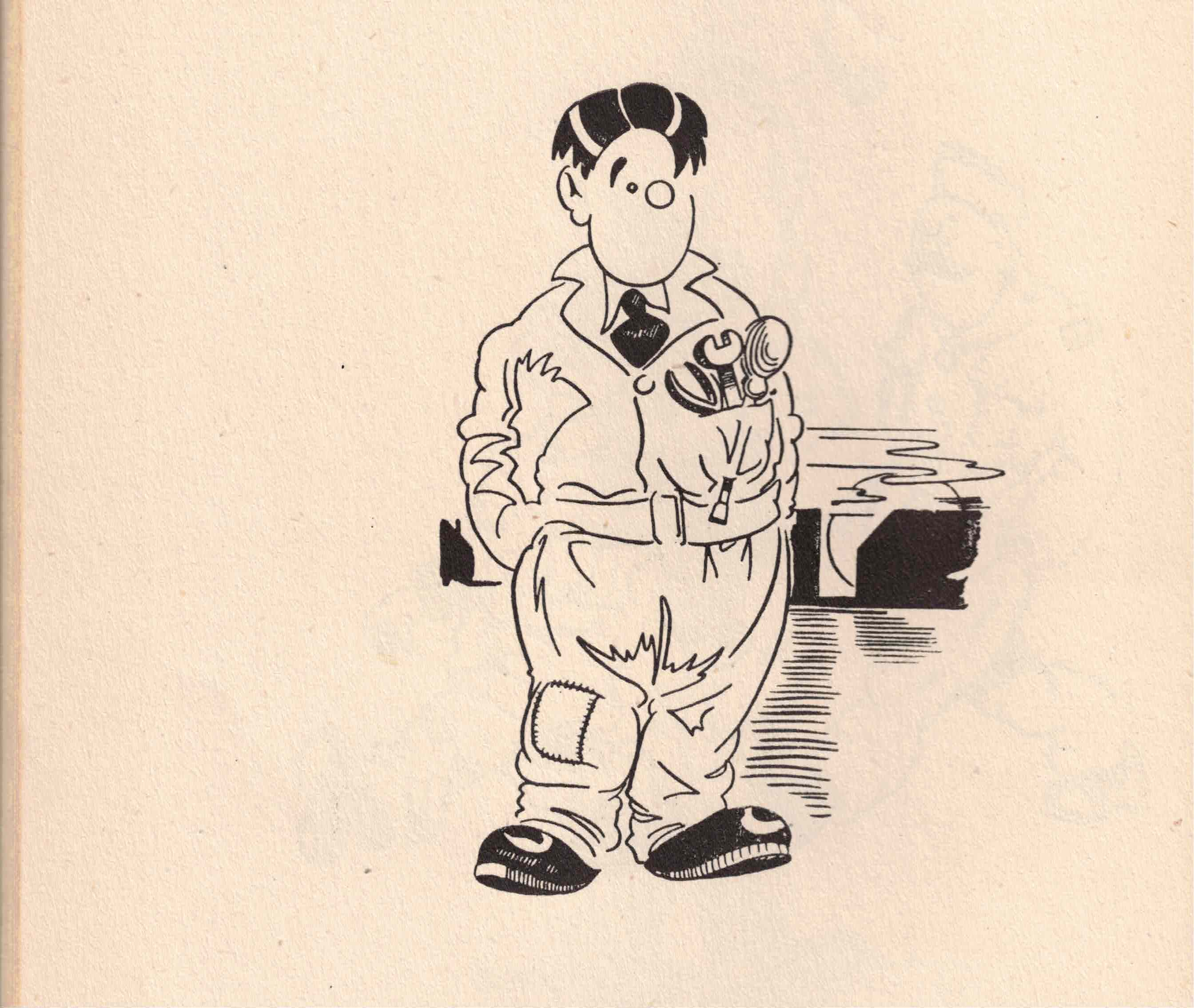
Now, pass me that spanner.


Tuesday, 4 October 2022

RETROWURST: Germany’s European Neighbours October 2004


I was a little startled when I read this Extrawurst from October 2004 about Germany’s European neighbours. As well as a write-up on the two European countries that Germans are most in love with, there’s a quick round-the-clock of the nine immediate neighbouring lands.

-------------------------------------------------------------

Germany is often described as the centre of Europe- the word ‘heart’ has perhaps too many emotional connotations for a people who pride themselves on Ordnung. And, being one of Europe’s largest countries, Germany has a lot of neighbours, nine in total. I thought it would be interesting this month to have a look at how the Germans typically view their neighbours and which products and brands are associated with these countries.


As is typical with neighbours, the German view of the people of the lands surrounding them is not all roses. Views range from ‘dull but tolerated’ to out-and-out rivalry and hate! But before we come onto that, let’s have a look at the European countries that can- in the eyes of most Germans - do no wrong. Number one for most Germans has to be Italy. Italy is far enough away and separated by mountains and a couple of other countries not to suffer the over-familiarity and thus contempt of the countries on the doorstep. Italy stands for the ideal lifestyle for many Germans and there is something for everyone from the beaches, to city style and culture, to the mountains of the South Tyrol. Italian food and drink are adored by the Germans, the supermarkets are brimming with Italian brand names such as Barilla, Averna and Ramazotti and there is an Italian restaurant or ice cream parlour on just about every street corner. One needs look no further than the irritatingly successful Ferrari/Schumacher combination of German efficiency and determination combined with Italian passion and flair to see this relationship in action.


A little further away but also beloved by the Germans is Ireland. The combination of Celtic tradition, a pride in beer brewing and a love of music is seen by a lot of Germans as an idealized version of themselves. Groups such as The Corrs or The Kelly Family are very popular and Kerrygold and Guinness are well-known brand names. Irish pubs can be found in even the tiniest of villages in Germany and the only cheese you are likely to find in a German supermarket from the British Isles will be Irish, rather than English, Cheddar.


So, back to the neighbours, going around in a clockwise direction. We’ll start with France. Germany has a rather uneasy relationship with France. Although Germany ganged up with France last year to form the backbone of ‘Old Europe’ against Bush’s war, past history still bears its influence. On the one hand, there is a grudging admiration for the French ‘Joie de Vivre’ and general enjoyment of the good things in life but there is some feeling that the French are rather too much in love with themselves, don’t work hard enough and don’t take enough pride in their homes, towns or environment generally. Products and brands associated with France are Citroen, Peugeot, Renault, Elf, cheese and wine, President and L’Oreal.


Luxembourg is associated with very little except money, more money and yet more money, so we’ll move quickly on to Belgium. The Germans view the Belgians as down-to-earth and a bit dull. Belgium is associated with cycle-racing, chocolates and beer, although the beer is not considered as good as German beer. This brings us on to Holland where the relationship seems to be a mutual hate: hate! There is a bit of a paradox with Holland as the Germans grudgingly admit that Amsterdam is actually quite a fun, interesting and cultural city but that the rest of Holland is full of big, narrow-minded, people who pollute the German autobahns with their caravans and litter at holiday-time! There are a fair number of brands and products associated with Holland: - Phillips, Heineken, Amstel, Cheese (Gouda & Edam), flowers and vegetables. But the overall impression is that be it beer, tomatoes, cheese or the people themselves, everything is a bit kitschy and tasteless. Needless to say, the people of Holland don’t have many kind words for the Germans either!


Moving further north we come to Germany’s Scandinavian neighbour, Denmark. Of all the neighbouring countries, Germany’s relationship with Denmark is perhaps the most positive. The Danes are considered to be a happy people, proud of their country with a very fair and modern social system. Products and brands associated with Denmark are Beer (Tuborg and Carlsberg), dairy products (Arla), bacon (Tulip) and fish products.


Unfortunately, the Germans generally have a negative view of Poland and the Polish people, perhaps because, reading between the lines, they feel threatened and still guilty about history. At its most bigoted, which, sadly, seems to include a fair proportion of Germans, particularly older people and those from the former East Germany, the Polish are regarded as car thieves or at very best casual workers for the harvest. Although the Germans are quite happy to adopt a sportsman such as a boxer or footballer with Polish origins as one of their own, the general view seems to be that the Polish are lazy and unmotivated. Perhaps this will change if more young Germans can throw off their prejudices and see for themselves the dynamism and development of Poland in the last ten years or so. Products associated with Poland include certain types of sausages and poultry (ducks and geese) traditionally consumed in Germany in November and December including the Advent and Christmas period.


The German view of their Czech neighbours is much kinder. The Czechs are respected for their sporting success in Ice Hockey and Football. They are thought to be a nice bunch of people who one could drink a gemütlich beer with. The Skoda/VW partnership symbolizes this relationship and other brands associated with Czech Republic are beers such as Budvar.


Austria is a very popular holiday destination in winter and summer and the people are described as simple (in the positive sense), straightforward, a slow pace of life and gemütlich. There are plenty of food and drink products associated with Austria including wine, Schnapps, dried sausages (Landjäger), coffee, cakes such as Sachertorte and Germknödel (a sort of giant sweet dumpling). Also associated with Austria are crystal ornaments (Swarovski) and many products and brands associated with mountains, hiking and skiing such as Blizzard skis or Meindl hiking boots.


Finally, we come to Switzerland to complete the circle. The Swiss are thought to be somewhat snobby, stuck-up and obsessed with money. They are considered by the Germans to be proud and obstinate. Brands and products associated with Switzerland include Swatch and Smart, dairy products (Gruyere and Emmental, yoghurt, Emi, cheese fondue and raclette) plus big food corporations such as Nestle.


I have made a lot of generalisations here which probably do the Germans a disservice but it’s certainly a lot milder than a typical article in the Daily Mail about the Germans!

-------------------------------------------------------------

The startling came not so much from what’s changed (not much, to be honest - the love affair with Italy is alive and well, fuelled by Aperol Spritz), more from how I have changed.

I admitted to generalising in the article and, boy - I certainly wouldn’t write something like that now! Is it ageing? Am I simply more sensitive and aware to nuances (for example, how there’s a kind of blending and merging aroud the borders rather than a sharp change)? 

Or was life just simpler then?